

Durable siding can elevate a home’s exterior, but without proper installation even the highest-quality material may warp or buckle over time. One detail that makes the difference is leaving small expansion gaps that let siding move naturally as temperatures and humidity change.
If gaps are overlooked, siding has no space to shift, leading to cracks, waves, and costly damage. Understanding how expansion gaps work and why they matter is the key to keeping siding stable, protective, and long-lasting.
What Are Siding Expansion Gaps?
Siding expansion gaps are intentional spaces left between panels and at points where siding meets trim, corner posts, and J-channels. These gaps are an essential part of proper siding installation.
All siding materials, including vinyl, engineered wood, and fiber cement, expand and contract in response to changes in temperature and humidity. Expansion gaps give panels the room they need to move without cracking, buckling, or warping.
Why Are Expansion Gaps Critical for Siding Longevity?
Leaving the correct expansion gaps provides several long-term benefits:
- Prevent warping and buckling: Gaps relieve pressure when siding expands, avoiding unsightly rippling or bowing.
- Accommodate material movement: A 12-foot vinyl panel can expand or contract by as much as 5/8 inch. Even fiber cement shifts slightly. Gaps absorb this movement naturally.
- Maintain weather protection: Properly gapped siding, combined with flashing and sealants, creates a barrier that prevents water from getting behind panels.
- Protect warranties: Most manufacturers require specific expansion gaps. Skipping them can void warranties and leave homeowners unprotected.
Causes of Siding Warping
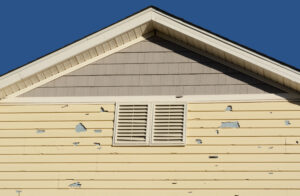
Warped siding rarely happens without warning. It usually stems from a handful of underlying issues, ranging from poor installation to environmental stress and aging materials.
Improper Installation
When siding is not installed correctly, it cannot move as it expands and contracts. This is the single most common cause of warping.
Typical installation mistakes include:
- Driving nails too tightly, which locks panels in place and prevents natural movement.
- Face-nailing vinyl siding instead of using the pre-slotted nailing hem.
- Neglecting to leave expansion gaps at butt joints, trim, and other key areas.
Actual costs depend on your location, project scope, and materials. The best way to know what you'll pay is to get quotes from local contractors.
Get Your Free Estimate →Excessive Heat Exposure
High temperatures can soften siding, especially vinyl, and cause it to lose shape. Darker colors and reflective surfaces only amplify the problem.
Heat-related causes include:
- Prolonged, direct sunlight on dark-colored panels.
- Reflected glare from Low-E windows, which can create hotspots strong enough to melt siding.
- Placing grills, fire pits, or outdoor heaters too close to the wall.
Moisture Problems
Water that becomes trapped behind siding is another frequent cause of warping. It not only stresses the panels but can also damage the sheathing underneath.
Moisture-related causes include:
- Poor flashing or lack of ventilation, which prevents moisture from escaping.
- Clogged gutters or improper grading that causes water to collect near the foundation and seep behind siding.
Low-Quality or Aging Material
Even when installation is correct, material quality matters. Low-cost or old siding is simply more vulnerable to bending, rippling, and breakage.
Material-related causes include:
- Thin, low-gauge vinyl that flexes under normal heat or wind stress.
- Aging siding that has become brittle and lost its ability to handle environmental changes.
"We matched with a great contractor the same day. The whole process was easy and completely free."
Best Practices for Installing Expansion Gaps
Expansion gaps vary by siding type. Proper installation also involves correct fastening and sealing methods.
Expansion Gap, Fastening, and Finishing Guide
| Siding Material | Expansion Gap Requirement | Fastening Technique | Finishing and Sealing Method |
| Vinyl | Leave 1/4 inch at trim and accessories; increase to 3/8 inch if installing below 40°F. | Do not nail tightly. Place nails in the center of pre-slotted holes and leave clearance equal to a dime’s thickness under the nail head. | Typically left unsealed. Gaps are managed by accessory channels. |
| Engineered Wood | Leave 3/16 inch at butt joints and where siding meets trim. | Use nails or screws as specified by the manufacturer. Do not over-drive fasteners. | Flash behind joints and either seal with flexible caulk or cover with joint molding. |
| Fiber Cement (e.g., James Hardie) | Leave at least 1/8 inch at butt joints. | Use manufacturer-approved fasteners. Avoid over-driving, which can crush the boards. | Flash and seal joints with a high-quality, flexible exterior caulk. |
Avoiding Common Installation Mistakes
Expansion gaps only work if the rest of the siding installation is done correctly. Some frequent errors include:
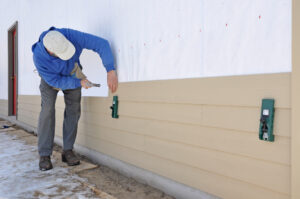
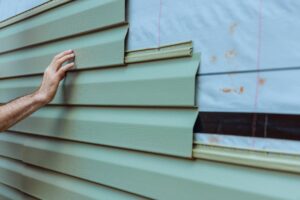
- Fastening too tightly: A properly hung panel should slide slightly when pushed side to side. If it does not move, it is nailed too tight.
- Ignoring manufacturer guidelines: These are precise requirements, not suggestions. Overlooking them risks both failure and voided warranties.
- Poor surface preparation: Siding should never be installed over damaged or uneven sheathing. The surface beneath must be repaired and level.
- Incorrect nailing: Missing the center of nail slots or face-nailing restricts movement and leads to buckling.
- Skipping the moisture barrier: A weather-resistant barrier is essential to prevent water intrusion and protect the wall assembly.
Maintaining Siding To Prevent Warping
Once panels get badly warped, replacement is usually the only option, which is why prevention is the most effective approach. A combination of regular maintenance, proper drainage, heat control, and mindful landscaping goes a long way in protecting your home’s exterior.
Regular Inspections and Cleaning
Keeping siding in good condition starts with routine inspections and simple cleaning. Walk around your home at least once a year, and after severe weather, to spot early signs of trouble such as cracks, loose panels, or surfaces that look wavy. Openings around windows and doors deserve extra attention, since caulk in these areas often dries out and allows water to seep in.
To prevent buildup of dirt, pollen, and mildew, wash your siding once a year with a soft-bristle brush and a mild soap-and-water solution. Avoid pressure washing at high settings, as this can drive water behind the panels and cause hidden damage.
Manage Moisture and Drainage
Moisture is one of the biggest culprits behind warped siding. Ensuring your home drains properly will reduce the risk.
- Keep gutters and downspouts clean so water does not overflow onto the siding or collect near the foundation.
- Use splash blocks or downspout extensions to carry water 4 to 6 feet away from the home.
- Check that the ground slopes gently away from the foundation to prevent water from pooling against the siding.
Why Hire a Licensed Professional
- Licensed & insured — protects you from liability
- Warranty coverage — manufacturers require pro installation
- Code compliance — avoids permit issues
- Faster completion — pros finish in days, not weeks
Control Heat Exposure
Vinyl siding, in particular, can warp or melt when exposed to excessive heat. To reduce the risk:
- Position grills, fire pits, and other heat sources at least 10 feet away from exterior walls.
- Watch for reflected sunlight from Low-E windows, which can concentrate heat onto siding. Installing awnings or solar screens helps diffuse this reflection.
- Strategically planting trees or shrubs can provide natural shade for areas most exposed to sunlight.
- When choosing new siding, lighter colors are preferable since they absorb less heat than darker shades.
Mindful Landscaping
Landscaping can either help protect siding or unintentionally put it at risk. Trim back branches, bushes, and climbing plants so they do not touch the siding, which can trap moisture and scratch the surface. It is also important to maintain a clearance of 6 to 8 inches between the soil and the bottom edge of the siding to avoid moisture wicking and discourage insect intrusion.
Repairs
Even with preventative care, minor warping can sometimes occur. If panels were installed too tightly, a contractor may be able to loosen them to relieve pressure. For sections that are severely warped or melted from heat, replacement is the only option, and a professional can match new panels to your existing siding.
If you notice widespread warping, evidence of trapped moisture, or structural damage, consult a siding professional right away. Early action can prevent small problems from turning into major repairs.
DIY vs. Professional: At a Glance
How To Address Existing Siding Warping
From minor fixes to more extensive replacements, here’s how to handle existing siding that has warped.
Minor Warping Due to Overtightening
If you discover warped siding, the solution depends on the extent of the damage. When the warping is minor and caused by nails that have been driven too tightly, the issue can often be resolved without a full replacement.
A professional can carefully remove the affected panels and re-secure them, ensuring that the fasteners are placed correctly in the center of the nailing slots and left slightly loose. This allows the siding to expand and contract as it should, relieving the pressure that caused the initial bowing.
Replacement for Severe Warping
For panels that are severely buckled, melted from intense heat, or cracked beyond repair, a simple reinstallation is not enough. In these cases, replacement is the only viable option.
An experienced siding contractor can help you source new panels that match your existing siding as closely as possible. The damaged sections can then be removed and replaced, with the new material installed according to the proper gapping and fastening guidelines to prevent future warping.
Spring and summer are the busiest seasons for home improvement projects — top-rated contractors book up fast. Lock in your estimate now before demand peaks.
Check Availability in Your Area →Hidden Issues Beneath the Siding
It’s crucial to consider the cause of the warping. If the issue is extensive or appears to be related to moisture, there may be hidden problems with the underlying wall.
A professional inspection can uncover issues like rot, mold, or damaged sheathing. Before new siding is installed, any underlying damage must be fully repaired. Ignoring these hidden issues will only lead to the same warping problems reappearing, potentially causing even more significant damage to your home’s structure.
FAQs
How Much of an Expansion Gap Is Needed for Vinyl Siding?
The size of the expansion gap for vinyl siding depends on the temperature at the time of installation. When siding is installed in temperatures above 40°F, a 1/4-inch gap should be left wherever the panels meet a channel, corner post, or trim. In colder conditions, specifically when temperatures are below 40°F, the gap should be increased to 3/8 inch. This larger space allows for the greater amount of expansion that will occur once the weather warms.
It is also important not to caulk vinyl siding seams or expansion gaps. Caulking restricts the natural movement of the panels, which can cause buckling or warping over time. Leaving the gaps open is what allows vinyl siding to expand and contract freely with temperature changes.
Ready to Move Forward?
Tell us about your project and get matched with up to 3 pre-screened contractors. Compare quotes, check reviews, and hire with confidence.
Does Fiber Cement Siding Need Expansion Gaps?
Yes, fiber cement siding does require expansion gaps, even though it is more dimensionally stable than materials like wood or vinyl. While the movement is minimal, fiber cement still expands and contracts slightly in response to changes in temperature and moisture.
Most manufacturers, including James Hardie, recommend leaving a gap of at least 1/8 to 1/4 inch at butt joints and around openings. These gaps provide the space needed to accommodate natural shifts without putting stress on the panels.
To keep the wall system weather-tight, these joints are typically flashed behind and sealed with a high-quality, flexible exterior caulk. This combination prevents water intrusion while still allowing the siding to move as intended.
Can Improper Installation Void a Siding Warranty?
Yes. If siding is installed without the correct expansion gaps, the warranty can be voided. Manufacturers expect their products to be installed according to specific guidelines, and ignoring those requirements is considered improper installation.
It’s important to understand the difference between warranties. A manufacturer’s warranty generally covers defects in the product itself, while an installation or workmanship warranty from your contractor applies to errors made during installation. If panels buckle or warp because gaps were not left correctly, the manufacturer is unlikely to cover the damage.
Are Expansion Gaps Required By Building Code?
Building codes do not typically mandate expansion gaps for residential homes in the same way they do for large commercial structures. However, they are a requirement of proper installation outlined in the manufacturer’s guidelines, which installers must follow for a compliant and warrantied installation.
Conclusion
Siding expansion gaps may seem minor, but they play a major role in keeping panels straight and protecting the wall from damage. By allowing siding to move with changes in temperature and moisture, these gaps prevent warping, preserve the exterior’s appearance, and maintain protection against the elements. Combined with correct fastening, flashing, and sealing, they help create a siding system that lasts.
Careful and proper installation is the key to ensure siding that holds up over time. If you are planning a new project or worried about an existing one, working with a qualified siding contractor ensures that expansion gaps and other important details are handled correctly, protecting both the look and longevity of your home.
Connect with top-rated local contractors who can help you with siding, roofing, HVAC, windows, and more. Get free quotes from verified professionals in your area today.