

Most homeowners don’t think about their ductwork until something goes seriously wrong. Your ducts are quietly responsible for distributing conditioned air to every room in your home, and when they start failing, you feel it in your comfort, your energy bills, and eventually your wallet. Ductwork typically lasts 15 to 25 years, and once it starts deteriorating, repairs often become a band-aid on a larger problem.
Replacement costs for a full duct system run $1,400 to $5,600 for an average home, with most homeowners spending around $3,000. Catching the warning signs early can help you make the call before a failing system wastes hundreds of dollars a year in energy loss.
What Are the Most Common Signs That Ductwork Needs to Be Replaced?
The most common signs ductwork needs replacement include unusually high energy bills, uneven temperatures between rooms, excessive dust, strange noises from vents, and ductwork older than 20 years.
These signs often overlap and reinforce each other. A duct system that’s leaking air will simultaneously raise energy costs, create temperature imbalances, and pull more dust into the living space. If you’re noticing two or more of these issues at the same time, replacement is more likely the right call than patching individual sections.
Here’s a quick summary of the nine warning signs covered in this guide:
- Unexplained spike in heating and cooling bills
- Uneven temperatures between rooms
- Excessive dust or debris at vents
- Strange sounds including rattling, banging, or whistling
- Visible damage to ducts in accessible areas
- Ductwork older than 20 years
- Musty smell or mold odors from vents
- Poor indoor air quality or worsening allergy symptoms
- Frequent HVAC system cycling or short-cycling
Actual costs depend on your location, project scope, and materials. The best way to know what you'll pay is to get quotes from local contractors.
Get Your Free Estimate →Why Are Your Energy Bills Suddenly Higher?
Leaky or deteriorating ductwork can cause HVAC systems to lose 20 to 30 percent of conditioned air before it reaches living spaces, according to the U.S. Department of Energy. That wasted air translates directly into higher monthly utility costs.
If your heating and cooling bills have climbed noticeably over the past year or two, and your usage habits haven’t changed, the duct system is one of the first places to investigate. A professional energy audit or duct blaster test can measure exactly how much air your ducts are losing and whether the loss justifies full replacement versus targeted sealing.
Worth knowing: The ENERGY STAR program estimates that duct leakage is the single biggest source of energy waste in most homes, accounting for an average of $400 per year in unnecessary utility costs.
"We matched with a great contractor the same day. The whole process was easy and completely free."
Do Uneven Temperatures Between Rooms Signal Duct Problems?
Uneven room temperatures are one of the clearest signs of ductwork failure, particularly when some rooms are consistently too hot or too cold regardless of thermostat settings.
Healthy ductwork distributes air evenly across the system. When ducts develop holes, disconnected joints, or collapsed sections, some rooms receive too little airflow while others get too much. This isn’t just uncomfortable. It forces your HVAC system to run longer cycles trying to compensate, which accelerates wear on the blower motor and heat exchanger. If you’ve already ruled out dirty filters, blocked vents, and refrigerant issues, the duct system is the likely culprit.
Is Excessive Dust a Warning Sign of Failing Ducts?
Yes. Unusually high dust levels throughout a home often indicate that ductwork has developed gaps or holes pulling in unconditioned air, debris, and fine particles from attics and crawl spaces.
This matters beyond housekeeping. Ducts that pull air from attics or crawl spaces can also introduce allergens, mold spores, and even pest debris into the air your family breathes. The American Lung Association identifies leaky ductwork as a significant contributor to poor indoor air quality.
Health note: If household members are experiencing increased allergy or asthma symptoms that worsen at home but improve when away, failing ductwork pulling in outdoor contaminants is worth investigating before assuming other causes.
What Do Strange Noises from Vents Mean?
Rattling, banging, popping, or whistling sounds coming from vents can signal loose duct sections, damaged joints, or undersized ducts struggling under pressure from the HVAC system.
Here’s what each sound typically indicates:
- Popping when the system starts: Duct panels are flexing under pressure, a sign the material is weakening
- Rattling: Loose connections or sections that have separated at the joints
- Whistling: Air is being forced through gaps or undersized openings
- Banging: A duct section may have fully separated and is shifting when air pressure changes
While some noises can be fixed with targeted repairs, widespread noise across multiple vents typically signals systemic deterioration that warrants full replacement.
Why Hire a Licensed Professional
- Licensed & insured — protects you from liability
- Warranty coverage — manufacturers require pro installation
- Code compliance — avoids permit issues
- Faster completion — pros finish in days, not weeks
Can You See Damage to Your Ductwork?
Visible damage including crushed flex duct, disconnected joints, holes, or sections with deteriorating insulation is a direct indicator that replacement is needed rather than deferred.
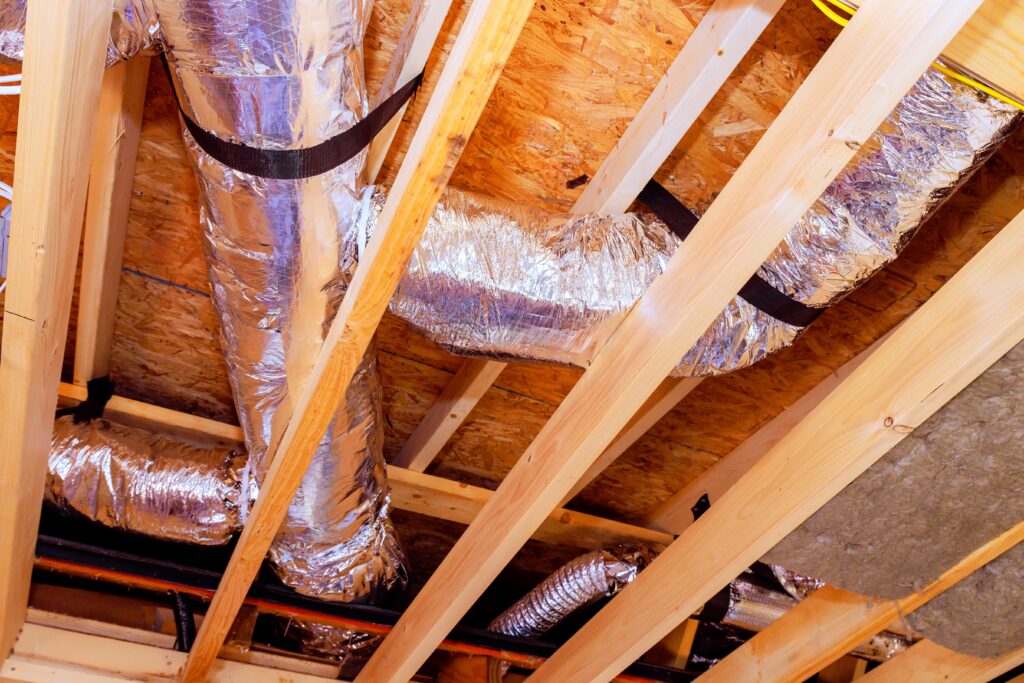
If your home has accessible ducts in the basement, attic, or crawl space, it’s worth taking a flashlight to them every few years. Key things to look for:
- Flex duct that has kinked, collapsed, or pulled apart at connections
- Metal ducts with visible rust or corrosion
- Joints held together with standard duct tape (not approved for HVAC use and fails within a few years)
- Insulation that is wet, compressed, or has fallen away entirely
- Visible holes, tears, or open seams in the duct material
- Moisture staining on or around duct surfaces
Any moisture damage is particularly serious, as it creates conditions for mold growth inside the duct system.
How Old Ductwork Becomes a Replacement Trigger
Ductwork installed more than 20 years ago is approaching the end of its reliable service life, even if it hasn’t shown dramatic failure symptoms yet.
Older duct systems were often built with materials that have since been phased out or improved. Flex duct from the 1980s and early 1990s is prone to inner liner deterioration. Metal ducts sealed with older mastic compounds can develop widespread joint failures over time. Ducts installed in unconditioned spaces without proper insulation lose significant efficiency regardless of their physical condition.
If your home is due for HVAC equipment replacement anyway, it’s almost always worth replacing the ductwork at the same time rather than running new equipment through a compromised distribution system.
DIY vs. Professional: At a Glance
Does Mold Smell or Poor Indoor Air Quality Point to Duct Failure?
A persistent musty smell from vents is a serious warning sign that moisture has entered the duct system and mold may be growing inside.
Mold inside ducts is a health hazard and cannot be effectively resolved through surface cleaning alone if the underlying moisture problem isn’t addressed. Ducts running through humid crawl spaces or that have developed condensation due to missing insulation are particularly vulnerable.
Important: If you detect a musty odor that worsens when the HVAC system runs, stop running the system and call a professional for inspection before the problem spreads further into the home.
In cases of confirmed mold contamination, replacement is almost always the recommended course of action rather than remediation. Fully cleaning the interior of a duct network is rarely practical or reliably effective.
Spring and summer are the busiest seasons for home improvement projects — top-rated contractors book up fast. Lock in your estimate now before demand peaks.
Check Availability in Your Area →Ductwork Repair vs. Replacement: When Does Replacement Make More Sense?
Replacement makes more sense than repair when ducts are older than 20 years, when damage affects more than one-third of the system, when energy loss exceeds 25 percent, or when mold contamination is confirmed.
| Situation | Recommended Action |
|---|---|
| Single disconnected joint or small hole | Repair |
| One collapsed flex duct run | Repair |
| Ducts under 15 years old with isolated damage | Repair |
| System-wide energy loss over 25% | Replace |
| Ducts older than 20 years | Replace |
| Mold contamination confirmed | Replace |
| Damage affecting more than 1/3 of the system | Replace |
| Repair cost exceeds 50% of replacement cost | Replace |
Targeted repairs including sealing accessible joints with mastic, re-insulating exposed sections, or replacing a single collapsed flex run can extend the life of a duct system that’s otherwise in good shape. But repairs become a losing proposition when deterioration is widespread. A useful benchmark from HVAC contractors: if the system will likely need another repair round within three to five years, full replacement is the better long-term investment.
What Does Ductwork Replacement Cost?
Ductwork replacement costs $1,400 to $5,600 for a typical single-family home, with most projects falling between $2,500 and $3,500 depending on system size, access difficulty, and materials.
| Cost Factor | Lower End | Higher End |
|---|---|---|
| Flexible duct (per linear foot installed) | $3 | $7 |
| Sheet metal duct (per linear foot installed) | $10 | $20 |
| Full replacement, small home under 1,500 sq ft | $1,400 | $2,500 |
| Full replacement, average home 1,500 to 2,500 sq ft | $2,500 | $3,500 |
| Full replacement, large home 2,500+ sq ft | $3,500 | $5,600+ |
The main cost drivers are home size, duct accessibility, and material type. Attic and crawl space installs cost more in labor than basement systems. A complete replacement in a 2,000 square foot home with moderate accessibility generally takes one to two days for a two-person crew.
If you’re comparing bids, make sure each quote covers the same scope:
- Supply duct runs to each room
- Return duct runs back to the air handler
- Main trunk lines
- Plenum boxes at the air handler
- All insulation and vapor barriers
Costs can vary significantly based on what contractors include in their base estimate, so comparing line by line matters before making a decision.
Ready to Move Forward?
Tell us about your project and get matched with up to 3 pre-screened contractors. Compare quotes, check reviews, and hire with confidence.
How to Find a Qualified HVAC Contractor for Duct Replacement
Look for contractors who are licensed in HVAC work in your state, carry liability and workers’ compensation insurance, and hold certifications from NATE (North American Technician Excellence) or ACCA (Air Conditioning Contractors of America).
Before hiring, confirm each contractor will:
- Perform Manual D calculations to properly size replacement ductwork (skipping this is a red flag)
- Seal all joints with mastic, not standard duct tape
- Pressure-test the completed system before finishing the job
- Pull any required permits for the work
- Provide a written warranty on both labor and materials
MyHomePros can help you find certified contractors in your area. Getting three quotes is standard practice, and a legitimate contractor should be willing to do a visual inspection before quoting.
The Bottom Line
The clearest signs that your ductwork needs to be replaced are high energy bills without explanation, persistent hot and cold spots in the home, excessive dust at vents, unusual sounds from the duct system, visible damage, age over 20 years, and any confirmed mold presence. If you’re seeing multiple signs at once, the case for replacement over repair strengthens considerably.
The cost of waiting is real. Leaky ducts waste energy continuously, force your HVAC equipment to work harder, and shorten its lifespan. Getting a professional inspection is the logical first step. Many HVAC companies offer duct inspections as part of a standard service call, and a duct blaster test can quantify exactly how much air you’re losing before you make any decisions.
Connect with top-rated local contractors who can help you with siding, roofing, HVAC, windows, and more. Get free quotes from verified professionals in your area today.