
*Updated December 11th, 2025
Keeping your shower floor clean isn’t just about making it look nice—it’s about keeping mold, mildew, and soap scum from taking over. A dirty shower floor can quickly become a breeding ground for bacteria, leaving behind grime and odors you definitely don’t want in your bathroom.
Regular shower cleaning not only keeps things fresh but also helps your surfaces last longer. Whether your floor is tile, fiberglass, acrylic, or a textured shower floor with extra texture for grip, knowing the right way to clean it makes all the difference.
Let’s break down the best way to clean a shower floor with minimal effort using simple, practical homemaking tips.
Understanding Your Shower Floor Material
Not all shower floors are created equal, and knowing what yours is made of can make a big difference in how you clean it. Using the wrong cleaner or scrubbing too hard can cause damage, leaving you with a stain, scratches, or even a worn-out surface that’s harder to keep clean in the long run.
Let’s take a look at the most common type of shower floor materials and how to care for them properly.
Tile (Ceramic, Porcelain, Natural Stone)
Tile is one of the most popular shower floor choices because it’s durable and stylish, but it does come with a downside—grout. Grout lines can easily trap dirt, soap scum, and even mold, making them a pain to keep clean.
- For ceramic and porcelain tile: A mix of baking soda and vinegar works wonders to lift grime without damaging the surface.
- For natural stone (like marble or travertine): Avoid acidic cleaning products like vinegar or lemon juice, as they can eat away at the stone. Instead, use a pH-neutral stone cleanser.
- For grout: A simple paste of baking soda and water, scrubbed in with a grout scrub brush or an old toothbrush, helps lift stains and prevent mold buildup.
Fiberglass and Acrylic
If your shower floor is fiberglass or acrylic, you need to be extra careful with how you clean a shower floor like this. These materials are prone to scratches, which can trap dirt and make your clean shower look dingy even after you scrub it.
- Skip abrasive tools: Avoid steel wool or rough scouring pads—these will leave behind permanent marks.
- Use gentle cleaners: A soft sponge or microfiber cloth with dish soap and warm water is usually enough to remove dirt and light stain buildup.
- For tougher stains: Try a paste of baking soda and water, let it sit for a few minutes (let it sit) on the stain, then gently scrub and rinse with clean water.
Textured or Non-Slip Surfaces
A textured shower floor or non-slip shower surface is great for preventing slips and falls, but that extra texture also tends to trap dirt and grime in every groove.
- Use a soft- to medium-bristle scrubber or brush to scour gently without damaging the surface.
- A mix of white vinegar and liquid dish soap is a simple shower cleaning trick: squirt or spray it on the floor, let it sit for a few minutes, then scrub in circular motions to lift soap scum and gunk.
- For deep grime, a magic eraser, Scrub Daddy, or similar tool can help reach into the texture without being overly abrasive.
No matter what type of shower floor you have, the key to a clean shower floor is regular maintenance and using the right cleaning supplies for the material.
Step-by-Step Guide to Cleaning a Shower Floor
Cleaning your shower floor doesn’t have to be a time-consuming chore. With the right step-by-step process, you can keep your shower looking fresh without hours of scrubbing. Here’s a simple way to clean a shower floor and remove soap scum, hard water, and mildew.
1. Prepping the Shower Floor
Before you start to scrub, a little prep work makes the cleaning process much easier.
- Clear the area: Remove bath mats, bottles, and anything sitting on the shower floor.
- Rinse with warm water: Use your showerhead (or a bucket of warm water) to rinse the shower floor thoroughly. This helps loosen dirt and grime, old cleaner residue, and soap scum.
If you see loose debris like hair, wipe it away with a paper towel or clean cloth before moving on.
2. Choosing the Right Cleaning Solution
Different shower floor materials need different cleaning tips, but these two options cover most situations.
DIY Natural Cleaner
- Mix ½ cup baking soda with just enough vinegar to form a paste.
- Spread it over the shower floor or any visible stain or scum buildup.
- Let it sit for about 10 minutes so it can break down gunk and water stains.
Commercial Cleaners
- For heavy soap scum or mildew, a commercial shower or tub cleaner may be the best way to clean your shower floor.
- Look for shower cleaning products that target mold and mildew and are safe for your tub, bathtub, tile, or porcelain.
- Always make sure your chosen cleaning product is safe for your specific material and provides adequate ventilation if fumes (fume) are strong.
3. Scrubbing and Stain Removal
Here’s where a little elbow grease comes in.
For Soap Scum and General Grime
- Spray white vinegar over areas with soap scum and grime.
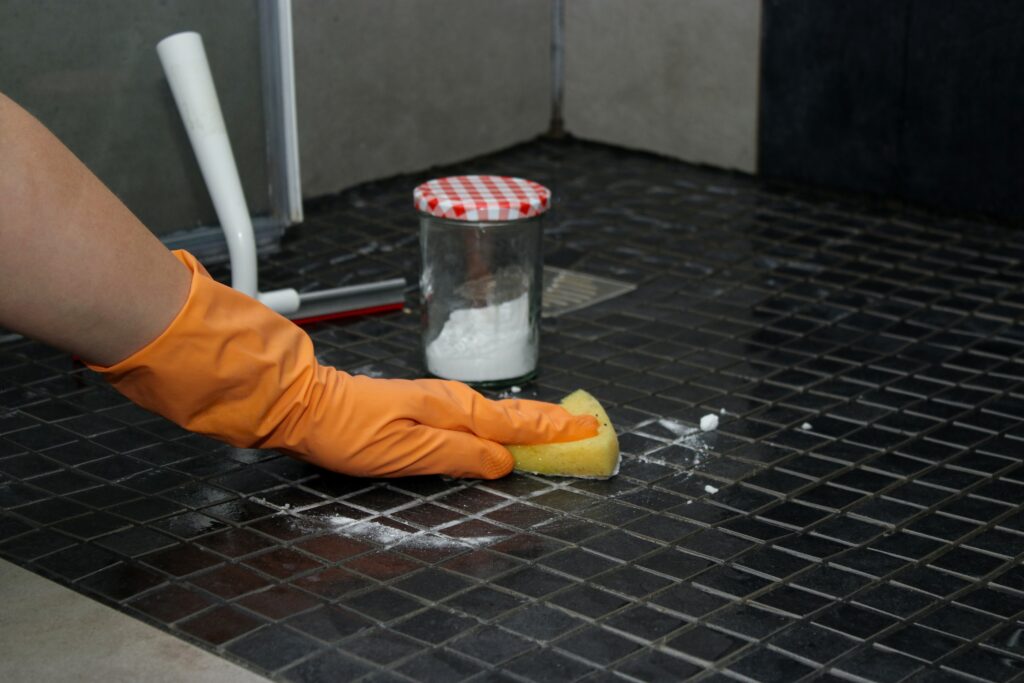
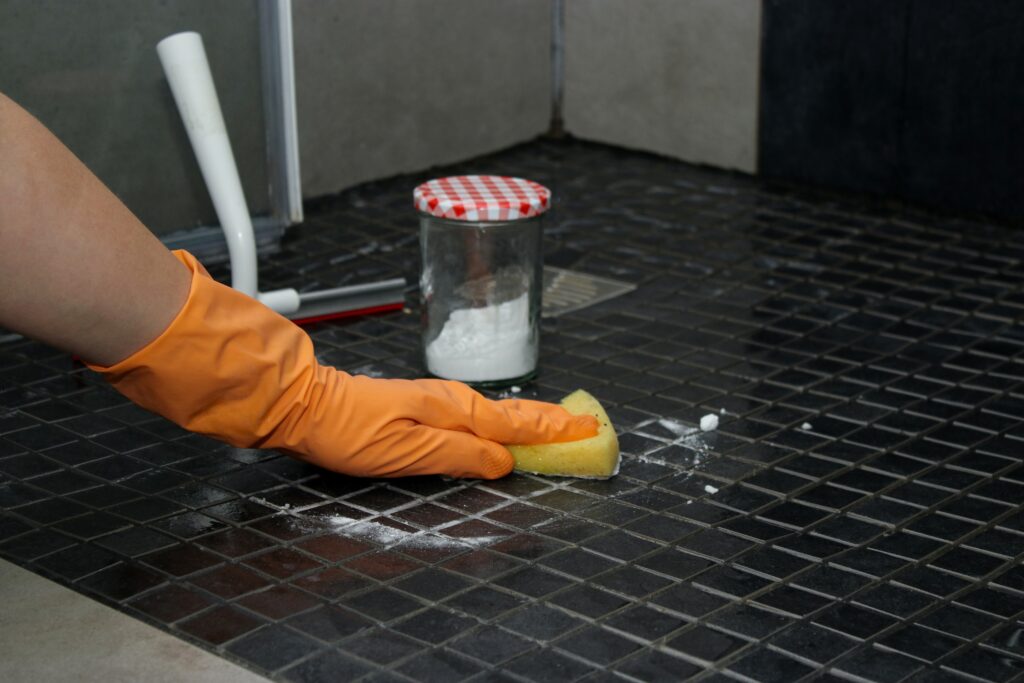
- Sprinkle baking soda on top and let it sit for 10–15 minutes.
- Use a scrub brush, scrubber, or sponge to scour the shower floor in circular motions, focusing on grooves, grout, and corners.
For Mold, Mildew, and Deep Stains
- Hydrogen peroxide can help lift mildew and discoloration without harsh chemicals. Apply it to affected areas and let it sit before you scrub.
- On non-stone surfaces, a diluted bleach solution can tackle serious mildew. Always ensure adequate ventilation and avoid mixing bleach with vinegar or other cleaners.
For Grout Lines
- Apply a paste of baking soda and water directly to dirty grout.
- After letting it sit, use a small scrub brush or toothbrush to scrub along the lines.
These expert tips are especially helpful if you’re dealing with older grout or long-term buildup on a tiled shower floor.
4. Rinsing and Drying
Once you’ve finished scrubbing, it’s crucial to fully rinse the shower floor.
- Rinse the shower thoroughly with clean water to wash away any remaining cleanser, dirt, or loosened soap scum.
- Take a clean microfiber towel or clean cloth and dry the shower floor to help prevent new water stains, mildew, and discoloration.
A quick wipe-down is one of the simplest homemaking tips to maintain a clean shower day to day.
Deep Cleaning Tips
Sometimes regular cleaning isn’t enough, especially if you have hard water, older grout, or a very textured shower floor that traps dirt and grime.
How to Remove Hard Water Stains with Lemon Juice or Vinegar
Hard water stains appear as cloudy spots or white streaks on your shower floor and walls.
- Soak affected areas with white vinegar or lemon juice.
- Let it sit to dissolve mineral deposits.
- Scrub gently and rinse with clean water.
For extra power, sprinkle baking soda on top of the vinegar and let it sit until it fizzes—this reaction helps lift stubborn buildup.
How to Lift Stubborn Grime Using Oxygen Bleach
If your tile shower floor or bathtub has dark, ground-in grime, oxygen bleach is a great home cleaning option.
- Mix with warm water as directed and apply to problem areas, especially grout and corners.
- Let it sit, then scrub with a brush and rinse with clean water.
Oxygen bleach is less harsh than some commercial cleaners and doesn’t produce strong fumes, making it a great cleaning tip for regular deep cleans.
Using a Steam Cleaner for Deep Sanitation
A steam cleaner can reach into every groove, texture, and corner of your shower floor:
- The high heat helps loosen gunk, mildew, and soap scum without additional chemicals.
- Simply steam, wipe with a clean microfiber cloth, and admire your freshly cleaned surface.
Preventative Maintenance for a Cleaner Shower Floor
Once you’ve done the hard work, the trick is to keep your shower and shower floor from getting that dirty again.
Daily Quick Rinse
After each shower, rinse the floor with warm water. This simple habit rinses away soap and water residue before it can dry and become scum buildup.
Weekly Light Scrub
Once a week, give your shower floor a quick scrub with mild soap and water or dish soap and warm water using a sponge or soft brush. This light cleaning helps prevent deeper dirt and grime.
Use a Squeegee or Microfiber Cloth
A quick pass with a squeegee or use a microfiber cloth to wipe standing water is one of the easiest homemaking tips for preventing water stains, hard water buildup, and mildew.
Improve Ventilation
Good airflow helps keep your shower dry. Run the fan, open a window, or leave the shower door open so the area dries faster.
Common Mistakes to Avoid When Cleaning a Shower Floor
Even when you know the best way to clean a shower floor, a few common mistakes can make it harder than it has to be.
- Using the wrong cleaner on the wrong surface: Acidic cleaners on natural stone and strong bleach on some acrylic or fiberglass can cause damage and discoloration.
- Scrubbing too hard with abrasive tools: Overly abrasive pads can scratch acrylic, fiberglass, or certain tile finishes, making them more porous and prone to stain and grime.
- Mixing incompatible cleaners: Never mix bleach with vinegar, ammonia, or other cleaners—this can create dangerous fumes.
Stick to safe combinations, and always test new products in a small, hidden area first.
Final Thoughts
Keeping your shower floor clean doesn’t have to be a dreaded task. With a simple step-by-step routine, the right cleaner, and a few smart homemaking tips, you can stay ahead of soap scum, grime, and stain buildup.
The trick is to use cleaning methods and products that match your type of shower and surface, whether you’re dealing with tile, porcelain, fiberglass, acrylic, or a textured shower floor. A little daily maintenance and a weekly deep clean go a long way.
Follow these expert tips, and you’ll enjoy a fresh, clean shower floor that looks better, feels better underfoot, and makes your whole bathroom feel more inviting.

Anna has over six years of experience in the home services and journalism industries and serves as the Content Manager at MyHomePros.com, specializing in making complex home improvement topics like HVAC, roofing, and plumbing accessible to all. With a bachelor’s degree in journalism from Auburn University, she excels in crafting localized, comprehensive guides that cater to homeowners’ unique needs. Living on both coasts of the United States has equipped her with a distinctive perspective, fueling her passion for turning any house into a cherished home through informed, personalized decision-making.
Connect with top-rated local contractors who can help you with siding, roofing, HVAC, windows, and more. Get free quotes from verified professionals in your area today.