
If your bathroom has become a gathering spot for pests, you are not imagining things. Bathrooms provide the three things insects need most: consistent moisture, warmth, and organic matter to feed on. That combination makes them the most pest-prone room in most homes. The good news is that most bathroom bug problems can be solved with moisture control, drain cleaning, and targeted treatments.
The Reason Bugs Love Bathrooms
Bathrooms attract pests because they provide constant moisture, warmth, and organic food sources like hair, soap scum, and mold.
Your bathroom checks every box on a pest’s survival list. Steam from showers, condensation on cold surfaces, and small plumbing leaks maintain high humidity throughout the day. Beyond moisture, bathrooms supply food in the form of organic drain film, soap scum, starchy wallpaper paste, and sewer sludge. Dark hiding spots like the cabinet under the sink complete the package. If your bathroom has common plumbing problems such as slow drips or failing seals, you are rolling out the welcome mat for insects.
How to Identify Common Bathroom Bugs?
The five most common bathroom pests are drain flies, silverfish, ants, gnats, and cockroaches, each identifiable by size, shape, and behavior.
Knowing which pest you are dealing with determines the treatment you need.
Drain Flies
- Appearance: 2 to 5mm long, fuzzy, moth-like wings covered in fine hairs, dusty gray or brown color.
- Hideout: Hovering near sink and shower drains, especially in the evening.
- Behavior: Breed directly in the sticky organic film lining drainpipes. Females lay eggs in batches of 30 to 100.
Silverfish
- Appearance: Wingless, teardrop-shaped, silvery-gray with three tail-like appendages. Fast-moving with a fish-like, side-to-side motion.
- Hideout: Vanity cabinets, behind peeling wallpaper, along damp baseboards.
- Behavior: Feed on starchy materials including wallpaper paste, cardboard, paper, and dead skin cells. Thrive in high-humidity environments.
Ants
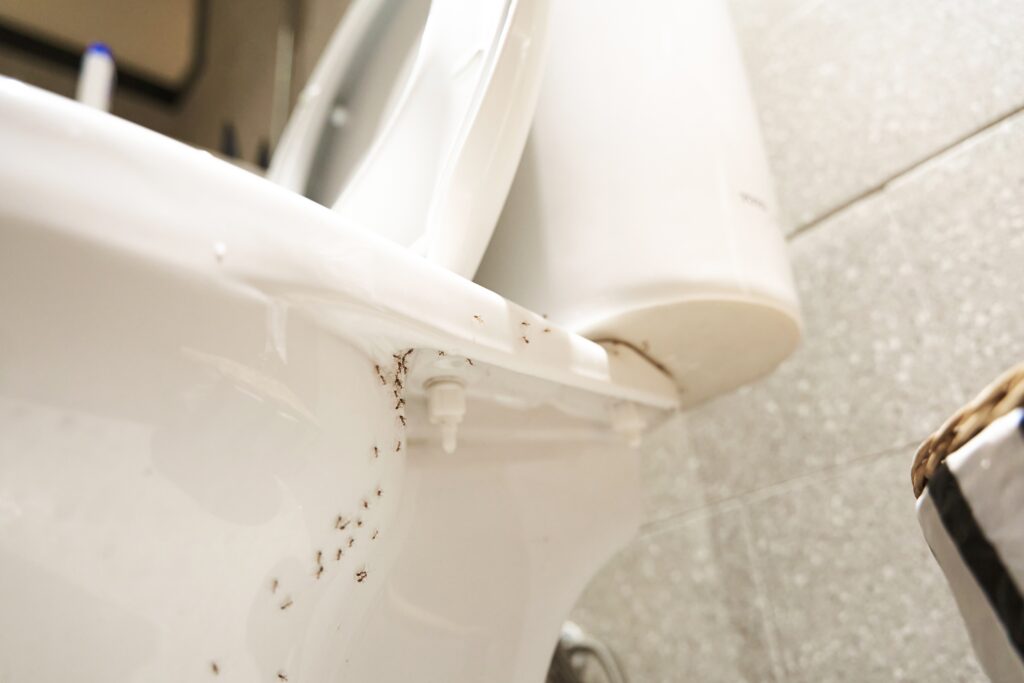
- Appearance: Small (1 to 3mm), typically pharaoh ants or odorous house ants. Travel in visible trails.
- Hideout: Near plumbing fixtures, window sills, under sinks.
- Behavior: Enter through tiny cracks in walls and around pipe penetrations, seeking moisture first and food second. A visible trail often points to a nearby leak or sweating pipe.
Gnats (Fungus Gnats)
- Appearance: Tiny, dark-bodied flies with long, slender legs and a mosquito-like silhouette.
- Hideout: Overwatered houseplant soil, drain openings with organic debris.
- Behavior: Hover in slow, erratic patterns near moisture sources. Unlike drain flies, they are drawn to damp soil rather than pipe biofilm.
Cockroaches
- Appearance: German cockroaches (12 to 15mm, light brown) and American cockroaches (35 to 40mm, reddish-brown) are the two most common species.
- Hideout: Under sinks, inside vanity cabinets, behind toilets, near floor drains.
- Behavior: Nocturnal and drawn to dark, humid spaces. Seeing one during daylight hours is a strong indicator of a large, established colony.
Quick-Reference Treatment Table
| Bug Type | Primary Hideout | Best DIY Treatment |
|---|---|---|
| Drain Flies | Sink and shower drains | Pipe brush scrub + enzymatic drain gel |
| Silverfish | Baseboards, damp cabinets | Reduce humidity + food-grade diatomaceous earth |
| Ants | Under sink, window sills | Liquid bait stations (borax-based) |
| Gnats | Houseplant soil, drains | Apple cider vinegar and dish soap trap |
| Cockroaches | Under sink, behind toilet | Gel bait stations in hidden, dry corners |
What Is the Best Way to Reduce Bathroom Moisture?
Running your exhaust fan during showers and for 20 to 30 minutes afterward is the single most effective step for reducing bathroom pests.
Moisture is the root cause of nearly every bathroom bug problem. Eliminate it, and most pests cannot survive.
Run Your Exhaust Fan Properly
Turn on your bathroom exhaust fan before you start the shower and leave it running for at least 20 to 30 minutes after you finish. If your bathroom does not have a fan, open a window or place a portable dehumidifier nearby. Creating an energy-efficient bathroom often starts with upgrading to a properly sized ventilation fan.
Fix Leaks and Dry Wet Surfaces
Inspect under the sink, around the toilet base, and at every faucet connection for slow drips or pooling water. Even a minor leak creates enough standing moisture to sustain an entire pest colony. If you discover leaking pipes, a plumbing repair may be the most cost-effective pest control measure you can take. After bathing, wipe down shower walls and countertops. Aim to keep bathroom humidity between 30% and 50%.
Pro Tip: If your bathroom consistently feels damp or you notice mold and mildew growth on walls or ceilings, your exhaust fan may be undersized. The standard recommendation is 1 CFM per square foot of bathroom floor space, with a minimum of 50 CFM.
How to Deep-Clean Drains to Kill Bugs at the Source?
Scrubbing drain walls with a pipe brush and applying an enzymatic cleaner is the only reliable way to eliminate drain fly breeding sites.
Drains are the primary breeding ground for drain flies and gnats. The organic film inside your pipes is where larvae live and feed, and simply pouring liquid down the drain will not remove it.
Why Bleach Does Not Work
Bleach passes through the pipe too quickly to penetrate the sticky biofilm on pipe walls. It may kill a few adult flies near the drain opening, but larvae embedded in the sludge survive. Bleach can also damage plumbing seals and should never be mixed with other cleaning products due to the risk of toxic fumes.
The Correct Drain Cleaning Process
- Remove the drain cover and clear any visible debris by hand or with needle-nose pliers.
- Scrub the interior pipe walls with a stiff-bristled pipe brush in an up-and-down twisting motion to break up the biofilm.
- Flush the drain with very hot water (not boiling, which can damage PVC pipes).
- Apply an enzymatic drain cleaner per the product label. These gel-based cleaners contain live bacteria that digest organic matter and cling to pipe walls, unlike bleach.
- Treat the drain’s overflow hole as well, since it often harbors the same buildup.
- Repeat nightly for five to seven nights to break the reproductive cycle, which runs 7 to 10 days from egg to adult.
If you have a clogged drain that drains slowly, clear the blockage first. Slow-moving water gives organic debris more time to accumulate inside the pipe.
Pro Tip: Not sure which drain is the source? Use the overnight tape test. Place a strip of clear packing tape over each suspect drain before bed, sticky side down. Check the tape in the morning. If small flies are stuck to the underside, that drain is an active breeding site.
What DIY Traps and Treatments Work Best?
Apple cider vinegar traps catch flying pests, while enclosed bait stations with borax-based gel are the most effective option for ants and roaches.
Once you have addressed moisture and cleaned your drains, targeted treatments handle any remaining pests.
For Drain Flies and Gnats
Fill a small bowl with equal parts apple cider vinegar and water, then add three to four drops of liquid dish soap. The vinegar attracts flying insects, and the soap breaks the surface tension so they cannot escape. Place traps near affected drains and replace every two to three days.
For Ants
Avoid contact insecticide sprays. They kill visible ants but do not reach the colony, and remaining ants often split into satellite colonies, making the problem worse. Instead, place enclosed liquid bait stations (borax-based) along the trail and under the sink. Workers carry the bait back to the nest. A DIY pest control guide covers additional fundamentals.
For Silverfish
Food-grade diatomaceous earth (DE) is one of the most effective treatments. This natural powder damages the silverfish’s waxy outer coating on contact, causing dehydration and death within days. Apply a thin layer along baseboards, inside vanity cabinets, and behind the toilet. DE is registered with the EPA for residential use and is non-toxic to humans and pets. Reapply whenever the powder gets damp.
For Cockroaches
Gel bait stations placed in hidden, dry locations, such as back corners under the sink and behind the toilet tank, are far more effective than aerosol sprays. Roaches consume the bait and carry it back to their harborage, where it spreads through the colony.
How Do You Seal Entry Points to Keep Bugs Out?
Caulking gaps around pipes, sealing cracks along baseboards, and repairing grout eliminates the access points pests use to enter your bathroom.
Pests can only infest a room if they have a way in. A systematic sealing job cuts off future infestations at the source. Focus on these key areas:
- Pipe penetrations. Fill gaps where supply lines and drain pipes pass through the wall or floor with silicone caulk or expanding foam.
- Tub and shower caulk lines. Cracked or peeling caulk creates harborage for pests and moisture. Recaulking your bathtub is a simple maintenance task that doubles as pest prevention.
- Baseboards. A thin bead of paintable latex caulk along the bottom edge seals the gap where silverfish and ants travel.
- Grout lines. Crumbling grout lets moisture seep behind tile, creating hidden damp zones where mold and pests thrive.
- Window frames. Seal any visible cracks or gaps in the frame and surrounding wall.
Regularly reviewing your bathroom renovation checklist can help you catch these maintenance items before they become pest problems.
When Should You Call a Professional Exterminator?
Call a professional if cockroaches appear during the day, drain flies persist after two weeks of treatment, or you suspect a hidden nest.
Most bathroom bug problems respond well to DIY methods. However, certain signs indicate you need professional help.
Red Flags That Signal a Serious Infestation
- Cockroaches visible during daylight. Roaches are nocturnal. Daytime sightings mean the colony has grown large enough that individuals are being pushed out of hiding spaces.
- Drain flies return within days of completing a full week of enzymatic treatment. This often points to a broken drain line, a dry P-trap in an unused fixture, or breeding sites inside a wall or under the slab that you cannot access.
- Ant trails reappear after multiple rounds of baiting. Persistent trails suggest the colony is nesting inside the wall cavity itself, beyond the reach of consumer-grade bait stations.
- Structural damage near bathroom fixtures. Wood softened by moisture, crumbling drywall behind the vanity, or signs of termite activity around the tub or shower framing all indicate problems that require professional assessment.
A pest control professional can identify the exact species, locate hidden nests, and apply targeted treatments not available to consumers. If the root cause is a plumbing issue like a broken sewer lateral, calling a plumber first can save you from repeated treatments that only address symptoms. The importance of professional pest control becomes especially clear with German cockroaches, which reproduce rapidly and resist many over-the-counter products.
Keep Your Bathroom Pest-Free for Good
Bathroom bugs are not a sign of a dirty home. They are a sign of excess moisture, and every infestation has a fixable root cause. The difference between a bathroom that attracts pests and one that does not usually comes down to a few maintenance habits that take minutes per week.
Most homeowners discover this after chasing the problem with sprays and traps that only address symptoms. The real turning point happens when you shift from reacting to individual bugs to eliminating the conditions they need. A bathroom with good ventilation, clean drains, and sealed entry points gives pests nothing to work with. Without moisture to drink, biofilm to breed in, or gaps to enter through, insects move on.
If you have worked through the steps in this guide and the problem persists beyond two weeks, that is a clear signal to bring in a licensed exterminator. Persistent infestations often trace back to something you cannot see or reach on your own, like a broken drain line behind the wall or a colony nesting inside a wall cavity. At that point, professional diagnosis saves time, money, and frustration.

Anna has over six years of experience in the home services and journalism industries and serves as the Content Manager at MyHomePros.com, specializing in making complex home improvement topics like HVAC, roofing, and plumbing accessible to all. With a bachelor’s degree in journalism from Auburn University, she excels in crafting localized, comprehensive guides that cater to homeowners’ unique needs. Living on both coasts of the United States has equipped her with a distinctive perspective, fueling her passion for turning any house into a cherished home through informed, personalized decision-making.
Connect with top-rated local contractors who can help you with siding, roofing, HVAC, windows, and more. Get free quotes from verified professionals in your area today.