
When homeowners start planning a bathroom remodel, one question comes up frequently: Should you install a walk-in tub or a walk-in shower? Both options are designed to improve safety, accessibility, and convenience, especially for households thinking about long-term comfort or aging in place.
Walk-in tubs and walk-in showers each offer unique advantages. The right choice often depends on your lifestyle, mobility needs, bathroom layout, and renovation budget. This guide breaks down the key differences between the two so you can decide which upgrade makes the most sense for your home.
What Is a Walk-In Tub?
A walk-in tub is a bathtub designed with accessibility in mind. Instead of stepping over the high wall of a traditional tub, users enter through a small door built into the side.
Once inside, you sit comfortably on a built-in seat while the tub fills with water.
Key Features of Walk-In Tubs
Walk-in tubs typically include several safety and comfort features, such as:
- Low step-in threshold door
- Built-in seating
- Grab bars for stability
- Slip-resistant flooring
- Handheld shower wand
- Optional hydrotherapy or air jets
Many homeowners also choose models with therapeutic features that help with muscle recovery and joint pain.
Who Walk-In Tubs Are Best For
Walk-in tubs are often a great option for:
- Seniors planning to age in place
- Homeowners with mobility challenges
- People with arthritis or joint pain
- Anyone who prefers soaking baths over showers
For homeowners who enjoy relaxing baths, a walk-in tub can offer comfort while still improving bathroom safety.
What Is a Walk-In Shower?
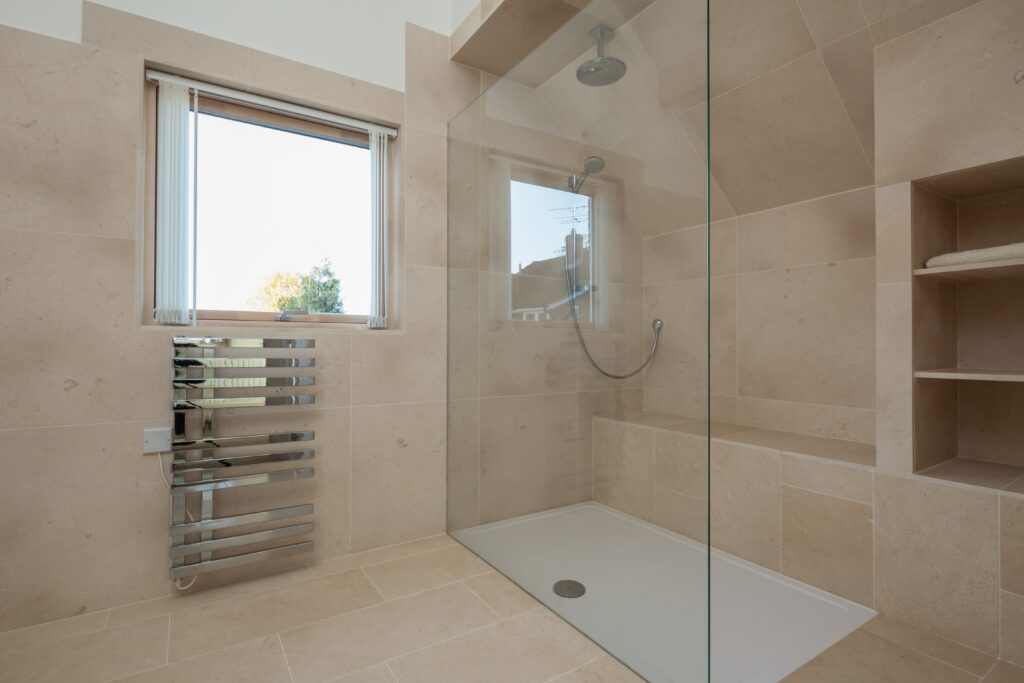
A walk-in shower is a shower designed with an open or low-threshold entry. Instead of a traditional bathtub wall, these showers allow users to step directly into the shower area.
Many walk-in showers are designed with curbless or barrier-free entry, making them especially accessible.
Key Features of Walk-In Showers
Common features include:
- Low or barrier-free entry
- Spacious shower area
- Built-in benches or seating
- Grab bars for support
- Slip-resistant flooring
- Glass panels or open shower layouts
Walk-in showers are often used in modern bathroom remodels because they create a clean, open look while improving accessibility.
Who Walk-In Showers Are Best For
Walk-in showers are ideal for:
- Homeowners who prefer quick showers
- Households focused on modern design
- People who want easier bathroom access
- Individuals using walkers or wheelchairs
For many homeowners, a walk-in shower offers the simplest and most convenient bathing solution.
Walk-In Tub vs Walk-In Shower: Key Differences
While both upgrades improve accessibility, they serve slightly different purposes.
Walk-in tubs focus on seated soaking and relaxation, while walk-in showers emphasize convenience and easy entry.
Here are some of the main differences homeowners should consider:
- Bathing style: Walk-in tubs allow seated soaking baths, while walk-in showers are designed for standing or seated showering.
- Accessibility: Both improve safety, but walk-in showers often provide easier entry, especially with curbless designs.
- Water usage: Tubs generally use more water than showers.
- Convenience: Showers are usually faster for everyday use.
Understanding how you prefer to bathe is often the biggest factor in choosing between the two.
Cost Comparison: Walk-In Tub vs Walk-In Shower
Bathroom remodeling costs vary widely depending on materials, plumbing changes, and labor.
Walk-In Tub Installation Cost
Walk-in tubs are typically the more expensive option.
Most homeowners pay between $4,000 and $12,000 or more for installation. Prices increase if you choose premium features like hydrotherapy jets, heated seating, or advanced controls.
Walk-In Shower Installation Cost
Walk-in showers generally cost less to install.
The average installation ranges from $3,000 to $8,000, though custom tile showers or luxury fixtures can raise the price.
Factors That Affect Installation Cost
Several factors influence the total price of either upgrade, including:
- Bathroom size and layout
- Plumbing modifications
- Material choices (tile, acrylic, glass)
- Accessibility upgrades
- Labor costs in your region
Getting multiple quotes from contractors can help you understand the real cost for your specific bathroom.
Accessibility and Safety Considerations
Both walk-in tubs and walk-in showers are designed to reduce bathroom hazards.
Walk-In Tub Safety Benefits
Walk-in tubs offer several safety features, including:
- Built-in seating that reduces the need to stand
- Easy entry compared to traditional tubs
- Grab bars and non-slip surfaces
- Therapeutic water jets for muscle relief
These features make walk-in tubs particularly helpful for people with mobility challenges.
Walk-In Shower Accessibility Benefits
Walk-in showers also provide major accessibility advantages:
- Barrier-free or low-threshold entry
- Larger open space for movement
- Wheelchair accessibility in some designs
- Easy access for caregivers assisting with bathing
For homeowners with significant mobility concerns, walk-in showers may offer the most flexibility.
Bathroom Space and Layout Requirements
Another key factor is whether your bathroom layout can support your preferred upgrade.
Walk-In Tub Space Needs
Many walk-in tubs are designed to fit into a standard 60-inch bathtub space, which makes them easier to install without major remodeling.
Walk-In Shower Space Needs
Walk-in showers often require slightly more open floor space, especially if you’re installing a curbless or wheelchair-accessible design.
However, smaller walk-in shower designs can still work in compact bathrooms.
Maintenance and Cleaning
Both options require regular maintenance, though the cleaning tasks differ slightly.
Walk-In Tub Maintenance
Walk-in tubs may require:
- Occasional cleaning of hydrotherapy jets
- Maintaining the watertight door seal
- Routine surface cleaning
Walk-In Shower Maintenance
Walk-in showers may involve:
- Cleaning tile grout
- Wiping glass doors or panels
- Removing soap residue from surfaces
Overall, maintenance is manageable for both options with regular cleaning.
Pros and Cons of Walk-In Tubs
Advantages
Walk-in tubs offer several benefits:
- Relaxing soaking experience
- Hydrotherapy options
- Ideal for homeowners who enjoy baths
- Built-in seating for comfort and safety
Potential Drawbacks
However, they also have a few limitations:
- Higher upfront installation cost
- Longer fill and drain times
- Must remain seated during bathing
Some homeowners find the filling process inconvenient compared to showers.
Pros and Cons of Walk-In Showers
Advantages
Walk-in showers offer many appealing benefits:
- Easy entry and accessibility
- Quick and convenient bathing
- Modern bathroom appearance
- Lower water usage
They are also easier for many homeowners to use on a daily basis.
Potential Drawbacks
There are a few trade-offs:
- No soaking bath option
- Some designs require more bathroom space
- Tile showers may require more cleaning
For homeowners who enjoy baths, the lack of soaking can be a downside.
Which Option Adds More Home Value?
Both upgrades can improve bathroom appeal, but buyer preferences often lean toward walk-in showers.
Walk-In Showers and Resale Appeal
Walk-in showers are often attractive to buyers because they:
- Create a modern bathroom design
- Make small bathrooms feel larger
- Offer convenient daily use
Walk-In Tubs and Aging-in-Place Homes
Walk-in tubs can still add value, particularly for homes marketed toward:
- Seniors
- Accessibility-focused buyers
- Multi-generational households
However, some buyers prefer homes that still include at least one traditional bathtub.
When to Choose a Walk-In Tub
A walk-in tub may be the best option if:
- You prefer soaking baths
- You want therapeutic hydrotherapy features
- Mobility challenges require seated bathing
- Relaxation and comfort are top priorities
For homeowners who enjoy baths and want accessibility features, walk-in tubs can be a great investment.
When to Choose a Walk-In Shower
A walk-in shower may be the better choice if:
- You prefer quick showers
- You want a more open bathroom layout
- Accessibility and easy entry are important
- You want a modern bathroom upgrade
Many homeowners find walk-in showers to be the most practical everyday solution.
FAQs About Walk-In Tubs and Walk-In Showers
Is a walk-in tub or walk-in shower safer?
Both options improve safety, but walk-in showers often provide easier entry, especially with barrier-free designs.
Which option is more affordable?
Walk-in showers are usually less expensive to install than walk-in tubs.
Can you replace a bathtub with a walk-in shower?
Yes. Many homeowners choose tub-to-shower conversions during bathroom remodels.
Do walk-in tubs increase home value?
They can increase value for buyers looking for accessibility or aging-in-place features.
Final Thoughts
Choosing between a walk-in tub and a walk-in shower ultimately comes down to your lifestyle, mobility needs, and bathroom layout. Walk-in tubs provide a relaxing soaking experience with therapeutic features, while walk-in showers offer easy access and modern design.
By considering how you use your bathroom today and how your needs may change in the future, you can choose the upgrade that improves both comfort and functionality in your home.

Anna has over six years of experience in the home services and journalism industries and serves as the Content Manager at MyHomePros.com, specializing in making complex home improvement topics like HVAC, roofing, and plumbing accessible to all. With a bachelor’s degree in journalism from Auburn University, she excels in crafting localized, comprehensive guides that cater to homeowners’ unique needs. Living on both coasts of the United States has equipped her with a distinctive perspective, fueling her passion for turning any house into a cherished home through informed, personalized decision-making.
Connect with top-rated local contractors who can help you with siding, roofing, HVAC, windows, and more. Get free quotes from verified professionals in your area today.