
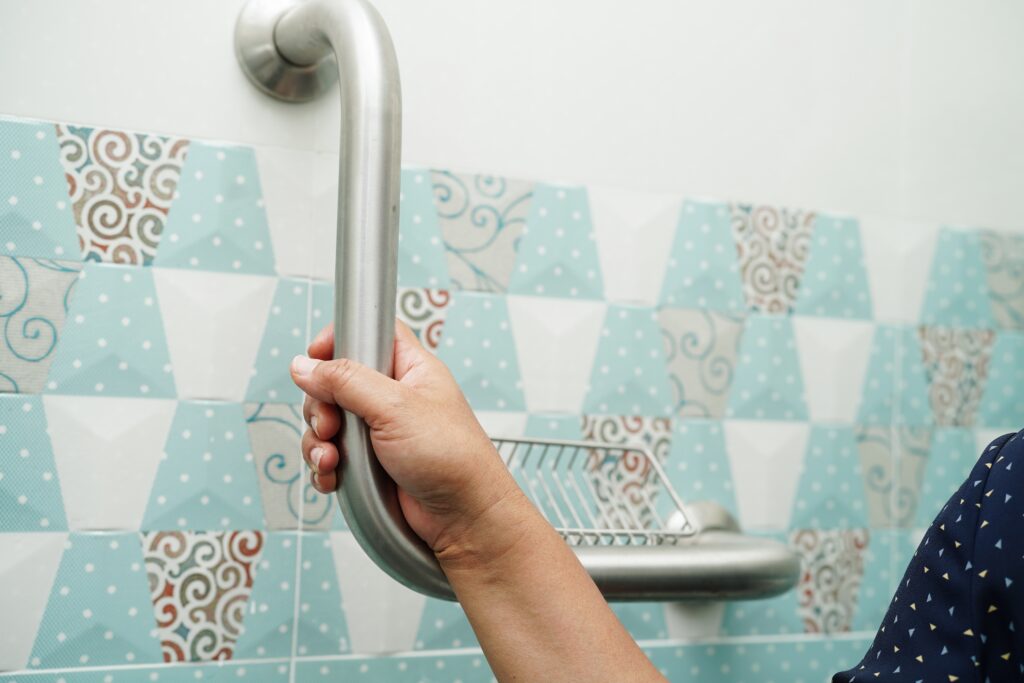
A grab bar in the right location can mean the difference between catching yourself and ending up in the emergency room. Whether you’re planning ahead for aging in place, recovering from surgery, or simply want safer footing on wet surfaces, proper placement makes these safety devices genuinely useful rather than just decorative. For a broader look at accessibility modifications, see our guide to home modifications for aging in place.
This guide covers optimal grab bar locations for showers, tub/shower combinations, and walk-in showers, along with installation requirements and the differences between residential preferences and commercial ADA compliance.
Understanding Grab Bar Orientations
Before discussing specific placement, it helps to understand how each orientation serves a different purpose. Most effective bathroom safety setups use a combination of vertical, horizontal, and diagonal bars.
| Orientation | Best Use | Typical Location |
|---|---|---|
| Vertical | Stability when stepping over thresholds; balance during entry and exit | Near shower entrance, beside tub edge |
| Horizontal | Support while standing; continuous grip when moving within shower | Side walls, back wall, at 33-36″ height |
| Diagonal (45°) | Transitioning between sitting and standing; accommodates users of different heights | Near shower seats, along back wall |
| L-shaped | Combined vertical and horizontal support in a single unit | Corner installations, entry points |
Recommended Grab Bar Locations by Shower Type
Standard Shower Stall (36″×36″ or Larger)
For a basic walk-in shower, install grab bars in these key locations:
- Entrance bar (vertical): Position 4-6 inches inward from the shower door frame or entrance opening. This bar provides a secure handhold when stepping over the threshold. Height should allow users to reach it comfortably while standing both inside and outside the shower.
- Side wall bar (horizontal): Install on the wall adjacent to the shower controls at 33 to 36 inches above the floor. This bar provides continuous support while adjusting water temperature and throughout the shower.
- Back wall bar (horizontal): Place on the wall opposite the entrance, at the same height as the side wall bar. This provides support when facing away from the showerhead or rinsing.
For enhanced safety, add a fourth bar on the wall opposite the controls, creating support on three walls. If a shower seat is installed, add a diagonal or vertical bar within reach of the seated position. Learn more about walk-in shower design options that prioritize accessibility.
Tub/Shower Combination
Bathtub surrounds present unique challenges because users must step over a high edge (typically 14-16 inches). This transition is where most bathroom falls occur.
- Entry bar (vertical): Install on the wall at the tub entrance, positioned so users can grip it while stepping over the tub edge. The bar should extend from approximately 32 inches above the tub floor to at least 52 inches, allowing grip at multiple heights during entry and exit.
- Lower side wall bar (horizontal): Install at approximately 8-10 inches above the tub rim (about 25 inches from the tub floor). This bar assists when sitting down in the tub or rising from a seated position on the tub floor.
- Upper side wall bar (horizontal): Install at 33-36 inches above the tub floor. This bar provides support while standing to shower and when stepping out of the tub.
- Back wall bar (horizontal): Position at the same height as the upper side wall bar, spanning most of the back wall length (36-48 inch bars work well for standard tubs).
If your current tub presents ongoing safety concerns, consider a tub-to-shower conversion which eliminates the high step-over entirely.
Placement Tip: If the tub has a built-in seat, consider installing a vertical entry bar on both ends of the tub. Users may enter from different sides depending on which way they face while bathing.
Roll-In or Curbless Shower
Barrier-free showers eliminate the threshold fall risk but still require support for stability on wet surfaces and when using shower seats.
- Control wall bar (horizontal): Install on the wall with shower controls at 33-36 inches height, extending the full depth of the wall
- Back wall bar (horizontal): Span the full length of the back wall at the same height
- Side wall bar (horizontal): If a folding seat is present, install on the wall opposite the seat at 33-36 inches height. Do not install a bar directly above the seat where it would interfere with sitting.
For ADA-compliant roll-in showers, grab bars must be installed within 6 inches of adjacent walls, and bars should not be placed above seats.
Height and Dimension Guidelines
Proper height ensures grab bars are useful rather than decorative. These measurements apply to most adults and align with U.S. Access Board accessibility standards:
| Measurement | Specification | Notes |
|---|---|---|
| Horizontal bar height | 33-36 inches above floor | Measured to top of gripping surface |
| Vertical bar bottom | 39-41 inches above floor minimum | Should extend high enough for standing grip |
| Clearance from wall | 1.5 inches minimum | Space between wall and inside edge of bar |
| Bar diameter | 1.25 to 2 inches | Circular cross-section; allows secure grip |
| Weight capacity | 250 pounds minimum | Required by ADA/IRC codes; higher ratings available |
| Distance from adjacent wall | 6 inches maximum (ADA) | Bar end should extend close to perpendicular walls |
Common Grab Bar Lengths
Choose length based on available wall space and intended use:
- 12-18 inches: Vertical entry bars, small spaces, beside toilet
- 24 inches: Standard horizontal placement on shorter walls
- 32-36 inches: Most common for side wall and back wall horizontal bars
- 42-48 inches: Full-length support spanning most of a tub or shower wall
ADA Requirements vs. Residential Preferences
If you’re installing grab bars in a private residence, you have flexibility to customize placement based on the specific user’s needs. Commercial and public facilities must comply with ADA Standards for Accessible Design.
Key ADA Requirements for Commercial Showers
Transfer-type showers (36″×36″):
- L-shaped grab bar (or two bars with ends close together) required on control wall and extending 18 inches along back wall
- Bars mounted 33-36 inches above shower floor
- Vertical grab bar at least 18 inches long required 3-6 inches above the horizontal bar (per ANSI A117.1, which supplements ADA in many jurisdictions)
Roll-in showers (30″×60″ or 36″×60″):
- U-shaped grab bar configuration (or three separate bars) required
- Bars on back wall and both side walls
- Bars mounted 33-36 inches above shower floor
- No grab bars above folding seats
Code Note: The ADA itself does not require vertical grab bars at showers, but the ICC A117.1 standard (referenced by the International Building Code) does require them in transfer-type showers. Check your local building codes to determine which requirements apply to your project.
Residential Customization
In a private home, prioritize placement based on the primary user’s needs:
- Simulate before installing: Have the user stand in the shower and reach for where they would naturally want support. Mark these locations with painter’s tape and test by holding a broomstick in position before drilling.
- Consider future needs: If aging in place, install bars slightly lower than currently needed to accommodate potential mobility changes.
- Accommodate multiple users: Diagonal bars work well because they offer grip points at various heights.
For more ideas on creating a safer bathroom environment, explore our bathroom remodel ideas for seniors.
Installation Requirements
A grab bar is only as strong as its mounting. Improper installation creates a false sense of security that can lead to catastrophic failure during the exact moment support is needed.
Mounting Into Wall Studs
Direct attachment to wall studs is the strongest and most reliable method.
- Locate studs using a stud finder. In bathrooms with tile over cement board, you may need a deep-scanning model.
- Position grab bars so at least one mounting flange aligns with a stud. Ideally, both flanges should attach to studs, but this depends on bar length and stud spacing (typically 16 inches on center).
- Drill pilot holes through tile using a carbide or diamond-tipped bit, then switch to a standard bit for the stud.
- Use stainless steel screws that penetrate the stud by at least 1 inch. Most grab bars include appropriate hardware.
- Apply silicone caulk behind the mounting flange before final tightening to prevent water intrusion.
When Studs Are Not Available
If studs don’t align with your desired placement, you have several options:
- Add blocking (best option): If walls are open during remodeling, install 3/4-inch plywood blocking between studs at all potential grab bar locations. This provides solid attachment anywhere along the blocked area.
- Heavy-duty toggle bolts: Products like WingIts or Toggler SnapToggle anchors can support 250+ pounds in 5/8-inch or thicker drywall or cement board. Use at least two anchors per mounting flange.
- Solid mount kits (for fiberglass/acrylic): Specialized products bridge the gap between fiberglass shower surrounds and wall studs, transferring load directly to the framing rather than relying on the flexible panel.
Warning: Never use plastic wall anchors, molly bolts, or standard drywall anchors for grab bars. These fasteners cannot support the sudden, dynamic loads applied during a fall. Towel bars are also not substitutes for grab bars, as they’re designed for a few pounds of static weight, not a person’s full body weight during a slip.
Installing on Tile Walls
- Mark mounting holes using the grab bar flange as a template
- Apply masking tape over drill locations to prevent bit slipping
- Use a carbide-tipped or diamond tile bit at slow speed with light pressure to drill through tile
- Switch to a standard bit once through the tile to complete the hole into the stud or backer board
- Do not overtighten screws when driving into tile; cracked tile compromises the installation
- Caulk all penetrations with silicone to prevent water damage behind the tile
If you’re planning a larger project that includes new tile, review our guide on choosing the right tile for your shower to ensure your wall surfaces support safe grab bar installation.
Installing on Fiberglass or Acrylic Surrounds
Fiberglass and acrylic shower/tub surrounds present a unique challenge because these panels are thin, flexible, and not structural. You cannot simply screw a grab bar into fiberglass and expect it to hold.
- Use a solid mount kit designed specifically for fiberglass installations
- Locate studs behind the fiberglass panel
- Drill through the fiberglass at stud locations
- Insert mounting hardware that spans from the fiberglass surface to the stud, filling the gap between
- Secure grab bar to the mounting hardware, not the fiberglass itself
The solid mount approach ensures all load transfers directly into the wall framing, not the flexible panel.
Choosing the Right Grab Bars
Materials
- Stainless steel: Most durable and corrosion-resistant; ideal for wet environments; polished or brushed finishes available
- Chrome-plated brass: Classic look; good durability but requires quality plating to resist corrosion
- Powder-coated steel: Wide color options; slightly less durable than stainless in wet environments
- Plastic/nylon coated: Warmer to touch; good grip when wet; hides mounting hardware; available in white and colors
Features to Consider
- Textured gripping surface: Knurled or peened surfaces improve grip when hands are wet and soapy
- Concealed mounting: Cover plates hide screws for cleaner appearance and easier cleaning
- Combination grab bar/shelf: Provides support plus storage for shampoo or soap
- Contrasting color: Bars that contrast with wall color are easier to see for users with visual impairments
- Antimicrobial coating: Inhibits bacterial growth; helpful in shared or commercial bathrooms
Common Placement Mistakes
- Mounting too high: Bars above 36 inches are difficult to reach when balance is compromised. The instinct during a slip is to reach down and outward, not up.
- Only installing one bar: A single grab bar may not be within reach when the slip occurs. Multiple bars on different walls provide continuous support.
- Placing vertical bars too far from entrance: The entry bar should be reachable while stepping over the threshold, not after you’re already inside the shower.
- Relying on towel bars: Towel bars are not engineered for body weight. They will fail during a fall, potentially causing injury from the bar itself.
- Ignoring the space near the toilet: Many bathroom falls occur while using the toilet, not just in the shower. Consider grab bars beside the toilet as part of a complete bathroom safety plan.
- Using improper mounting: Plastic anchors, standard drywall anchors, and adhesive-mounted bars are not suitable for safety applications.
Planning for Aging in Place
Even if grab bars aren’t immediately needed, planning ahead makes future installation easier and less expensive.
During New Construction or Remodel
- Install blocking: Add 3/4-inch plywood blocking between studs at 32-38 inches height throughout the shower area, around the toilet, and along tub walls. This creates a continuous mounting surface for future grab bar placement anywhere along the wall.
- Document blocking locations: Photograph wall framing before closing up walls. Include measurements from fixed reference points so blocking can be located years later.
- Consider curbless shower design: Eliminating the shower threshold removes one of the highest-risk transition points.
- Include adequate floor drains: Curbless showers require proper slope and drainage to prevent water from escaping the shower area.
If you’re undertaking a broader renovation, our shower remodel cost guide can help you budget for accessibility features alongside other upgrades.
Retrofitting an Existing Bathroom
- Start with entry and side wall bars: These provide the most benefit for the cost and disruption of installation.
- Use toggle anchors if blocking isn’t present and opening walls isn’t practical.
- Consider a shower seat: Combining a grab bar with a folding shower seat significantly increases safety for users with balance or stamina concerns.
- Consult an occupational therapist: For users with specific mobility limitations, an OT can assess needs and recommend optimal grab bar placement tailored to individual abilities.
Walk-in tubs offer another option for enhanced bathing safety. Review the key safety features to look for in walk-in tubs if you’re considering this alternative.
Why This Matters: The Centers for Disease Control and Prevention reports that one in four adults over 65 falls each year, and approximately 80% of home falls among older adults occur in the bathroom. Research from the University of Toronto found that individuals with properly placed grab bars are 75.8% more likely to recover their balance during a slip than those without grab bars.
FAQs
What Is the Correct Height for Shower Grab Bars?
Horizontal grab bars should be installed 33 to 36 inches above the shower floor, measured to the top of the gripping surface. This height range provides optimal support for most adults while complying with ADA accessibility standards. For residential installations, you can adjust within this range based on the primary user’s height and reach.
How Many Grab Bars Do I Need in a Shower?
For basic safety, install at least two grab bars: a vertical bar at the shower entrance for stability when stepping in and out, and a horizontal bar on the side or back wall for support while standing. For enhanced safety, add a third bar on the wall opposite the controls and consider a diagonal bar near any shower seat. Research shows multiple points of contact significantly reduce fall risk.
Can I Install Grab Bars on Fiberglass or Acrylic Shower Walls?
Yes, but you must use special mounting hardware that bridges the gap between the fiberglass surface and the wall studs behind it. Fiberglass and acrylic panels are not structural and cannot support body weight on their own. Products like solid mount kits anchor through the fiberglass directly into the wall framing, providing a secure connection. Never mount grab bars directly to fiberglass panels using standard screws.
Should Grab Bars Be Vertical, Horizontal, or Diagonal?
Each orientation serves a different purpose, and most bathrooms benefit from a combination. Vertical bars provide stability when stepping in or out of the shower. Horizontal bars offer support while standing or moving within the shower. Diagonal bars (installed at 45 degrees) combine both benefits and are ideal near shower seats for transitioning between sitting and standing. Diagonal bars also accommodate users of different heights since grip points vary along the bar’s length.
What Weight Should a Grab Bar Support?
Grab bars must support a minimum of 250 pounds of force applied at any point along the bar, per ADA and building code requirements. This standard applies to the grab bar itself, the mounting hardware, and the supporting wall structure. Higher-rated bars (up to 500 pounds) are available for users who need additional capacity. The 250-pound requirement accounts for dynamic loading during a fall, which exerts significantly more force than static body weight.
Do I Need to Install Grab Bars Into Wall Studs?
Mounting into wall studs is the strongest and most secure method. If studs are not available at your desired location, you can use heavy-duty toggle bolts or snap-toggle anchors rated for at least 250 pounds in 5/8-inch or thicker drywall. For new construction or remodels, installing plywood blocking between studs before finishing walls provides maximum flexibility for grab bar placement anywhere along the blocked area. Never use plastic wall anchors or molly bolts for grab bars.
Are Suction Cup Grab Bars Safe?
Suction cup grab bars are not recommended for safety applications. They may feel secure when first installed but can fail suddenly when load is applied, especially on textured surfaces, in humid conditions, or as the suction weakens over time. The failure often occurs during the exact moment support is needed, during a slip, potentially causing a worse injury than if no bar were present. Use permanently mounted grab bars for any location where safety is the goal.
Cost Considerations
Installing grab bars is one of the most cost-effective bathroom safety improvements available:
| Component | DIY Cost | Professional Installation |
|---|---|---|
| Standard stainless steel grab bar (24″) | $20-$60 | $75-$150 installed |
| Designer/decorative grab bar | $50-$150 | $125-$250 installed |
| Solid mount kit (for fiberglass) | $40-$80 per location | $100-$200 per location installed |
| Toggle bolt anchors (if no studs) | $15-$30 | Included in professional installation |
| Complete 3-bar shower setup | $75-$200 | $250-$500 installed |
Compare these costs to the average hospital bill for a fall-related injury. The National Council on Aging reports that fall-related medical costs totaled approximately $80 billion in 2020, with the average emergency department visit costing thousands of dollars before any follow-up care.
For larger accessibility projects like walk-in tub installations, see our walk-in tubs cost guide to understand the full investment. If you’re planning multiple bathroom modifications, hiring a reliable bathroom remodel contractor can ensure all accessibility features are properly integrated.

Anna has over six years of experience in the home services and journalism industries and serves as the Content Manager at MyHomePros.com, specializing in making complex home improvement topics like HVAC, roofing, and plumbing accessible to all. With a bachelor’s degree in journalism from Auburn University, she excels in crafting localized, comprehensive guides that cater to homeowners’ unique needs. Living on both coasts of the United States has equipped her with a distinctive perspective, fueling her passion for turning any house into a cherished home through informed, personalized decision-making.
Connect with top-rated local contractors who can help you with siding, roofing, HVAC, windows, and more. Get free quotes from verified professionals in your area today.