

Did you know your ceiling fan direction can increase your home’s energy efficiency? The right direction can help your home feel comfortable all year long.
Ceiling fans use much less energy than your HVAC system, making them an affordable option to cool or warm your home. Understanding the right fan direction in the summer and winter can benefit your energy usage, bills, and overall comfort.
Ceiling Fan Direction for Summer
During the summer, you likely rely on your air conditioning to cool your home’s temperature, but a ceiling fan could reduce how much you use the AC. On average, an AC unit uses 3,000 – 3,500 watts per hour, and ceiling fans use 15 to 90 watts per hour.
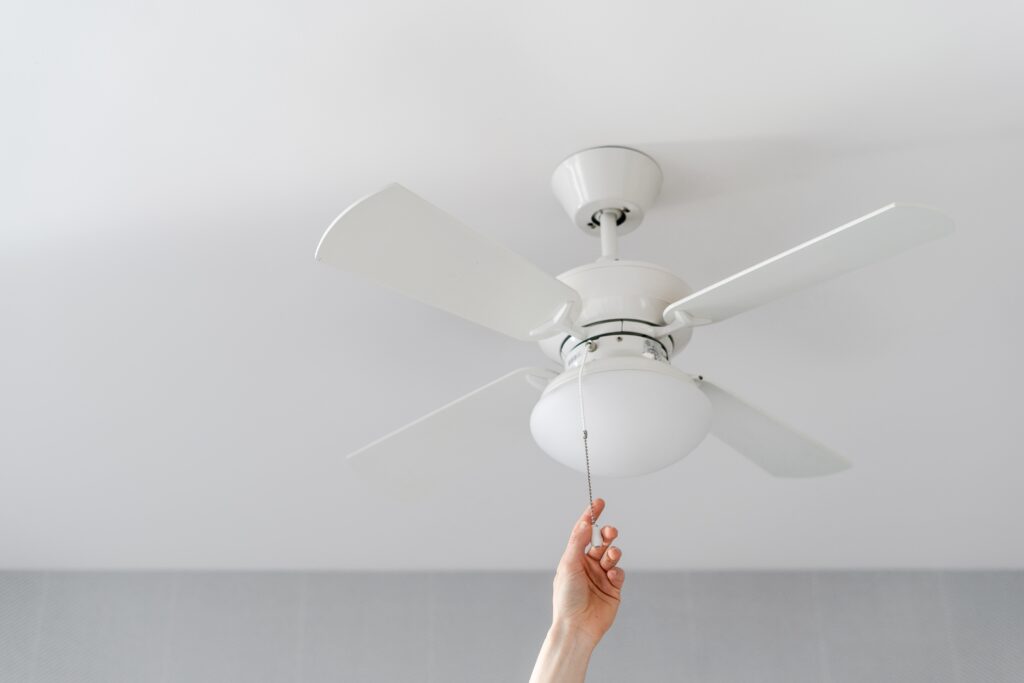
During hotter months, your ceiling fan should rotate counterclockwise. This allows it to push cooler air to a level where you can feel it.
If you run your ceiling fan at a high speed, you can typically increase the temperature you set on your thermostat to reduce AC usage.
Actual costs depend on your location, project scope, and materials. The best way to know what you'll pay is to get quotes from local contractors.
Get Your Free Estimate →Need professional help with your project?
Get quotes from top-rated pros.
Find Local ProsTo determine if your ceiling fan is going in the right direction, stand directly underneath it. You should feel a rush of air from the fan if it’s going in the proper direction.
"We matched with a great contractor the same day. The whole process was easy and completely free."
Ceiling Fan Direction for Winter
In winter, you should reverse your ceiling fan blades to run clockwise. Cold air is denser than warm air, so warm air naturally rises.
When you reverse the blades, the warm air is forced down to your level, so you can feel comfortable and not use your HVAC system as much. Unlike in the summer, you’ll run your clockwise blades at the lowest speed. This ensures the warm air gets to you without causing a cold air draft from the fan speed.
Using your ceiling fan in reverse is especially important if you have vaulted ceilings. With much more room for hot air to rise, your furnace must work harder. The ceiling fan, however, pushes the warm air down and helps lower your heating bills.
Ceiling Fan Direction for Specific Rooms
While the standard ceiling fan rules change from winter to summer, there are some exceptions for specific rooms:
- Dining rooms in summer: Keep your fan on low or medium. The highest setting can cause your food to cool too fast.
- Outside: If you have a ceiling fan on your porch, run it on high speed counterclockwise year-round unless you have very cold winters. The circulation will keep your porch cool and keep the bugs away.
- Home office or other area with paperwork: If you have a lot of paperwork out, keep your fan at low to medium speed. The highest speed will have you chasing paperwork all over the room.
- Vaulted ceilings: Fortunately, you don’t have to do a ceiling fan direction switch if you have vaulted ceilings. They are set high enough that you likely won’t feel the ‘wind chill’ from the counterclockwise direction in the summer.
Why Hire a Licensed Professional
- Licensed & insured — protects you from liability
- Warranty coverage — manufacturers require pro installation
- Code compliance — avoids permit issues
- Faster completion — pros finish in days, not weeks
Factors to Consider
When deciding which direction and speed to run your ceiling fan, consider these factors:
- Size of the room: The larger the room is, the larger the fan you’ll need. You may also need to run it at higher speeds to keep the entire room at a comfortable temperature.
- Ceiling height: The lower your ceilings, the lower the speed you can run your fan. A high or vaulted ceiling requires a higher speed, but you generally don’t have to change it throughout the year.
- Personal preference: A high-speed fan cools rooms the most in the summer, but if you don’t care for the wind chill, you may choose to run it at a slower speed.
- AC and Furnace use: How much you use your AC and furnace also determines how much you need your ceiling fans. Proper use of your fans may decrease the need for AC and furnace use and energy bills.
DIY vs. Professional: At a Glance
Conclusion
The right ceiling fan direction can significantly impact your home’s comfort and energy usage. Simply using a ceiling fan in summer mode (counterclockwise) at high speed can reduce the time you use your AC while running it clockwise in cooler months can help keep your home warmer.
Spring and summer are the busiest seasons for home improvement projects — top-rated contractors book up fast. Lock in your estimate now before demand peaks.
Check Availability in Your Area →Check Out Additional HVAC Resources
- R-22: Understanding Changes to HVAC Refrigerant
- Ideal Humidity Level for Your Home
- Thermostat Replacement Cost
Ready to Move Forward?
Tell us about your project and get matched with up to 3 pre-screened contractors. Compare quotes, check reviews, and hire with confidence.
Sources
Connect with top-rated local contractors who can help you with siding, roofing, HVAC, windows, and more. Get free quotes from verified professionals in your area today.