

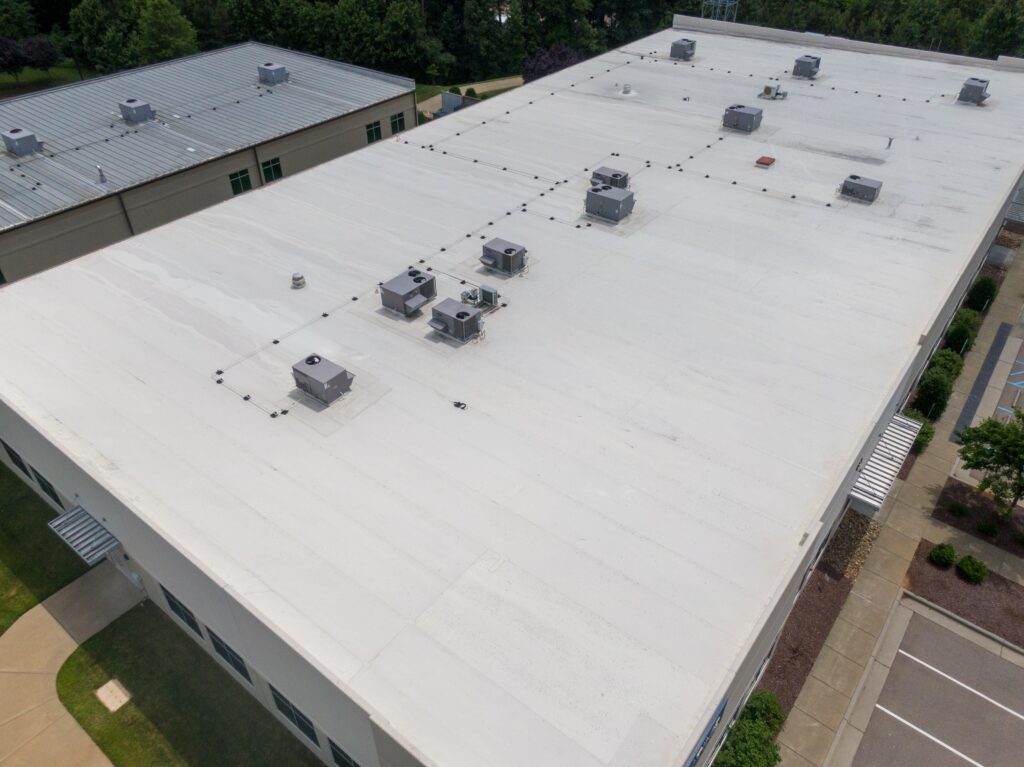
If your flat or low-slope roof is due for a replacement, TPO roofing is likely on your short list. It is the fastest-growing single-ply membrane in the commercial roofing market, and for good reason. TPO combines energy efficiency, solid durability, and a lower price point than most competing flat-roof materials. A typical TPO roof costs $4 to $10 per square foot installed and lasts 15 to 30 years depending on membrane thickness, climate, and maintenance.
But TPO is not perfect for every building or every budget. Installation quality matters enormously, the technology is still relatively young, and lower-grade membranes have a history of premature failures. This guide covers what TPO roofing actually is, what it costs, how long it lasts, how it is installed, and how it stacks up against PVC and EPDM so you can decide whether it belongs on your property.
What Is TPO Roofing?
TPO is a single-ply roofing membrane made from thermoplastic polyolefin, a blend of polypropylene and ethylene-propylene rubber.
TPO stands for thermoplastic polyolefin. It is a synthetic roofing membrane designed for flat and low-slope roofs on both commercial and residential buildings. The material comes in large rolls, typically 6 to 12 feet wide and 100 feet long, and is heat-welded at the seams to form a continuous, watertight surface.
Inside each TPO sheet is a scrim-reinforced layer, a woven fabric mesh that acts as the structural backbone of the membrane. This reinforcement gives TPO its tear and puncture resistance. The top layer includes UV blockers and compounds designed to resist weathering, while the bottom layer bonds to the roof’s insulation or substrate.
Common TPO Specifications
TPO membranes are available in several thicknesses, measured in mils (one mil equals one-thousandth of an inch). The most common options for residential and commercial projects include:
| Thickness | Typical Use | Relative Cost |
|---|---|---|
| 45 mil | Budget residential, low-traffic roofs | Lowest |
| 60 mil | Standard residential and light commercial | Moderate |
| 80 mil | Commercial, higher foot traffic | Higher |
| 90 mil | Heavy commercial, maximum durability | Highest |
Thicker membranes generally last longer and resist punctures better, but the thickness above the scrim matters more than the total mil count. An 80-mil sheet with a thin top layer may not outperform a well-balanced 60-mil membrane.
TPO typically comes in white, light gray, or tan. White is the most popular because it reflects UV rays and reduces cooling costs, which is a major reason TPO qualifies for ENERGY STAR ratings.
Actual costs depend on your location, project scope, and materials. The best way to know what you'll pay is to get quotes from local contractors.
Get Your Free Estimate →How Much Does TPO Roofing Cost?
TPO roofing costs $4 to $10 per square foot installed, with materials alone running $1.00 to $2.50 per square foot before labor.
The total cost of a TPO roof depends on several factors beyond just the membrane itself. Here is a breakdown of where the money goes.
"We matched with a great contractor the same day. The whole process was easy and completely free."
Cost Breakdown by Component
| Component | Cost Per Square Foot |
|---|---|
| TPO membrane (material only) | $1.00 to $2.50 |
| Polyiso insulation boards | $0.50 to $3.00 |
| Labor | $2.50 to $4.50 |
| Old roof removal (if needed) | $1.00 to $2.00 |
| Flashing and penetrations | $0.25 to $1.00 |
For a 1,500-square-foot flat roof, total installed costs typically fall between $6,000 and $15,000. A 2,500-square-foot commercial roof might run $10,000 to $25,000 depending on complexity.
What Drives TPO Roof Pricing Up or Down
Several factors can push your project toward the higher or lower end of that range.
Membrane thickness is the most direct cost lever. A 60-mil system costs significantly less than an 80-mil or 90-mil build, but thinner membranes may need replacement sooner. Attachment method also plays a role. Ballasted systems (held down by gravel or pavers) cost less than mechanically fastened systems, which cost less than fully adhered systems. Fully adhered installations are the most expensive but provide the strongest wind uplift resistance.
Roof accessibility, the number of penetrations (vents, skylights, HVAC units), and whether the old roofing material needs to be removed all affect labor costs. Multi-story buildings and roofs with complex layouts take longer to install and cost more per square foot.
Pro Tip: Don’t choose a TPO membrane based on price alone. Cheaper, thinner membranes from lesser-known manufacturers have a documented history of premature cracking and seam failure. Spending more on a quality 60-mil membrane from a reputable brand like Carlisle, GAF, Firestone, or Versico often saves money over the roof’s lifetime.
If you are weighing this investment against other home improvements, comparing the return on investment for roofing projects can help you prioritize.
How Long Does a TPO Roof Last?
A properly installed TPO roof lasts 15 to 30 years, with premium membranes and consistent maintenance pushing toward the upper end.
TPO’s lifespan depends on four main variables: membrane thickness and quality, installation workmanship, climate exposure, and how consistently the roof is maintained.
Lifespan by Membrane Quality
Manufacturer warranties offer a useful proxy for expected longevity. Most TPO manufacturers offer tiered warranty programs based on system build and thickness:
- 10-year warranties are common for basic, thinner systems
- 15- to 20-year warranties cover mid-range builds with 60-mil membranes
- 20- to 30-year warranties apply to premium systems using 80-mil or thicker membranes with enhanced detail work
These warranties are not automatic. They require certified installation, documented inspections, and adherence to manufacturer specifications for maintenance and repairs. The National Roofing Contractors Association (NRCA) recommends biannual professional inspections to maintain warranty compliance and catch problems early.
Why Hire a Licensed Professional
- Licensed & insured — protects you from liability
- Warranty coverage — manufacturers require pro installation
- Code compliance — avoids permit issues
- Faster completion — pros finish in days, not weeks
What Shortens a TPO Roof’s Life
Poorly welded seams are the most common cause of early TPO failure. If the heat-welding temperature or speed is off during installation, seams can separate within a few years. Ponding water, chemical exposure from rooftop HVAC equipment, and unauthorized repairs using non-approved sealants also accelerate deterioration.
Regular inspections, clear drainage, and prompt repair of minor damage are the simplest ways to protect your investment. If you are planning a replacement, knowing how to prepare your home for a roof replacement will help the process go smoothly.
How Is TPO Roofing Installed?
TPO installation involves preparing the roof deck, laying insulation, rolling out the membrane, heat-welding seams, and finishing with flashing.
TPO is not a DIY project. The installation requires specialized hot-air welding equipment, precise temperature control, and experience with single-ply membrane systems. Here is what the process looks like when done correctly.
DIY vs. Professional: At a Glance
Step-by-Step Installation Process
1. Roof Deck Preparation. The existing surface must be clean, dry, and structurally sound. If there is an old roofing system in place, it is usually removed down to the deck. Any damaged decking is repaired or replaced before anything else happens. Knowing the cost to replace roof decking can help you budget for this step if your deck shows signs of rot or deterioration.
2. Insulation Installation. Rigid insulation boards, usually polyisocyanurate (polyiso), are laid over the deck and mechanically fastened. This layer provides thermal performance and creates a smooth, stable base for the TPO membrane.
3. Membrane Rollout. TPO sheets are unrolled across the roof perpendicular to the deck and left to relax for approximately 30 minutes. This allows the material to acclimate to ambient temperatures and prevents wrinkles or shrinkage after installation.
4. Membrane Attachment. The membrane is secured using one of three methods: mechanical fasteners (screws and plates), adhesive (bonding agent applied to both the membrane and substrate), or ballast (gravel or pavers weighing the membrane down). The choice depends on building codes, wind uplift requirements, roof structure, and budget.
5. Heat Welding Seams. This is the most critical step. Overlapping edges of adjacent TPO sheets (typically a 6-inch overlap) are fused together using a hot-air welder operating at roughly 900°F. When done correctly, the welded seam is stronger than the membrane itself. When done poorly, it is the most likely point of failure.
6. Flashing and Edge Detailing. TPO flashing is installed around every roof penetration, including vents, pipes, skylights, and HVAC curbs. Proper flashing prevents water from entering at transitions between the membrane and vertical surfaces. Understanding the basics of roof flashing installation helps you evaluate a contractor’s work.
7. Final Inspection. A thorough inspection checks seam integrity, flashing adhesion, drainage function, and overall membrane condition. Many manufacturers require a third-party or manufacturer inspection before activating extended warranties.
Warning: Improper heat-welding is the leading cause of TPO roof failure. Always verify that your contractor has specific experience with TPO systems and uses calibrated welding equipment. Asking the right questions before hiring a roofing contractor can prevent costly mistakes.
Spring and summer are the busiest seasons for home improvement projects — top-rated contractors book up fast. Lock in your estimate now before demand peaks.
Check Availability in Your Area →What Are the Pros of TPO Roofing?
TPO offers strong energy efficiency, competitive pricing, and durable heat-welded seams that outperform adhesive-based alternatives.
TPO has earned its market share for several practical reasons.
- Energy efficiency. The white, reflective surface bounces UV rays and heat away from the building. This reduces cooling costs during warm months and qualifies TPO for ENERGY STAR and Cool Roof Rating Council (CRRC) ratings. For properties looking to reduce overall energy consumption, this pairs well with other home energy saving strategies.
- Lower cost than PVC. TPO typically costs 25% to 35% less than PVC roofing while offering comparable energy performance. For budget-conscious property owners, this cost advantage is significant.
- Strong seam integrity. Heat-welded TPO seams are three to four times stronger than the adhesive or taped seams used on EPDM rubber roofs. This welded bond resists separation even under thermal cycling and wind stress.
- Chemical and environmental resistance. TPO resists mold, algae, and dirt buildup without requiring pressure washing. It also performs well against ozone and moderate UV exposure.
- Flexibility. The ethylene-propylene rubber component allows TPO to expand and contract with temperature changes without cracking. This makes it effective in climates with significant seasonal temperature swings.
- Recyclable. TPO membranes can be recycled at end of life, which makes them a more environmentally responsible choice than some alternatives.
What Are the Cons of TPO Roofing?
TPO’s limited performance history, inconsistent product quality across brands, and vulnerability to chemical exposure are its biggest drawbacks.
No roofing material is without tradeoffs, and TPO has several that deserve honest consideration.
- Shorter track record. TPO has been in commercial use since the early 1990s. Compared to EPDM (50+ years) and PVC (40+ years), the long-term performance data is still limited. Some early TPO formulations failed prematurely, and manufacturers continue refining their chemistry.
- Inconsistent quality across brands. Not all TPO is created equal. Cheaper manufacturers may use thinner top layers, lower-grade UV stabilizers, or less durable scrim reinforcement. These differences are not always obvious from product specifications alone.
- Limited chemical resistance. TPO does not perform well when exposed to grease, cooking oils, or harsh industrial chemicals. Restaurants, manufacturing facilities, and buildings with rooftop kitchen exhaust should consider PVC instead.
- Specialized repair requirements. TPO repairs require hot-air welding equipment and trained technicians. You cannot patch a TPO roof with a tube of sealant the way you might with some other materials. This can make small repairs more expensive and harder to schedule.
- Puncture vulnerability under heavy traffic. While TPO handles occasional foot traffic well, roofs with frequent maintenance access or heavy rooftop equipment see more puncture damage. Walkway pads should be installed in high-traffic areas.
If your building has conditions that TPO handles poorly, alternatives like metal roofing or built-up systems may be a better fit.
Ready to Move Forward?
Tell us about your project and get matched with up to 3 pre-screened contractors. Compare quotes, check reviews, and hire with confidence.
How Does TPO Compare to PVC and EPDM?
TPO costs less than PVC and reflects heat better than EPDM, but PVC offers superior chemical resistance and EPDM has a longer track record.
When shopping for a flat-roof membrane, TPO is usually compared against two main alternatives. Here is how they stack up.
| Feature | TPO | PVC | EPDM |
|---|---|---|---|
| Cost (per sq ft installed) | $4 to $10 | $6 to $14 | $4 to $10 |
| Lifespan | 15 to 30 years | 20 to 30+ years | 20 to 30+ years |
| Seam Method | Heat-welded | Heat-welded | Adhesive/tape |
| Energy Efficiency | High (reflective) | High (reflective) | Low (absorbs heat) |
| Chemical Resistance | Moderate | High | Low |
| Track Record | ~30 years | ~40 years | ~50 years |
| Common Color | White | White | Black |
When to Choose Each Material
Choose TPO when you want a reflective, energy-efficient membrane at the lowest cost. It works well on retail centers, schools, office buildings, and residential flat roofs in moderate climates.
Choose PVC when the roof will be exposed to grease, oils, or chemical exhaust. Restaurants, manufacturing plants, and buildings with industrial rooftop equipment benefit from PVC’s superior chemical resistance. PVC also has a longer performance history than TPO, though it costs more.
Choose EPDM when cold-climate durability matters most and energy efficiency is less of a priority. EPDM’s black surface absorbs heat, which helps melt snow and ice in northern regions. It also has the longest track record of the three membranes. However, its adhesive seams are weaker than the heat-welded seams of TPO and PVC.
Before committing to any membrane, make sure you understand what to include in a roofing contract so your warranty, material specifications, and workmanship standards are documented.
Is TPO Roofing Right for Your Property?
TPO is best suited for flat or low-slope roofs where energy efficiency, budget constraints, and seam durability are top priorities.
TPO makes the most sense when several conditions align. The roof is flat or has a low slope. Energy costs during cooling season are a concern. The budget does not stretch to PVC pricing. And the building does not have rooftop conditions that demand specialized chemical resistance.
For residential flat roofs, a 60-mil TPO system from a reputable manufacturer is a strong all-around choice. For commercial properties, 80-mil systems with fully adhered attachment provide the best combination of longevity and wind resistance.
The single most important factor in TPO performance is installation quality. A premium membrane installed by an inexperienced crew will underperform a mid-grade membrane installed by a certified, experienced contractor. Always verify that your installer has specific TPO certification from the membrane manufacturer and carries adequate insurance.
If you are still deciding between roofing options, understanding whether a new roof increases home value can help you frame the decision as both a protective investment and a financial one. And if you are not sure where to start with finding the right installer, these tips for finding the right contractor are a practical starting point.
Ready to explore your options? Connect with experienced roofing contractors in your area through MyHomePros to get quotes on TPO and other flat-roof systems.
Connect with top-rated local contractors who can help you with siding, roofing, HVAC, windows, and more. Get free quotes from verified professionals in your area today.