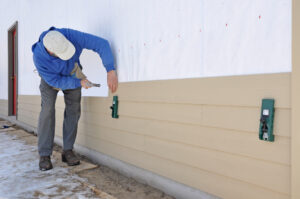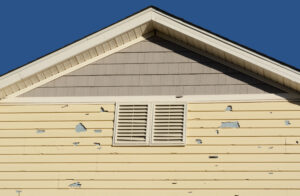

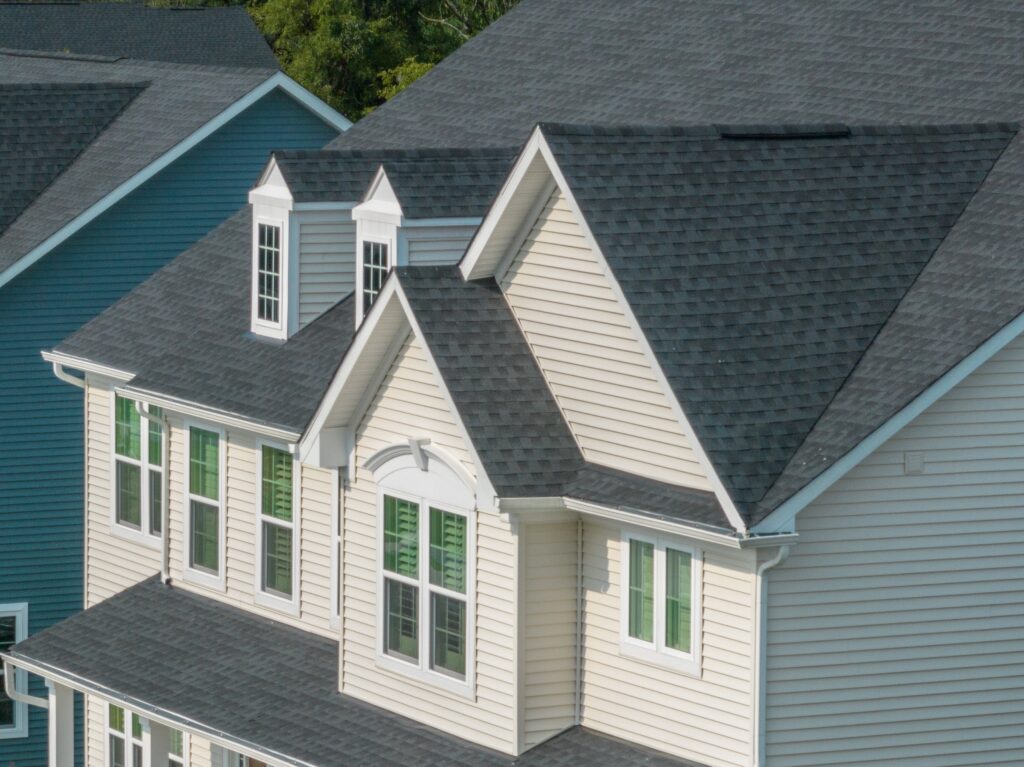
Old or damaged siding is more than a cosmetic issue. Cracks, gaps, and warping let in water and pests, which can lead to mold, rot, and costly structural repairs. The longer you wait, the bigger the risk to your home.
The good news is that siding replacement doesn’t have to drain your savings. Financing options make it possible to spread the project cost into manageable monthly payments, so you can protect your home without putting too much strain on your budget.
In this guide, we’ll cover the most common ways to finance a siding project and help you decide which option makes the most sense for your home and your finances.
Why Siding Financing Matters
New siding protects your home and boosts curb appeal, but it is also one of the largest exterior projects most homeowners face. Deciding how to pay for it is just as important as choosing the right material.
Rising costs
The cost of siding has continued to rise in recent years. Materials such as vinyl and fiber cement are more expensive due to strong demand and supply chain challenges. Labor costs add to the expense, with contractors typically charging $40 to $90 per hour or $2 to $7 per square foot. For a 2,000-square-foot home, that brings the total project cost in 2025 to roughly $12,000 to $25,000, a price that can put real strain on most household budgets.
Financing Vs. Cash
Paying in cash means avoiding interest, but it also ties up savings you might need for unexpected expenses. Financing allows you to move forward with the project while keeping that safety net in place. It also gives you the chance to replace siding before it leads to bigger problems like water damage or pest issues.
Financing can open the door to better materials as well. Instead of limiting yourself to basic vinyl, you may be able to choose options like insulated vinyl or fiber cement. These upgrades add durability, improve energy efficiency, and may help lower utility bills over time. Converting one large expense into predictable monthly payments also makes it easier to plan around your household budget.
Long-term returns
The Remodeling 2024 Cost vs. Value Report shows that siding replacement can recoup up to 80 percent of its cost at resale, making it one of the strongest home improvement projects for return on investment. Beyond resale value, new siding improves insulation, eases the load on your HVAC system, and can lower energy bills. These long-term benefits help offset the cost of financing and make siding replacement easier to view as an investment in your home rather than just another expense.
Siding Financing Options for Homeowners
There are several ways to cover the cost of new siding, and understanding these choices makes it easier to find the financing option that fits your project. Here are the most common ones and how they work.
1. FHA 203(k) loan
An FHA 203(k) loan is a government-insured mortgage designed for homes in need of updates. You can refinance your existing loan or buy a fixer-upper and roll the siding costs into your mortgage. The amount you can borrow is based on your home’s post-renovation value, up to 110%.
Loan limits vary by county but generally follow FHA limits. These range from about $498,000 to $1.1 million in 2025. You’ll need a minimum credit score of 580 and at least 3.5% equity.
- Pros: Combines mortgage and renovation into one monthly payment. Offers access to larger sums than many personal loans. Backed by the FHA, making approval easier for moderate-credit borrowers.
- Cons: Requires working with FHA-approved lenders and contractors. More paperwork and longer closing times than other loans. Must follow FHA rules about eligible improvements.
2. FHA Title I loan
FHA Title I Loans are designed to provide financing for essential home improvements that increase a property’s livability. You can borrow up to $25,000 for a single-family home, regardless of your current equity. These loans are offered through private lenders but insured by the federal government.
Repayment terms range from 6 months to 20 years. You may qualify with weaker credit than a conventional loan requires, and sometimes even without existing equity.
- Pros: Can qualify if you have little or no home equity. Lower credit barriers than traditional loans. Can be combined with an FHA 203(k) for more funding.
- Cons: Loan amounts are capped at $25,000. Only available through approved lenders. Interest rates may be higher than refinances or HELOCs.
3. Cash-out refinance
A cash-out refinance replaces your current mortgage with a larger one. The new loan pays off your existing mortgage, and you pocket the difference in cash. That money can be used for siding or other expenses.
Most lenders limit you to 80% loan-to-value (LTV). If your home is worth $400,000 and you owe $200,000, you could potentially borrow up to $320,000. This would give you $120,000 in cash.
- Pros: Interest rates are often lower than unsecured loans. Repayment is spread across the duration of your mortgage. May let you deduct mortgage interest on taxes. You should consult a tax advisor.
- Cons: You’ll pay closing costs, usually 2%–6% of the loan amount. Extends or resets your mortgage term. Approval can take several weeks.
4. Home equity line of credit (HELOC)
A HELOC is a revolving credit line secured by your home equity. You can borrow, repay, and borrow again during the draw period, which typically lasts 5 to 10 years. After that, you enter a repayment period of 10 to 20 years.
Loan amounts are usually up to 85% of your home’s value, minus your existing mortgage. Interest rates are variable, meaning your payment could change.
- Pros: Flexible. You borrow only what you need, when you need it. Lower rates than personal loans or credit cards. Interest may be tax-deductible if used for home improvements.
- Cons: Variable rates can make budgeting difficult. Requires discipline to avoid overspending. Your home is collateral, so missed payments risk foreclosure.
5. Home equity loan
Unlike a HELOC, a home equity loan gives you a one-time cash payout. Repayment comes in fixed monthly installments over 5 to 30 years.
Borrowing limits typically reach 80%–85% of your home’s value, minus your mortgage balance. Rates are fixed, which adds predictability.
- Pros: Predictable monthly payments. Lower rates than personal loans or credit cards. Good for projects with a clear, upfront cost like siding.
- Cons: Adds a second monthly payment on top of your mortgage. Puts your home at risk if you default. Less flexible than a HELOC if project costs change.
6. Personal loan
Personal loans are unsecured, meaning you don’t put your home at risk. Approval is based on credit and income. Many lenders fund loans in as little as one business day.
Loan amounts often range from $1,000 to $100,000, with repayment terms of 1 to 7 years. Interest rates are higher than mortgage products but lower than credit cards if you have good credit.
- Pros: No collateral required. Fast approval and funding. Fixed payments make budgeting easier.
- Cons: Higher rates for borrowers with fair or poor credit. Shorter repayment terms mean higher monthly payments. Maximum loan sizes may not cover large siding projects.
7. Contractor financing
Many siding contractors partner with lenders to offer in-house financing. The contractor sets up the application process. This often makes it easier to secure funding at the same time you sign for the project.
Some plans include promotional offers such as 0% interest for 12 months. However, these are often deferred-interest deals. This means you may owe back interest if the balance isn’t cleared during the promotional period.
- Pros: Quick and convenient approval. No need to shop separately for financing.
- Cons: Rates after promotions can be very high. Less transparent than shopping for your own loan. May lock you into working with one contractor.
8. Credit card
Credit cards are the easiest way to finance siding but also the most expensive if you carry a balance. Some cards offer 0% introductory APR periods, typically lasting 12 to 21 months. This can make short-term borrowing more affordable.
- Pros: No application delays if you already have available credit. Unsecured, so your home isn’t at risk. Useful for bridging small gaps in funding.
- Cons: High interest rates if you carry a balance beyond the promo period. Easy to overspend and get caught in revolving debt. Not realistic for larger siding projects.
How to Qualify for a Siding Loan
Getting approved for a loan is all about showing the lender you can handle the payments. They’ll primarily focus on three main things.
Credit Score
A higher credit score shows you have a good track record of paying your bills. To get the best rates on a personal loan, you’ll want a score of 720 or higher. But you can often qualify with a score in the mid-600s. For a home equity loan, lenders usually look for a score of at least 660.
Debt-to-Income (DTI) Ratio
Your DTI is just the total of all your monthly debt payments divided by your gross monthly income. Lenders want to see that you have plenty of room in your budget for a new loan payment. A debt-to-income ratio below 36% is great.
Gather Your Documents
Make the application process a breeze by getting your paperwork ready ahead of time. You’ll probably need these items:
- Recent pay stubs
- W-2 forms from the last two years
- Your latest federal tax returns
- Bank statements
- A copy of your driver’s license
- For a home equity loan, you’ll also need your mortgage statement and your homeowners insurance policy.
Tips for Choosing the Right Financing Option
Paying for siding is a big commitment. The right financing choice depends on your credit, your budget, and how comfortable you are with different types of loans. Here are some practical steps to guide you.
1. Assess Your Financial Profile
Your credit score has a big influence on the loans you can get and the rates you’ll be offered. Higher scores often mean better terms. Lower scores may make FHA or contractor financing more realistic. Checking your score before you apply helps you know what to expect.
Next, look at your budget. Figure out how much room you have each month for a new payment without stretching yourself too thin. Online loan calculators can show you how different amounts and interest rates translate into monthly costs.
If you’re thinking about a home equity loan or a HELOC, it also helps to know how much equity you’ve built up. Subtract what you owe on your mortgage from your home’s estimated value. Most lenders will let you borrow up to about 80% to 85% of that number.
2. Compare Loan Offers
It pays to shop around. Local banks and credit unions may give loyal customers competitive rates. Online lenders often move faster, especially with personal loans. Contractors may pitch their own financing, but you’ll want to compare that against outside options before deciding.
When you compare, don’t just look at the interest rate. The annual percentage rate, or APR, includes fees and gives you a clearer picture of the total cost. A loan with a slightly higher rate but no fees can be cheaper than one with a low rate and high upfront costs.
3. Read the Fine Print
Whether the loan has a fixed or variable rate matters. Fixed rates, common with personal and home equity loans, mean your payment won’t change. Variable rates, often used for HELOCs, can start low but climb over time. This makes your payment less predictable.
Think about the length of the loan, too. A longer repayment period brings the monthly payment down but increases the total interest you’ll pay. A shorter loan saves money overall but puts more pressure on your budget each month. And always ask whether there’s a penalty for paying it off early.
If you’re considering contractor financing with a 0% promotion, look closely at the terms. Some offers truly waive interest, but others defer it. In those cases, failing to pay off the balance before the promo ends could leave you on the hook for all the interest that’s been building from day one.
4. Match the Loan to Your Project
If your siding project has a set cost and you know the total upfront, a personal loan or a home equity loan gives you a lump sum with predictable payments. If the costs might change or the work will happen in phases, a HELOC is useful because you can draw funds as needed.
Loans tied to your home usually come with lower rates. But they carry more risk if you miss payments. Unsecured loans don’t put your house at stake, but you’ll likely pay more in interest.
Conclusion
The right financing for your siding replacement project makes it easier to manage without putting unnecessary strain on your budget. Think of the process in two steps. First, get a clear picture of the total cost by collecting estimates from local contractors. Ask for a detailed breakdown of labor, materials, and timing so you can compare each quote on equal terms.
Once you know the cost, turn your focus to financing. Review loan offers carefully and look beyond the interest rate. Consider fees, repayment terms, and whether the monthly payment will fit comfortably into your budget.
From there, choose the financing option that matches your needs. The best choice is the one that fits your household budget while allowing you to move forward with the siding upgrade your home deserves.

Anna has over six years of experience in the home services and journalism industries and serves as the Content Manager at MyHomePros.com, specializing in making complex home improvement topics like HVAC, roofing, and plumbing accessible to all. With a bachelor’s degree in journalism from Auburn University, she excels in crafting localized, comprehensive guides that cater to homeowners’ unique needs. Living on both coasts of the United States has equipped her with a distinctive perspective, fueling her passion for turning any house into a cherished home through informed, personalized decision-making.
Connect with top-rated local contractors who can help you with siding, roofing, HVAC, windows, and more. Get free quotes from verified professionals in your area today.