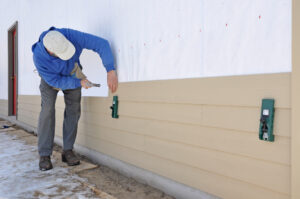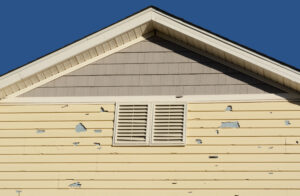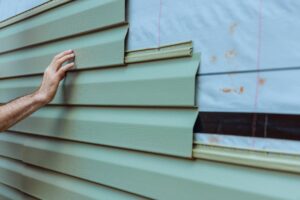

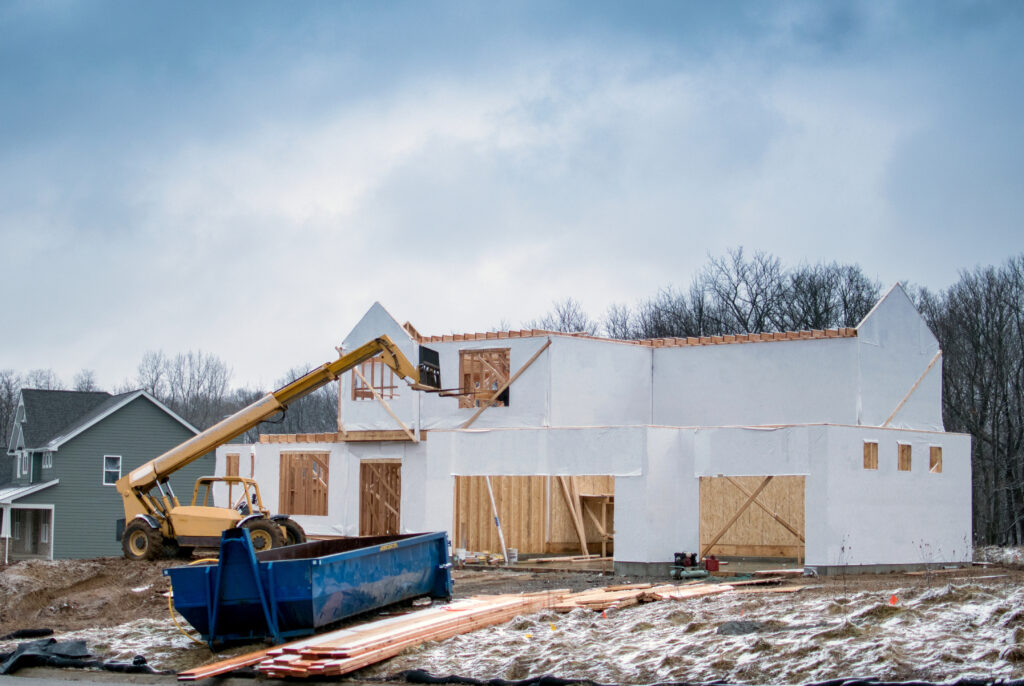
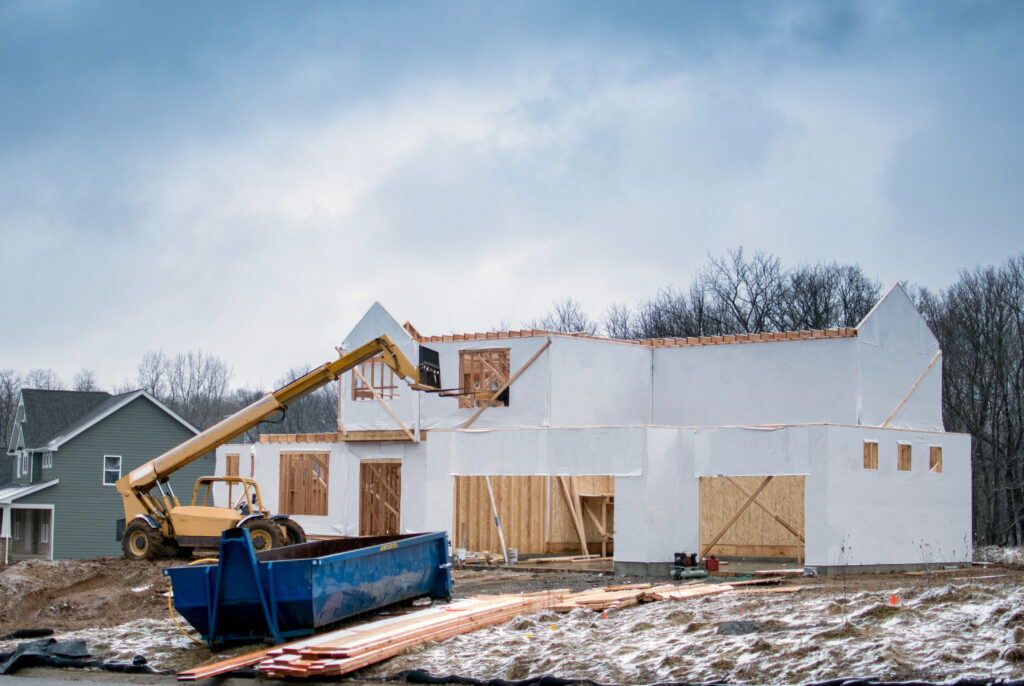
Rain, wind, and air pressure can push moisture through the small seams and gaps in an exterior wall. Trapped moisture leads to problems such as rot, mold, and weakened structure. Weather-resistant barriers (WRBs) provide a protective layer beneath siding, blocking water and air while allowing vapor to escape.
The two most common WRBs are asphalt-saturated felt paper and synthetic house wrap. Both serve the same purpose, but they differ in durability, permeability, ease of installation, and cost. Knowing how these materials compare makes it easier to choose the right option for your home.
What Is House Wrap?
House wrap is a synthetic, weather-resistant barrier used to protect buildings from moisture and air infiltration. This fabric-like material is installed over the sheathing and behind the exterior siding during construction or renovation. It functions as a critical secondary line of defense for a home, working in tandem with the siding to prevent damage from the elements.
Key Functions Of House Wrap
- Keeps water out: The primary job of house wrap is to shed bulk water from rain, snow, and condensation that gets past the exterior cladding. This prevents moisture from reaching the wall assembly, which can cause mold, mildew, and rot.
- Allows vapor to escape: Unlike solid plastic, house wrap is designed to be vapor-permeable, or “breathable”. This allows moisture vapor from inside the wall cavity to dry to the outside, preventing it from becoming trapped and causing damage.
- Acts as an air barrier: When properly sealed at the seams, house wrap reduces air leakage through the wall. By creating a tighter building envelope, it helps improve a home’s energy efficiency and reduces drafts.
- Adds a layer of durability: House wrap helps extend the lifespan of a home’s siding and framing by minimizing exposure to moisture and wind. It is also designed to be tear-resistant, withstanding tough jobsite conditions.
Types Of House Wrap
House wrap has evolved from the older, heavier asphalt-saturated felt paper and comes in several modern forms.
- Spun-bonded polyolefin: This is one of the most common types, made from fine, continuous, high-density polyethylene (HDPE) fibers spun into a nonwoven sheet. DuPont’s Tyvek is a popular brand of this kind.
- Woven polyolefin: Made from woven polyethylene or polypropylene, this type is often stronger and more tear-resistant than nonwoven alternatives and is well-suited for high-wind areas.
- Drainable house wrap: These feature a textured or embossed surface that creates a small gap between the house wrap and the siding. This allows water to drain away more efficiently and promotes faster drying behind the siding.
- Self-adhered membranes: Also known as “peel-and-stick” wraps, these are membranes with a sticky backing that provides excellent sealing capabilities. They are especially useful around windows and doors where a tight seal is critical.
What Is Felt Paper?
Felt paper, also known as tar paper or asphalt-saturated paper, is a traditional weather-resistant barrier installed behind exterior siding. It is a durable paper or fiberglass mat that is saturated with asphalt to make it water-resistant. For decades, it was the standard way to protect a home’s sheathing and framing from moisture and air leaks.
Key Functions Of Felt Paper
Felt paper’s primary role is to serve as a secondary line of defense against moisture.
- Water repellent: If water, such as from wind-driven rain, gets past the siding, the felt paper will shed it away from the wall sheathing. This prevents the moisture from causing rot and mold within the wall cavity.
- Vapor permeable: Although it repels liquid water, felt paper allows water vapor to pass through. This “breathability” allows moisture from inside the wall assembly to dry to the exterior, which is critical for preventing rot and mildew.
- Weather protection during construction: It protects the wall sheathing from the elements before the final siding is installed.
- Provides a uniform surface: It helps to create a smoother, more even surface for the siding to be installed over, which can improve the final appearance.
Common Weights For Felt Paper
Felt paper for walls is typically available in two weight grades, though modern weights are not as heavy as they once were.
- 15-pound felt (Type 1): This is the lighter-duty and more common grade for wall applications.
- 30-pound felt (Type 2): This is a thicker, heavier-duty version that offers more protection and durability. It is often specified for applications that need higher performance.
Choosing The Right Underlayment For Your Project
Choosing between house wrap and felt paper depends on your priorities for moisture protection, durability, ease of installation, and cost. While house wrap is the modern, higher-performing option, felt paper remains a functional and sometimes preferable choice in certain conditions.
House Wrap vs. Felt: Feature-By-Feature Comparison
| Feature | House Wrap (Synthetic) | Felt Paper (Asphalt-Saturated) |
| Moisture Protection | Breathable and water-resistant. It effectively sheds liquid water while being highly vapor-permeable, which allows trapped moisture vapor to escape the wall cavity. Some modern house wraps even feature drainage channels to promote faster drying. | Less breathable but still functional. While a proven barrier against liquid water, felt paper is less vapor-permeable, though its permeability increases when it gets wet, which can promote drying. |
| Durability | Superior tear resistance and UV protection. Made from synthetic polymers, house wrap is highly resistant to ripping and tearing during installation and exposure to high winds. Most house wraps can also withstand several months of UV exposure before siding is installed. | Prone to damage. Felt paper is heavier and can tear more easily, especially in high winds and cold weather. Prolonged UV exposure during construction can cause it to degrade and become brittle. |
| Installation Ease | Lightweight and easy to handle. House wrap comes in large, lightweight rolls (up to 10 feet wide), making it fast and easy to install with fewer seams. It also remains flexible in cold weather. | Heavy and labor-intensive. Felt paper comes in smaller, heavy rolls (typically 3 feet wide), making installation more cumbersome. It can also become stiff and more difficult to work with in cold temperatures. |
| Cost Comparison | Higher upfront cost, but cost-effective over time. While the price per square foot can be higher, house wrap’s faster installation, lower risk of tearing during construction, and long-term durability can result in better overall value. | Lower upfront cost, but can be less cost-effective. Felt paper typically has a lower initial material cost. However, the added labor for installation and risk of needing repairs can sometimes make it more expensive in the long run. |
| Energy Efficiency | Higher performance for air-sealing. When properly taped at the seams, house wrap is a very effective air barrier, which is a key factor in improving a building’s energy efficiency. It helps reduce air leaks, keeping conditioned air inside and drafts out. | Less effective air barrier. Because it’s installed with more and narrower seams, felt paper is not as effective as a synthetic house wrap in reducing air infiltration. An energy-efficient assembly would require extensive sealing of seams, which is standard with house wrap. |
| Code Compliance | Favored in modern construction. Building codes now commonly allow approved “equivalent” synthetic house wraps in place of traditional felt. High-performance, vapor-permeable house wraps are often preferred, especially in climates with high moisture loads. | Still code-compliant, but less common. Felt paper is still a code-approved option as long as it meets performance standards like ASTM D 226. However, many modern building practices favor house wrap’s superior performance. |
When to Choose House Wrap
Choosing house wrap is often the best option for modern construction, especially in wet or humid climates, when prioritizing durability, energy efficiency, and ease of installation. While felt paper remains a code-compliant alternative, house wrap offers several performance advantages that align with modern building science principles.
- Modern Construction and Energy Efficiency: The preferred choice for new, energy-efficient homes.
- Wet or Humid Climates: Its superior breathability and drainage options make it ideal for managing moisture.
- Long-Term Durability: For projects prioritizing a durable, long-lasting weather-resistant barrier.
- Complex Siding Applications: High-performance versions, especially drainable ones, are excellent behind moisture-sensitive cladding like wood.
When to Choose Felt Paper
While synthetic house wraps are now the modern standard for many applications, felt paper remains a suitable, budget-friendly, and sometimes preferential choice in specific scenarios, particularly in drier climates or for certain traditional construction projects.
- Budget-Conscious Projects: If minimizing upfront material costs is the main priority.
- Historical Restorations: To maintain consistency with the original construction.
- Certain Siding Types: Some traditional stucco applications still prefer felt paper for its chemical resistance.
- Dry Climates: In drier areas with minimal rain and humidity, felt paper provides adequate protection.
Best Practices For A Successful Installation
Regardless of the material chosen, proper installation is mandatory for ensuring long-term weather resistance and preventing moisture damage.
- Prepare the Surface: Ensure the wall sheathing is clean and dry before starting.
- Bottom-Up Installation: Start at the bottom of the wall and overlap courses in a “shingle style” to direct water down and away.
- Overlap Correctly: Overlap horizontal seams by at least 6 inches and vertical seams by 6 to 12 inches.
- Seal Penetrations: Tape all seams in house wrap and use flashing tape to seal around every opening, including pipes, vents, and windows.
- Flash Windows and Doors: Install flashing tape to the sill first, then the jambs, and finally the head, ensuring each layer overlaps the one below it. Never tape the bottom flange, as this can trap water.
Does Building Code Require House Wrap?
Building codes generally require a weather-resistant barrier (WRB), which can be either house wrap or felt paper.
The International Residential Code requires a WRB to protect the wall assembly from moisture. While it mentions No. 15 felt as a minimum standard, it also allows for other approved materials that pass specific performance tests for water holdout and vapor permeability.
Building Code requirements can vary by location. Some local codes may specify particular standards or even prefer one type of barrier over another. Always consult your local building authority to confirm regulations for your area.
While both materials can meet code, modern best practices in construction often favor synthetic house wrap for its superior performance in air-sealing, moisture management, and durability.
FAQs
Do I Need A Weather Barrier Under Vinyl Siding?
Yes. Even though vinyl siding is waterproof, the seams can let water through. A WRB (house wrap or felt) is required by modern building codes as a crucial second layer of defense.
Can You Put Siding Directly On Studs?
No. Siding requires a rigid sheathing (like plywood or OSB) for a flat installation and a secure surface for fasteners. The WRB is then applied over the sheathing.
Is Felt Cheaper Than House Wrap?
Felt paper is usually cheaper than synthetic house wrap when you look at the upfront material cost. On the surface, this can make it seem like the more economical option. But the real expense of using felt often shows up in labor and long-term performance.
Because felt is heavier and comes in smaller rolls, installation tends to be slower and more labor-intensive. That added time translates into higher labor costs for the overall project. On top of that, felt is more vulnerable to damage. It tears more easily during installation, and exposure to sun and moisture can make it brittle or cause it to fail over time.
Synthetic house wraps, by comparison, are lighter, easier to handle, and built for greater durability. While the initial price is higher, their efficiency during installation and resistance to wear often make them a more cost-effective choice in the long run.
Which Lasts Longer Under Siding?
Synthetic house wrap generally lasts longer due to its superior durability, resistance to tearing, and UV protection. Felt paper is more prone to degradation over time, especially from UV exposure during construction.
Conclusion
Both house wrap and felt paper are critical weather-resistant barriers that protect your home from moisture. For most modern projects, synthetic house wrap is the better choice due to its higher durability, easier installation, and better overall performance, especially in wet or humid climates. However, felt paper remains a suitable, budget-friendly option for certain traditional applications or projects in drier climates.
The choice between house wrap and felt paper often depends on your specific budget, location, and project goals. The most important factor for any successful project is proper installation, which requires experience and attention to detail.
Before making a final decision, consult a local siding contractor for guidance. They can assess your home, consider your local climate and building codes, and recommend the best option for your project.

Anna has over six years of experience in the home services and journalism industries and serves as the Content Manager at MyHomePros.com, specializing in making complex home improvement topics like HVAC, roofing, and plumbing accessible to all. With a bachelor’s degree in journalism from Auburn University, she excels in crafting localized, comprehensive guides that cater to homeowners’ unique needs. Living on both coasts of the United States has equipped her with a distinctive perspective, fueling her passion for turning any house into a cherished home through informed, personalized decision-making.
Connect with top-rated local contractors who can help you with siding, roofing, HVAC, windows, and more. Get free quotes from verified professionals in your area today.