


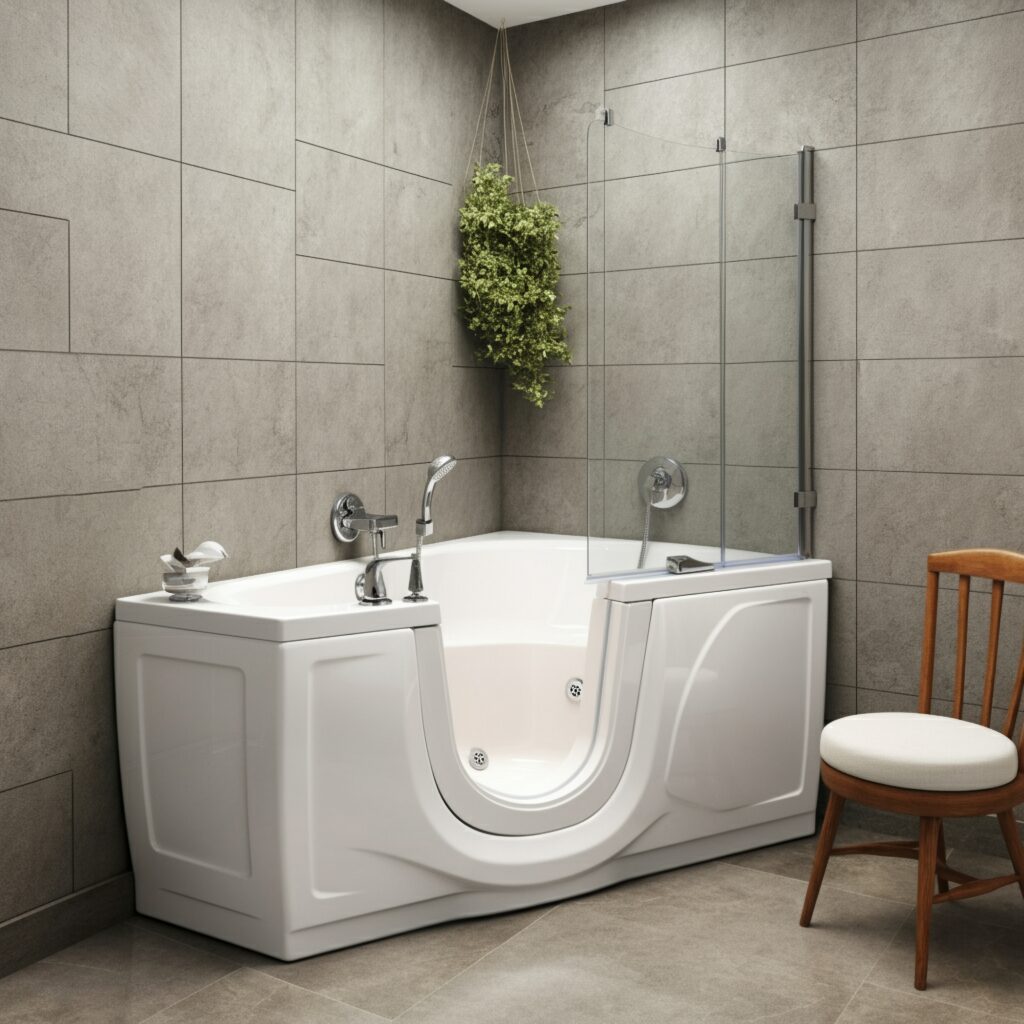

Thinking about installing a walk-in tub? Walk-in tubs are a great upgrade if you’re looking for more safety, comfort, and accessibility in your bathroom. Whether you’re planning ahead for aging in place or just want a more relaxing soak without the hassle of stepping over a high tub wall, these tubs check a lot of boxes.
But before installation day rolls around, a little prep goes a long way. Making sure your bathroom is ready can help avoid delays, unexpected costs, and stress.
From checking your plumbing to clearing space, we’ll walk you through everything you need to do to get your bathroom set for a smooth and successful install.
Table of Contents
Evaluate Your Current Bathroom Layout
Before your new walk-in tub shows up at your door, it’s important to make sure it’ll actually fit—not just in your bathroom, but through the door, around the corner, and into place. Start by measuring the available space where your current tub or shower sits. Then compare those measurements to the dimensions of the walk-in tub you’re planning to install. Walk-in tubs can be a bit bulkier than standard tubs, so it’s better to know now than deal with a surprise later.
Next, take a good look around the room. Are there any obstacles in the way? Check for nearby vanities, toilets, shelving, windows, or weird angles that could interfere with placing the tub where you want it. Even things like towel racks or light switches might need to be moved if they’ll be hard to reach once the tub is in.
Actual costs depend on your location, project scope, and materials. The best way to know what you'll pay is to get quotes from local contractors.
Get Your Free Estimate →Need professional help with your project?
Get quotes from top-rated pros.
Find Local ProsAnd don’t forget to think about how the tub opens. Many walk-in tubs have doors that swing either inward or outward, so you’ll want to make sure there’s enough clearance for that door to open fully without bumping into anything. Entry and exit should feel easy and safe—not cramped or awkward. Taking the time to map this all out now will save you a major headache on installation day.
Check Plumbing and Electrical Requirements
Once you’ve figured out where your walk-in tub is going, it’s time to make sure your bathroom’s plumbing and electrical setup are ready for it. Walk-in tubs aren’t exactly “plug and play”—they often come with built-in features like jets, heated seats, and fast-fill systems that require a bit more behind-the-scenes support.
First, check if your current water supply and drain lines match up with the tub’s requirements. If your new tub’s hookups don’t line up with your old ones, a plumber may need to reroute some pipes. You’ll also want to be sure your water heater can handle the job—walk-in tubs usually hold more water than standard ones.
Then there’s the electrical side. If your tub includes any powered features—like air jets, whirlpool settings, or a heated backrest—it’ll likely need a dedicated electrical line. That means you might need to add a new outlet or upgrade your bathroom’s wiring to safely handle the load.
Not sure what you’re looking at? That’s totally normal. This is where bringing in a professional is a smart move. A licensed plumber or electrician can quickly tell you what’s needed and help you avoid any installation-day surprises.
"We matched with a great contractor the same day. The whole process was easy and completely free."
Remove Existing Bathtub or Shower
Before your shiny new walk-in tub can move in, the old tub or shower has to go—and that part can get a little messy. During the removal process, installers will typically turn off the water supply, disconnect plumbing, and then cut out or break apart your existing tub or shower to get it out of the space. Depending on how your current setup was installed, this can take a couple of hours to a full day.
Once the old fixture is out, you might discover a few hidden surprises. Sometimes the drywall behind the tub is water-damaged or moldy, or the subfloor underneath is a little worse for wear. That’s not unusual, especially in older homes. It just means you might need some light repairs before the new walk-in tub can be safely installed. It’s a good idea to build in a little wiggle room in your schedule and budget.
There may also be a gap of time between when the old tub comes out and when the walk-in tub is ready to go in, especially if you’re waiting on delivery or scheduling with a contractor. If your bathroom is your main one, it’s worth making a short-term plan—whether that’s using a second bathroom in the house, showering at the gym, or staying with a friend or family member for a night or two.
Demolition is the not-so-glamorous part of the process, but it’s necessary to make room for the upgrade. Just be prepared for a bit of dust, noise, and maybe a drywall patch or two.
Reinforce Flooring if Necessary
Walk-in tubs are built for comfort and safety—but they’re also pretty hefty, especially when you factor in all the water and, of course, the person using it. A filled walk-in tub can easily weigh several hundred pounds, so it’s important to make sure your bathroom floor can handle the extra load.
If your home has an older subfloor or if your bathroom is on an upper level, reinforcement might be needed to keep things stable and safe. You don’t want the tub to settle unevenly or cause stress on the floor over time. A squeaky floor or any give when you walk over the area could be a red flag.
Before installation, take a moment to check for any signs of water damage or soft spots in the floor around your current tub. If the subfloor feels spongy or looks discolored, there may be hidden moisture issues that need fixing before your new tub goes in. It’s one of those “better safe than sorry” situations—addressing it now will save you from much bigger problems down the line.
If you’re not sure what to look for or you suspect the floor may need support, bring in a contractor or handyman to take a look. They can assess whether reinforcement is needed and handle any repairs quickly so your bathroom is strong and ready for your new walk-in tub.
Make Room for Accessibility
One of the biggest perks of a walk-in tub is making your bathroom safer and easier to use—but to really get the full benefit, you might need to make a few adjustments to the space around it.
If you live in an older home, chances are your bathroom door is on the narrow side. Walk-in tubs can be bulky, and the person using it may need extra room to get in and out—especially if mobility is a concern. In some cases, you may need to widen the doorway to meet accessibility needs or even just to get the tub through on installation day. It’s not a huge renovation, but it’s worth checking ahead of time so there are no surprises.
Next, take a look at the floor space in front of where the tub will go. Is there enough room to move around safely? You’ll want a clear path—free of rugs, storage baskets, or other obstacles—so it’s easy to enter and exit the tub without tripping or squeezing through tight spots. If a wheelchair or walker is in the picture, that extra space is even more important.
This is also a great time to think about additional safety features. Grab bars near the tub, non-slip flooring, and even a handheld showerhead can make a big difference in comfort and confidence. Some homeowners even go a step further and install ADA-compliant fixtures to help future-proof their space.
Small adjustments can make a huge impact when it comes to accessibility. It’s all about creating a bathroom that feels welcoming, functional, and safe.
Why Hire a Licensed Professional
- Licensed & insured — protects you from liability
- Warranty coverage — manufacturers require pro installation
- Code compliance — avoids permit issues
- Faster completion — pros finish in days, not weeks
Prep for Temporary Disruptions
Any home upgrade comes with a little disruption, and walk-in tub installation is no different. It’s totally manageable, but it helps to go in with a plan so you’re not caught off guard.
First, expect your bathroom to be out of commission for at least a couple of days. The timeline depends on a few things—like whether your old tub needs to be removed, if plumbing or electrical work is required, or if any repairs pop up once demo begins. In some cases, the entire process could be done in a day or two, but it’s always better to plan for a few days just in case.
If this is your only bathroom, you’ll want to think about alternative options. Can you use a friend’s or neighbor’s shower? Maybe set up a temporary routine at the gym or stay with family for a night or two? It’s not ideal, but it makes the whole process a lot less stressful if you have a backup in place.
The most important thing? Talk to your installer ahead of time. Ask for a clear timeline, find out what prep you can do in advance, and confirm how long your bathroom will be out of use. Good communication can help set expectations and prevent last-minute surprises.
Final Checklist Before Installation Day
You’re almost there—your walk-in tub is on the way, and installation day is just around the corner! Now’s the time to tie up those last few loose ends so everything goes smoothly when the crew shows up.
First, confirm your delivery and installation details. It might seem obvious, but double-checking the date and time with your installer helps avoid any last-minute confusion. If the tub is being delivered separately from the crew doing the install, make sure you know who’s showing up when and that someone’s home to receive it.
Next, clear the work area. That means removing rugs, hampers, decorative items, or anything else that could get in the way. If your bathroom connects to a tight hallway or has limited access, make sure those spaces are clear too—installers may need to maneuver large parts and tools through them. The easier it is for them to get in and out, the faster and smoother the job will go.
Lastly, make sure all the paperwork is in order. Depending on where you live, you might need a permit for plumbing or electrical work, and some HOAs require pre-approval for major home changes—even if they’re inside your house. It’s a good idea to double-check just to be safe. A quick call to your local permitting office or HOA can save you a lot of hassle and possibly fines.
Once that’s all taken care of, you can sit back, relax, and get ready to enjoy the comfort and peace of mind your new walk-in tub will bring.
DIY vs. Professional: At a Glance
FAQs
Do I need a professional plumber or electrician?
In most cases, yes—and honestly, it’s a smart move. Walk-in tubs usually require some plumbing adjustments, and may also need electrical hookups for features like jets or heated seating. Unless you’re extremely confident in your skills and have experience with home renovations, calling in a licensed plumber or electrician helps ensure everything’s up to code, safe, and done right the first time. It can also save you money in the long run by avoiding mistakes or redos.
Spring and summer are the busiest seasons for home improvement projects — top-rated contractors book up fast. Lock in your estimate now before demand peaks.
Check Availability in Your Area →Can I install a walk-in tub in a small bathroom?
Absolutely—walk-in tubs come in a variety of sizes, and many are specifically designed for compact spaces. If you have a smaller bathroom, you may need to get a little creative with your layout, but that doesn’t mean it’s off the table. Some tubs are made to fit into standard alcove tubs, and others can be customized to suit tighter spaces. Just be sure to take accurate measurements and work with an installer who’s familiar with small-space solutions.
Ready to Move Forward?
Tell us about your project and get matched with up to 3 pre-screened contractors. Compare quotes, check reviews, and hire with confidence.
How long does the full process take?
It depends on a few factors—like whether your old tub needs to be removed, if there’s any floor or plumbing repair, and how complex the new installation is. In general, you can expect the full process to take anywhere from one to three days. The actual installation might be just a few hours, but if you need prep work or adjustments to plumbing or electrical, you’ll want to allow some extra time.
Conclusion
Installing a walk-in tub is a big step toward making your home safer, more comfortable, and future-ready—but a smooth install starts with solid prep. Taking the time to check your layout, update plumbing or electrical (if needed), and clear the space ahead of time can make all the difference.
Don’t be afraid to ask questions, get a few estimates, and lean on the pros when needed. With a little planning and the right team by your side, you’ll be soaking in your new walk-in tub in no time—stress-free, and totally worth it.
Additional Walk-In Tub Resources
Connect with top-rated local contractors who can help you with siding, roofing, HVAC, windows, and more. Get free quotes from verified professionals in your area today.