

If you’re looking for a window that’s practical, energy efficient, and a little different from the usual styles, awning windows are definitely worth a look. They’re not always the first option homeowners think of, but in the right spots, they can make a big impact.
In this awning windows guide, we’ll break down what they are, how they work, and where they make the most sense.
What Are Awning Windows?
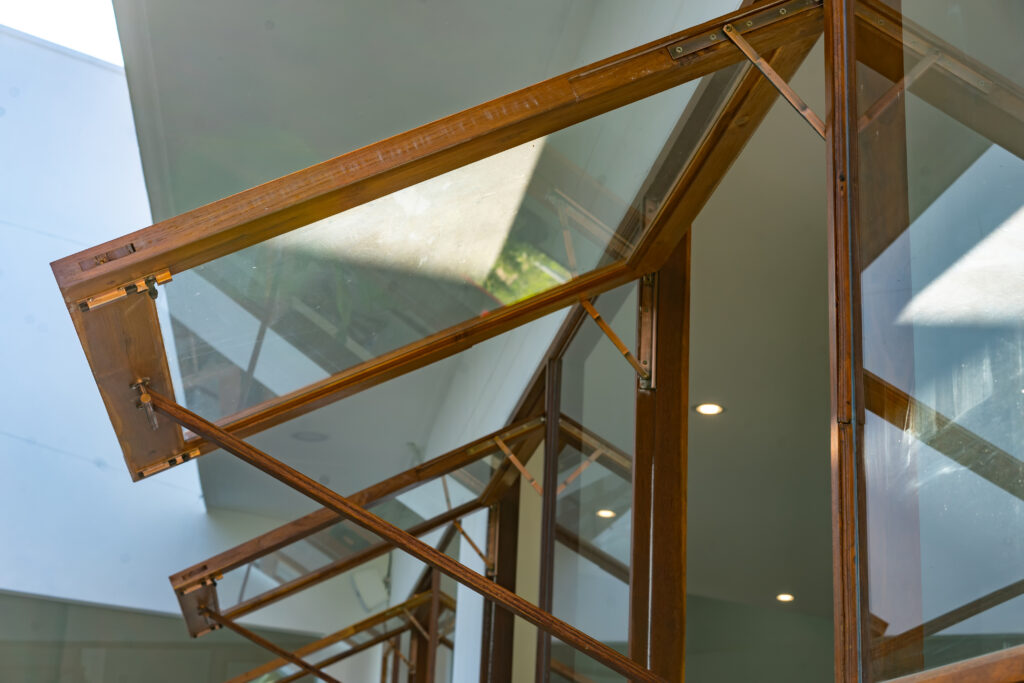
Awning windows are hinged at the top and open outward from the bottom. When they’re open, the glass creates a sort of “awning” effect.
Unlike casement windows (which open from the side) or sliding windows (which move horizontally), awning windows tilt outward at an angle. This makes them especially useful in places where you want ventilation without worrying too much about the weather.
You’ll often see awning windows used in bathrooms, basements, or paired with larger fixed windows to add airflow.
How Awning Windows Work
Awning windows typically open and close using a crank handle. Turn the crank, and the bottom of the window pushes outward while the top stays hinged in place.
One of the biggest benefits of this design is airflow. Because of the angle, awning windows can let fresh air in while helping keep rain out.
When closed, they form a tight seal against the frame, which helps reduce drafts and improve energy efficiency. Most models also have screens on the inside, making them easy to manage from indoors.
Actual costs depend on your location, project scope, and materials. The best way to know what you'll pay is to get quotes from local contractors.
Get Your Free Estimate →Pros of Awning Windows
One of the biggest advantages of awning windows is their ability to provide ventilation in almost any weather. Since they open outward from the bottom, light rain is less likely to blow inside, which means you can keep them open more often.
They’re also known for being energy efficient. Like casement windows, awning windows seal tightly when closed, helping keep cool air in and hot air out, especially important in warmer climates.
Another reason homeowners like them is their versatility. They’re a great solution for smaller or hard-to-reach spaces, like above cabinets or in bathrooms where privacy matters.
They also offer a clean, modern look and work well when combined with other window styles, especially larger picture windows that don’t open on their own.
Cons of Awning Windows
Awning windows aren’t perfect for every situation. Because they tend to be smaller, they don’t offer the same wide, unobstructed views you’d get with larger window styles.
They also open outward, which can be an issue if they’re placed near walkways, patios, or areas with heavy foot traffic. You’ll want to think carefully about placement to avoid any awkward clearance issues.
Another limitation is that they’re usually not suitable for emergency egress, so they’re not the best choice for bedrooms where building codes require a larger opening.
And like any window with moving parts, the crank and hinges may need occasional maintenance over time.
"We matched with a great contractor the same day. The whole process was easy and completely free."
Where Awning Windows Work Best in a Home
Awning windows really shine in specific areas of the home where other window types might not work as well.
Bathrooms are one of the most common spots since they allow ventilation while still maintaining privacy. Basements are another great fit because awning windows can work well in smaller openings and still let in fresh air.
You’ll also see them in kitchens, especially above cabinets or countertops, where a traditional window might be harder to operate. In some designs, they’re paired with large fixed windows to add airflow without sacrificing the view.
Laundry rooms and utility spaces are also great candidates since they benefit from improved ventilation in a compact design.
Awning Windows vs. Other Window Types
Compared to casement windows, the main difference comes down to how they open. Casement windows swing out to the side, while awning windows tilt outward from the bottom. That slight difference makes awning windows better for rainy conditions, while casement windows tend to offer more airflow.
Sliding windows, on the other hand, don’t require any exterior space to open, which can be an advantage in tight areas. But they don’t seal as tightly, so they’re usually less energy efficient.
Double-hung windows are more traditional and often easier to clean, but they don’t provide the same level of airflow or weather protection as awning windows.
Common Awning Window Materials
Like most windows, awning windows come in a variety of materials, each with its own pros and cons.
Vinyl is one of the most popular choices because it’s affordable, low maintenance, and energy efficient. It’s a solid all-around option for most homeowners.
Fiberglass is more durable and holds up well in extreme temperatures. It tends to cost more upfront but can offer better long-term performance.
Wood provides a classic look and good insulation, but it requires more maintenance—especially in humid or rainy environments.
Aluminum and composite frames are also available and are often used in more modern designs. Just keep in mind that aluminum can transfer heat more easily unless it’s designed with thermal breaks.
Glass and Energy Efficiency Features to Consider
If you want to get the most out of your awning windows, the glass package is just as important as the frame.
Look for features like double-pane or triple-pane glass, Low-E coatings to reflect heat, and gas fills like argon to improve insulation. These upgrades can make a noticeable difference in both comfort and energy bills.
ENERGY STAR® rated windows are also a good indicator that the window meets performance standards for your climate.
Why Hire a Licensed Professional
- Licensed & insured — protects you from liability
- Warranty coverage — manufacturers require pro installation
- Code compliance — avoids permit issues
- Faster completion — pros finish in days, not weeks
How Much Do Awning Windows Cost?
Awning window cost can vary depending on size, materials, and installation.
In general, you can expect to pay:
- Around $300 to $800+ per window for materials
- Around $600 to $1,200+ per window installed
Smaller sizes and simpler designs tend to be more affordable, while premium materials and glass upgrades will increase the price.
What Affects Installation Cost?
Installation costs depend on a few key factors. Replacing an existing window is usually more straightforward than installing one in a new opening.
Other factors include the condition of the wall or frame, whether any structural work is needed, and how easy the window is to access. Interior and exterior finishing details can also impact the final cost.
DIY vs. Professional: At a Glance
Are Awning Windows Energy Efficient?
Yes, awning windows are generally considered very energy efficient.
Because they close tightly against the frame, they do a good job of preventing air leaks. When paired with energy-efficient glass, they can help keep your home cooler in the summer and more comfortable year-round.
As always, proper installation plays a big role in how well they perform.
Are Awning Windows Secure?
Awning windows are typically quite secure. Many models include strong locking mechanisms that pull the window tightly into the frame.
Their placement, often higher on walls, also adds an extra layer of security since they’re less accessible from the outside.
Spring and summer are the busiest seasons for home improvement projects — top-rated contractors book up fast. Lock in your estimate now before demand peaks.
Check Availability in Your Area →Do Awning Windows Require Maintenance?
Maintenance is pretty straightforward. You’ll want to keep the glass clean, check the seals occasionally, and make sure the crank and hinges are functioning properly.
If anything wears out over time, replacement parts are usually easy to find and install.
Signs It’s Time to Replace Awning Windows
Like any window, awning windows don’t last forever. Some common signs it may be time for a replacement include drafts, difficulty opening or closing, or condensation between the panes.
You might also notice visible damage to the frame or hardware, or rising energy bills that point to poor insulation.
Ready to Move Forward?
Tell us about your project and get matched with up to 3 pre-screened contractors. Compare quotes, check reviews, and hire with confidence.
How to Choose the Right Awning Windows
Choosing the right awning windows comes down to how and where you plan to use them. Think about the room, how much ventilation you want, and how the window will fit into your overall design.
It’s also important to consider your climate, maintenance preferences, and budget. Comparing materials and glass options can help you find the right balance between performance and cost.
Final Thoughts
Awning windows are a smart, versatile option, especially for spaces where ventilation and weather protection matter most. They may not be the largest or most eye-catching windows, but they’re incredibly functional in the right places.
If you’re planning a window upgrade, it’s worth considering how awning windows could fit into your overall design. With the right placement and features, they can add comfort, efficiency, and flexibility to your home.
FAQs About Awning Windows
What are awning windows best used for?
They’re ideal for bathrooms, basements, kitchens, and any space where you want ventilation without worrying about rain.
Are awning windows energy efficient?
Yes, they seal tightly and perform well when paired with energy-efficient glass.
Can awning windows be left open in the rain?
In light rain, yes. Their design helps keep water out.
How much do awning windows cost?
Most range from $600 to $1,200 installed, depending on size and materials.
Are awning windows good for basements?
Yes, they’re a great fit for smaller openings and can improve airflow.
Do awning windows need a lot of maintenance?
Not much, just occasional cleaning and basic hardware upkeep.
Connect with top-rated local contractors who can help you with siding, roofing, HVAC, windows, and more. Get free quotes from verified professionals in your area today.