

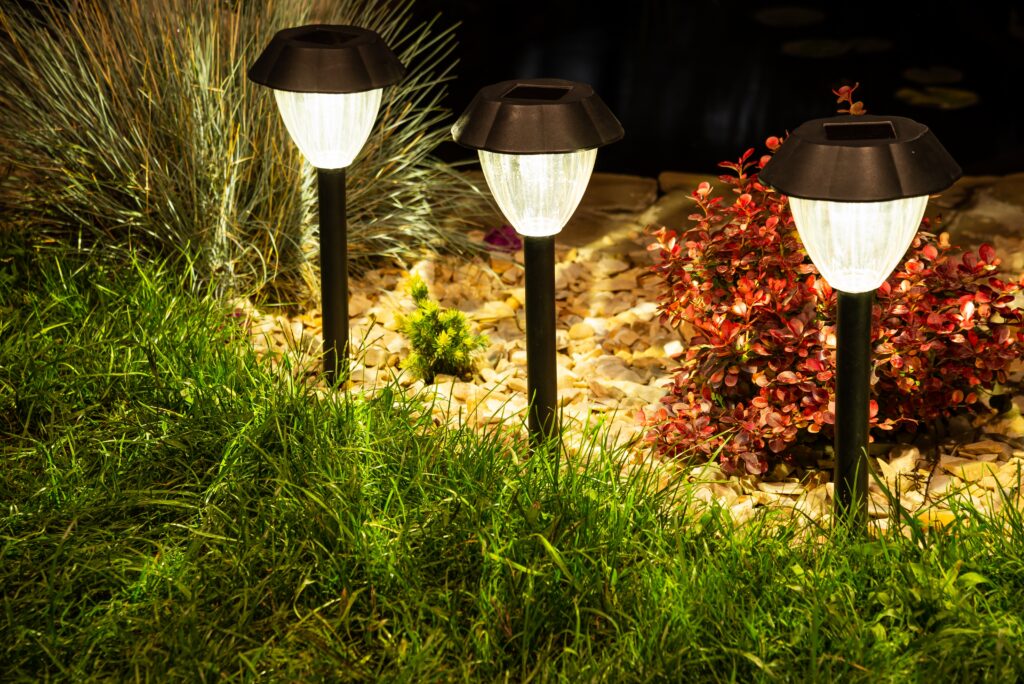
Solar lights are one of the easiest upgrades you can make around your home. They’re affordable, simple to install, and don’t add anything to your electric bill. Whether you’re lighting up a walkway, patio, or backyard, solar lighting is a low-maintenance way to boost both curb appeal and functionality.
If you’ve ever wondered how solar lights actually work, this guide breaks it all down in a practical way.
How Solar Lights Work
Solar lights are pretty straightforward once you understand the basics. Each light has a small solar panel that collects sunlight during the day and converts it into energy. That energy is stored in a rechargeable battery inside the unit.
At night, a built-in sensor detects darkness and automatically turns the light on, using the stored energy to power an LED bulb. When the sun comes back up, the process resets and starts charging again.
Most solar lights include four key components: the solar panel, a rechargeable battery, an LED light, and a sensor that controls when the light turns on and off.
Actual costs depend on your location, project scope, and materials. The best way to know what you'll pay is to get quotes from local contractors.
Get Your Free Estimate →Need professional help with your project?
Get quotes from top-rated pros.
Find Local ProsHow to Charge Solar Lights Properly
For solar lights to work well, proper charging is everything. When you first install them, it’s a good idea to let them charge in direct sunlight for a full day or two before expecting full performance.
Placement makes a big difference. Solar lights perform best in areas that get consistent, direct sunlight for most of the day. If they’re placed under trees, near fences, or in shaded corners, they won’t charge as efficiently and may appear dim or stop working altogether.
On cloudy days, solar lights will still charge, but not as much. And while you can place them under strong artificial light indoors, it’s not nearly as effective as real sunlight.
"We matched with a great contractor the same day. The whole process was easy and completely free."
How Long Do Solar Lights Last?
Most solar lights are designed to last several years, but different parts have different lifespans. The LED bulbs themselves can last for years, while the rechargeable batteries typically need to be replaced every one to three years.
How long your solar lights last really depends on quality, weather exposure, and how well they’re maintained. Cheaper lights may wear out faster, especially in areas with extreme heat, cold, or moisture.
Common Solar Light Problems (and How to Fix Them)
If your solar lights aren’t working the way they should, there’s usually a simple explanation.
One of the most common issues is lights not turning on at all. This is often caused by dead or worn-out batteries, or sometimes the switch being accidentally turned off. Replacing the battery is usually the quickest fix.
If your lights are dim or flickering, the solar panel might be dirty or not getting enough sunlight. A quick clean with a damp cloth can make a noticeable difference.
Charging issues are often tied to placement. If your lights aren’t getting enough sun during the day, they won’t have enough power to run at night. Moving them to a sunnier spot can solve the problem.
Water damage is another possibility, especially with older or lower-quality lights. If you notice corrosion or moisture inside the housing, it may be time to repair or replace the unit.
Why Hire a Licensed Professional
- Licensed & insured — protects you from liability
- Warranty coverage — manufacturers require pro installation
- Code compliance — avoids permit issues
- Faster completion — pros finish in days, not weeks
How to Maintain Solar Lights for Better Performance
The most important thing you can do is keep the solar panels clean. Dirt, dust, and pollen can block sunlight and reduce charging efficiency.
It’s also a good idea to check and replace rechargeable batteries as needed. Over time, batteries lose their ability to hold a charge, which can make your lights appear weak or inconsistent.
Seasonal checks help too. Before winter or after heavy storms, take a quick look at your lights to make sure everything is still sealed and functioning properly.
DIY vs. Professional: At a Glance
Tips to Get the Most Out of Your Solar Lights
To really maximize your solar lighting, focus on placement and upgrades. Position lights along pathways, driveways, and outdoor living areas where they’ll get plenty of sun and provide the most benefit at night.
Upgrading to higher-capacity rechargeable batteries can improve brightness and runtime. Some newer solar lights also come with adjustable settings, like motion sensors or brightness modes, which can help extend battery life.
Even small adjustments like angling the solar panel toward direct sunlight can improve performance.
Types of Solar Lights for Different Uses
There are a lot of solar lighting options available, and choosing the right type depends on your goals.
Path lights are great for walkways and landscaping, while flood lights and motion sensor lights work better for security. String lights are perfect for patios and outdoor entertaining, adding a softer, decorative feel.
Mixing different types of solar lights around your home can give you both function and style without increasing energy costs.
Spring and summer are the busiest seasons for home improvement projects — top-rated contractors book up fast. Lock in your estimate now before demand peaks.
Check Availability in Your Area →Are Solar Lights Worth It for Your Home?
For most homeowners, solar lights are absolutely worth it. They’re easy to install, require little upkeep, and can save money over time since they don’t rely on electricity.
They’re especially useful in areas where running wiring would be difficult or expensive. Plus, they’re an eco-friendly option that reduces energy use while still improving your outdoor space.
Ready to Move Forward?
Tell us about your project and get matched with up to 3 pre-screened contractors. Compare quotes, check reviews, and hire with confidence.
When to Replace vs. Repair Solar Lights
If your solar lights stop working, it’s often worth trying a quick fix first, like replacing the battery or cleaning the panel. These small updates can bring older lights back to life.
However, if the housing is damaged, the panel no longer charges, or performance has significantly declined, replacing the unit may be the better option. Newer solar lights tend to be more efficient and offer better brightness and features than older models.
Final Thoughts
Solar lights are one of the simplest ways to upgrade your home’s exterior. When they’re working properly, they provide reliable, energy-free lighting with minimal effort.
By placing them in the right spots, keeping them clean, and making small upgrades when needed, you can get the most out of your investment.
Connect with top-rated local contractors who can help you with siding, roofing, HVAC, windows, and more. Get free quotes from verified professionals in your area today.