


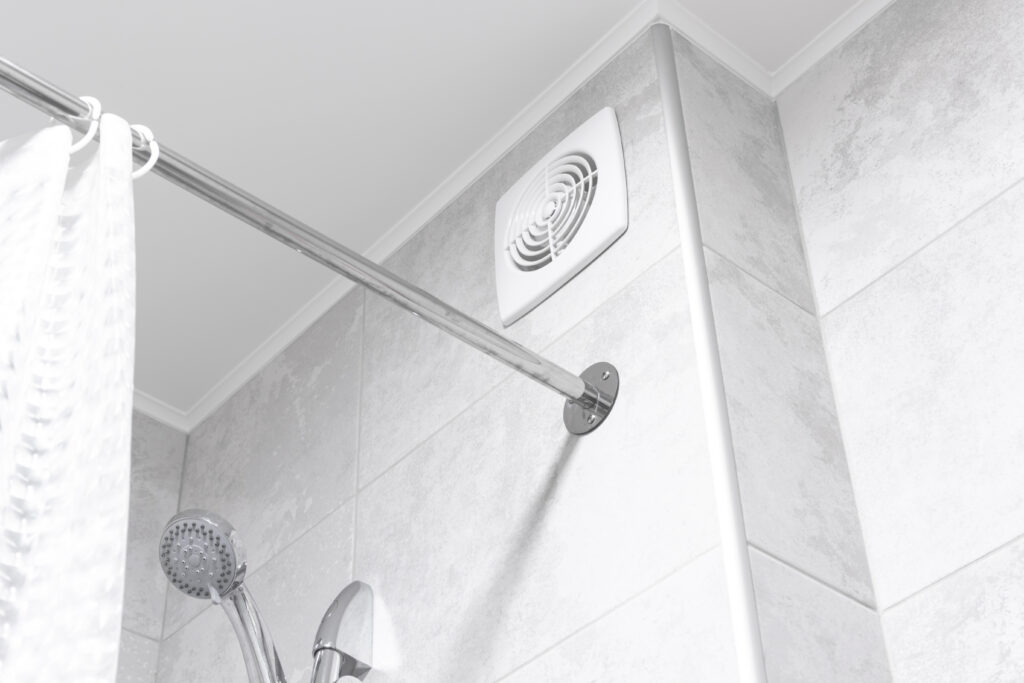
A bathroom without proper ventilation is a bathroom working against you. Every hot shower pumps gallons of moisture into the air, and that moisture has to go somewhere. When it stays trapped, it settles into drywall, warps cabinetry, peels paint, and feeds mold colonies that can spread through walls within weeks. The fix is almost always mechanical ventilation, specifically an exhaust fan sized correctly for your space and vented to the outdoors.
This guide covers how bathroom exhaust fans work, how to choose the right CFM rating, what venting options are available for different home layouts, and how humidity-sensing controls can automate the whole process. Whether you are planning a full bathroom renovation or just upgrading a fan that has not worked right in years, the information here will help you make a decision that protects both your health and your home.
Why Does Bathroom Ventilation Matter?
Proper bathroom ventilation prevents mold growth, structural damage, and poor indoor air quality caused by trapped moisture.
An average shower produces roughly half a pint of water vapor in just 10 minutes. Without ventilation, that moisture clings to every surface in the room. Over time, the consequences compound. Grout darkens. Ceiling paint bubbles and peels. Wood trim swells. And behind the surfaces you can see, moisture works its way into wall cavities where mold and mildew thrive in dark, damp conditions.
Beyond cosmetic damage, poor bathroom ventilation creates real health risks. The EPA identifies excess indoor moisture as one of the primary contributors to mold growth, which can trigger respiratory issues, allergic reactions, and worsen asthma symptoms. Bathrooms without adequate ventilation also trap volatile organic compounds (VOCs) from cleaning products, creating air quality problems that extend beyond the bathroom itself.
Building codes reflect how seriously this issue is taken. The International Residential Code (IRC) requires mechanical ventilation in any bathroom that lacks an operable window, and many local jurisdictions require exhaust fans regardless of whether a window exists. The rationale is simple: opening a window is unreliable. People forget, weather prevents it, and windows do not create the directed airflow needed to actually pull moisture out of the room.
What Size Exhaust Fan Does Your Bathroom Need?
Most bathrooms need at least 1 CFM per square foot of floor area, with a minimum of 50 CFM for any bathroom regardless of size.
CFM stands for cubic feet per minute, and it measures the volume of air an exhaust fan can move. Getting this number right matters. An undersized fan will run without actually clearing the moisture, which gives you the noise of ventilation without the benefit. An oversized fan wastes energy and can create uncomfortable negative pressure in the room.
The Home Ventilating Institute (HVI) recommends a simple formula for bathrooms under 100 square feet: 1 CFM per square foot of floor area. A standard 8-by-10-foot bathroom needs an 80 CFM fan. For bathrooms over 100 square feet, HVI recommends calculating based on the number of fixtures instead.
CFM Sizing by Fixture Count
For larger bathrooms, add CFM based on what the room contains.
| Fixture | Recommended CFM |
|---|---|
| Toilet | 50 CFM |
| Standard shower | 50 CFM |
| Bathtub | 50 CFM |
| Jetted tub | 100 CFM |
| Enclosed toilet room | 50 CFM (separate fan) |
A master bathroom with a separate toilet room, a shower, and a jetted tub would need at least 200 CFM of total exhaust capacity. You can achieve this with a single high-capacity fan or multiple smaller fans positioned near each fixture.
Actual costs depend on your location, project scope, and materials. The best way to know what you'll pay is to get quotes from local contractors.
Get Your Free Estimate →Ceiling Height Adjustments
Standard CFM calculations assume 8-foot ceilings. If your bathroom has 9- or 10-foot ceilings, multiply the base CFM by a ceiling factor: divide your actual ceiling height by 8 and apply that multiplier. A 70-square-foot bathroom with 10-foot ceilings would need roughly 88 CFM (70 x 1.25) rather than the standard 70 CFM.
Pro Tip: Always round up when choosing a fan size. A slightly oversized fan running on a lower speed setting will outperform an undersized fan running at full power, and it will be quieter too.
What Types of Bathroom Exhaust Fans Are Available?
Bathroom exhaust fans come in four main types: ceiling-mounted, wall-mounted, inline, and combination units with built-in lights or heaters.
Each type serves a different installation scenario. The right choice depends on your bathroom layout, duct routing options, and what additional features you want from the unit.
Ceiling-Mounted Fans
The most common type. These install directly into the ceiling and connect to ductwork that routes exhaust air through the attic or between floor joists to an exterior vent. They are available in a wide range of CFM ratings and noise levels, making them suitable for everything from a small half-bath to a large master bathroom. If you are remodeling your shower area, this is typically the fan type your contractor will recommend.
"We matched with a great contractor the same day. The whole process was easy and completely free."
Wall-Mounted Fans
Designed for bathrooms where ceiling installation is impractical, wall-mounted fans vent directly through an exterior wall. This eliminates the need for long duct runs and simplifies installation. They work well in situations where attic access is limited or where the bathroom sits on an exterior wall. The tradeoff is that they are more visible and offer fewer style options compared to ceiling models.
Inline Fans
Inline fans mount inside the ductwork itself rather than in the bathroom ceiling or wall. The fan unit sits in the attic or between joists, which makes the bathroom side nearly silent. A single inline fan can also serve multiple bathrooms through a branched duct system. This option is popular in higher-end renovations and in homes where noise is a primary concern, though it costs more than standard ceiling-mounted models.
Combination Units
Many modern exhaust fans include built-in LED lighting, heating elements, or both. Combination fan-light units are a practical choice when you want to consolidate ceiling fixtures. Fan-heater combinations add supplemental warmth, which is particularly useful in bathrooms that feel cold during winter months. Just make sure the CFM rating still meets your ventilation needs. The fan function should not be an afterthought to the light or heater.
How Loud Are Bathroom Exhaust Fans?
Fan noise is measured in sones, with ratings below 1.0 considered very quiet and ratings above 4.0 considered loud enough to be disruptive.
Noise is one of the most common reasons people avoid running their bathroom fan. A loud fan discourages use, which defeats the purpose of having ventilation in the first place. Understanding the sone scale helps you set realistic expectations.
| Sone Rating | Comparable Sound Level |
|---|---|
| 0.3 to 0.5 | Rustling leaves, nearly silent |
| 0.5 to 1.0 | Quiet refrigerator hum |
| 1.0 to 2.0 | Normal conversation level |
| 2.0 to 3.0 | Background office noise |
| 4.0+ | Standard television volume |
For a bathroom you use daily, prioritize fans rated at 1.5 sones or below. For guest bathrooms or powder rooms with shorter run times, a slightly louder fan in the 2.0 to 3.0 range is usually acceptable. Multi-speed fans let you run at a quieter low setting for continuous ventilation and switch to a higher, louder setting during and after showers.
Worth Knowing: Inline fans are the quietest option available because the motor sits inside the ductwork, away from the bathroom. If silence matters to you and the budget allows, an inline system is worth the investment.
Where Should a Bathroom Exhaust Fan Be Vented?
Bathroom exhaust fans must always vent to the outdoors, never into the attic, crawl space, or space between ceiling joists.
This is one of the most frequently violated ventilation rules, and the consequences are serious. Dumping humid air into an attic creates the exact conditions mold needs to grow: darkness, warmth, and moisture. It can also saturate insulation, reducing its R-value and leading to condensation that damages roof sheathing and framing.
The IRC is clear on this point: exhaust air from bathrooms must discharge directly to the outdoors. Here are the primary venting options.
Why Hire a Licensed Professional
- Licensed & insured — protects you from liability
- Warranty coverage — manufacturers require pro installation
- Code compliance — avoids permit issues
- Faster completion — pros finish in days, not weeks
Through the Roof
The most effective venting method for bathrooms on upper floors. A duct runs vertically from the fan through the attic and exits through a roof cap. This path minimizes bends in the ductwork, which improves airflow efficiency. Professional installation is important here because the roof penetration must be properly sealed and flashed to prevent leaks.
Through an Exterior Wall
Best for bathrooms that share an exterior wall. The duct runs horizontally through the wall and terminates with a wall cap fitted with a damper to prevent backdrafts. This is the shortest possible duct run in most cases, which means less friction loss and better fan performance. It also avoids roof penetrations entirely.
DIY vs. Professional: At a Glance
Through the Soffit
A soffit vent is an option, but it comes with a significant risk. If the soffit has intake vents for attic ventilation, the moist air you exhaust can get pulled right back into the attic. Some local building codes prohibit soffit venting for this reason. If your code allows it, make sure the exhaust termination is positioned far from any soffit intake vents.
Special Considerations for Basement Bathrooms
Adding a bathroom in the basement presents unique venting challenges. You may need to route ductwork upward through interior walls and out through a rim joist or band board. In some cases, tying into existing HVAC ductwork is an option, though this spreads bathroom moisture through the entire duct system and is not ideal for humidity control.
Important: Regardless of the venting path, use rigid or semi-rigid metal ductwork rather than flexible vinyl ducts. Metal ducts resist sagging, accumulate less condensation, and meet code requirements in most jurisdictions. All duct joints should be sealed with foil tape, not standard duct tape, which degrades over time.
How Do Humidity-Sensing Controls Work?
Humidity-sensing fan controls use a built-in sensor to detect rising moisture levels and automatically turn the fan on and off without manual input.
One of the biggest ventilation problems in homes is not the fan itself. It is human behavior. People forget to turn the fan on, turn it off too soon, or leave it running all day. Humidity-sensing controls solve this by removing the guesswork entirely.
These controls, sometimes called humidistats, monitor the relative humidity in the bathroom. When moisture levels rise above a preset threshold, the sensor activates the fan. Once humidity drops back to an acceptable range, the fan shuts off automatically. Most models allow you to adjust the sensitivity threshold, typically between 40% and 80% relative humidity, so you can calibrate for your climate and habits.
Spring and summer are the busiest seasons for home improvement projects — top-rated contractors book up fast. Lock in your estimate now before demand peaks.
Check Availability in Your Area →Other Smart Control Options
Beyond humidity sensors, several other control types improve how bathroom fans operate.
Timer switches let you set the fan to run for a fixed period, usually 5 to 60 minutes, after you flip the switch. This ensures the fan runs long enough to clear moisture after a shower without requiring you to remember to come back and turn it off.
Motion-activated controls turn the fan on when someone enters the bathroom and continue running for a set period after the room is vacated. These work well in guest bathrooms where visitors may not know to use the fan.
Continuous-duty fans run at a low speed all the time, providing constant background ventilation at around 20 CFM. They ramp up to full speed via a switch or sensor when additional moisture removal is needed. This approach aligns with ASHRAE 62.2 standards for continuous whole-house ventilation.
How Much Does It Cost to Install a Bathroom Exhaust Fan?
Most homeowners spend between $250 and $550 on bathroom exhaust fan installation, depending on the fan type and complexity of the ductwork.
The cost breaks down into two main categories: the fan unit itself and the labor to install it.
A basic ceiling-mounted exhaust fan costs between $50 and $150 for the unit alone. Combination fan-light models range from $100 to $300. High-end units with humidity sensors, Bluetooth speakers, or multi-speed motors can run $200 to $400. Inline fan systems typically cost $150 to $350 for the fan, plus additional costs for the grille and ductwork.
Labor costs for installation range from $150 to $350 for a straightforward replacement where existing ductwork is already in place. New installations that require cutting into the ceiling, running ductwork, and creating a new exterior vent point cost $300 to $500 or more. Electrical work, if a new circuit or GFCI-protected outlet is needed, adds another $100 to $250.
If you are weighing whether to tackle a bathroom project yourself or hire a pro, fan installation falls somewhere in the middle. Replacing an existing fan with a same-size model is manageable for experienced DIYers. Running new ductwork and making roof or wall penetrations is best left to a professional, especially since improper venting is worse than no fan at all.
Ready to Move Forward?
Tell us about your project and get matched with up to 3 pre-screened contractors. Compare quotes, check reviews, and hire with confidence.
What Maintenance Does a Bathroom Exhaust Fan Need?
Bathroom exhaust fans need cleaning every six months to maintain proper airflow and prevent dust buildup that reduces performance.
A neglected fan becomes an inefficient fan. Dust, lint, and moisture residue accumulate on the fan blades and housing over time, reducing CFM output by as much as 20% to 30%. In severe cases, debris buildup can cause the motor to overheat.
Cleaning is simple. Turn off the power, remove the cover or grille, and wash it with warm soapy water. Use a vacuum with a brush attachment to clean the fan blades and housing. While the cover is off, check that the damper flap moves freely and that ductwork connections are still sealed.
Signs Your Fan Needs Replacement
Even well-maintained fans eventually wear out. Watch for these indicators.
Your fan may need replacing if the motor hums but the blades do not spin, if moisture lingers on mirrors for more than 15 minutes after a shower ends, or if you notice increased noise or vibration during operation. Most exhaust fans last 10 to 15 years with regular maintenance. If your fan predates 2010, upgrading to a newer ENERGY STAR-certified model will give you better performance at lower energy consumption.
If your bathroom ceiling shows signs of moisture damage or peeling paint, that is often the first visible clue that your ventilation system is underperforming.
Can You Ventilate a Bathroom Without an Exhaust Fan?
Windows and dehumidifiers can reduce moisture, but no passive method removes humidity as effectively as a mechanical exhaust fan.
Some older homes rely on bathroom windows for ventilation, and building codes in certain areas still permit this. The problem is that opening a window depends entirely on human behavior, weather, and outdoor air quality. During winter, opening a window while showering wastes heated air and creates uncomfortable drafts. During humid summer months, outdoor air may contain as much moisture as the bathroom air you are trying to replace.
Portable dehumidifiers can remove moisture from bathroom air, but they are slow compared to exhaust fans, require emptying, consume significant energy, and take up floor space in a room that usually has little to spare.
For bathrooms where installing a ducted exhaust fan is truly impossible, a recirculating fan is a last-resort option. These units pull air through a charcoal filter to reduce odors before pushing the air back into the room. They help with smells but do very little for actual moisture removal. If humidity is your primary concern, and it almost always should be, a recirculating fan is a compromise, not a solution.
The best approach for homes where duct routing is difficult is an inline fan system with flexible duct placement or a wall-mounted fan on the nearest exterior wall. A qualified HVAC contractor can usually find a path to the exterior that a homeowner might not see.
Tips for Getting the Most From Your Bathroom Ventilation
Running the fan during every shower and for at least 20 minutes afterward is the single most effective habit for controlling bathroom moisture.
Run the fan during every shower or bath and keep it running for at least 20 minutes after you finish. This post-shower run time is critical. Most of the moisture in the air does not disappear the moment you turn off the water. It continues evaporating from wet surfaces, and the fan needs time to clear it.
If your bathroom is part of a larger energy efficiency plan, choose an ENERGY STAR-certified fan. These models use up to 60% less energy than standard fans and often include features like DC motors, LED lighting, and humidity sensing that improve both performance and convenience.
Make sure the bathroom door has at least 3/4 inch of clearance from the finished floor. The fan needs makeup air to replace what it exhausts, and a tightly sealed door starves the system. If your door sits flush to the floor, consider a door-mounted transfer grille or undercutting the door slightly.
Keep the ductwork as short and straight as possible. Every 90-degree elbow in the duct run reduces effective CFM. If your ductwork shows signs of damage or disconnection, the fan may be exhausting air into your attic or wall cavity without you knowing it.
Ready to upgrade your bathroom ventilation? Connect with trusted bathroom remodeling professionals who can assess your current setup, recommend the right fan size, and handle the installation from start to finish.