

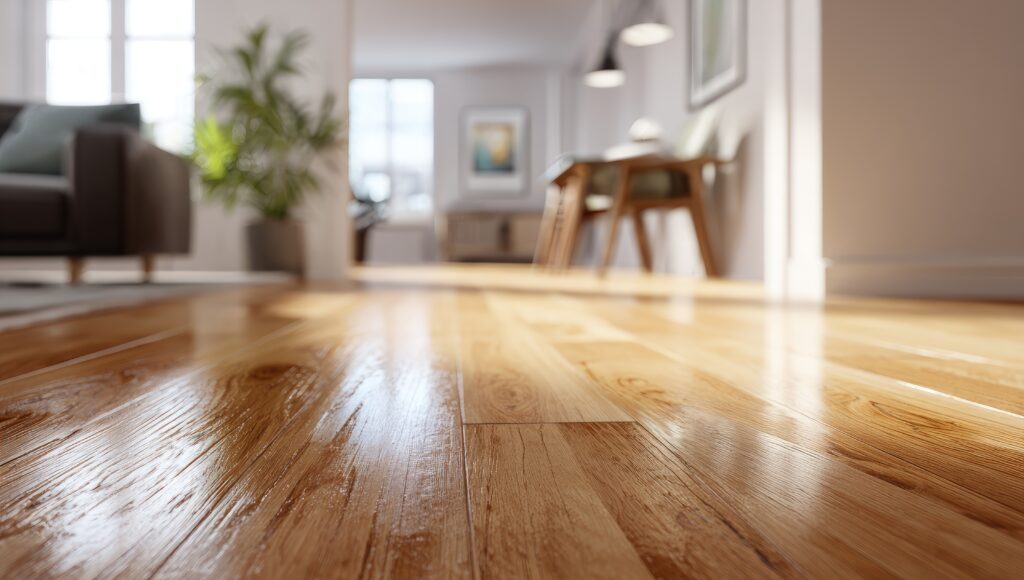
Hardwood floors are one of the most desirable features in a home, but even well-cared-for wood will show wear over time. Scratches, fading, dull finish, and uneven color are all common as years pass. When your floors start to look tired, the next step is not always obvious. You may be able to restore what you have, or you may need to replace the flooring entirely. The right choice depends on the floor’s condition, the look you want, and how much you plan to spend.
The cost to refinish hardwood floors generally falls between $3 and $8 per square foot. If you choose to replace the flooring entirely, you should expect to pay between $8 and $25 per square foot for materials and labor combined.
This guide covers the real-world costs and practical tradeoffs of refinishing versus replacing hardwood floors. It is written to help you make a smart financial decision by breaking down labor pricing, material costs, and how each option can affect long-term durability and resale value.
Hardwood Refinishing Costs
If your floors are structurally sound, refinishing is usually the best way to save money while still getting a “new floor” look. This process involves sanding away the old finish and a thin layer of the wood itself to reveal a fresh surface.
Average Costs by Project Size
The total amount you pay will depend mostly on the total area. Here is a look at common price ranges:
- Small Projects (up to 300 sq. ft.): $900 to $2,400.
- Medium Projects (500 to 1,000 sq. ft.): $1,500 to $8,000.
- Large Projects (1,500+ sq. ft.): $4,500 to $12,000 or more.
Understanding Labor Rates for Floor Sanding
Labor is the biggest expense in any flooring project. Professional labor rates for floor sanding are influenced by the complexity of the room. If you have many closets, hallways, or stairs, the price will go up. Sanding stairs is particularly labor intensive and usually costs between $40 and $100 per step.
The Value of Dustless Sanding
One of the biggest complaints about floor work used to be the fine dust that settled everywhere in the house. Modern contractors now offer dustless sanding systems that use high-powered vacuums attached directly to the sanding machines. While it may add a small premium to your quote, it saves you from expensive professional house cleaning later and protects your family from breathing in fine wood particles.
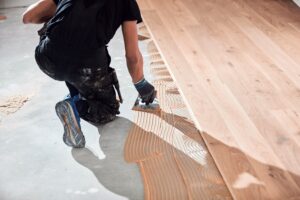
Hardwood Floor Replacement Costs: Investing in New Planks
Sometimes, a floor is beyond repair. If your wood is rotting, severely warped, or has been sanded so many times that the nails are showing, you will need a full replacement.
Actual costs depend on your location, project scope, and materials. The best way to know what you'll pay is to get quotes from local contractors.
Get Your Free Estimate →Material Prices per Square Foot
The cost of the wood itself is the main driver here. Current pricing shows a wide range depending on species:
- Domestic Hardwoods (Red Oak, White Oak, Hickory): These are the most common choices in the US, ranging from $5 to $12 per square foot.
- Mid-Range Woods (Walnut, Cherry): These offer unique colors and usually cost between $8 and $15 per square foot.
- Exotic Woods (Brazilian Cherry, Ipe, Mahogany): These are very hard and durable but can cost $15 to $25 per square foot.
For a broader look at how hardwood compares with other materials, see our guide to flooring types explained.
Structural Subfloor Repair and Preparation
When you pull up an old floor, you might find problems underneath. Structural subfloor repair is a common hidden cost. If the plywood subfloor is uneven, squeaky, or damaged by moisture, it must be fixed before the new hardwood is installed. Budgeting an extra $2 to $5 per square foot for these repairs is a safe way to avoid surprises.
Refinishing vs. Replacement ROI
For most homeowners, the decision to replace or refinish wood flooring is a financial one. You want to know how much of your investment you will see again when you sell the house. According to the National Association of Realtors (NAR), flooring projects offer some of the highest returns of any interior renovation.
The 147% Refinishing Factor
NAR data shows that refinishing hardwood floors has a cost recovery of roughly 147%. This means that if you spend $3,000 to fix your floors, you could potentially see a $4,410 increase in your home’s value. This is much higher than the ROI for most kitchen or bathroom remodels. For more on which projects deliver the strongest returns, check out our guide to home renovations with the best ROI.
"We matched with a great contractor the same day. The whole process was easy and completely free."
Comparing Refinishing vs. Replacement ROI
A full replacement also adds value, but the upfront cost is higher, which lowers the percentage of your “money back.” New hardwood installation typically has a 118% ROI. While still profitable, it is clear that refinishing is the more efficient choice if the wood is in good enough shape to save.
Janka Hardness and Wood Condition
The Janka Hardness Scale is a tool used by professionals to determine how much pressure a wood species can handle. This is important for both refinishing and replacement decisions.
The Janka Hardness Scale and Labor Costs
If you have very hard wood like Hickory (1820 on the scale), it takes more time and more sandpaper to refinish than a softer wood like Pine (varying from 690 to 1225). Contractors often charge more for labor when working with harder woods because it wears down their equipment faster.
Checking the Sandable Wear Layer Thickness
Before you decide to refinish, you must perform a “thickness test.” Every time a floor is sanded, a small amount of wood is removed.
- Solid Hardwood: Usually 3/4 inch thick, these floors can be sanded many times.
- Engineered Hardwood: These have a real wood layer on top of plywood. The sandable wear layer thickness on engineered wood is the deciding factor. If the layer is less than 3mm, you generally cannot sand it without destroying the floor.
Identifying Hardwood Floor Cupping vs. Buckling
You should also look for signs of moisture damage.
- Cupping: This is when the edges of the boards sit higher than the center. It is usually caused by high humidity. In many cases, professional sanding can level these boards out.
- Buckling: This is more serious. The boards have completely lifted away from the subfloor. This usually requires a hardwood floor replacement for at least that section of the house.
Hardwood Color Trends and Style Shifts
Today’s hardwood color trends favor lighter, more natural tones and a move away from heavy, dark stains.
Current Color Preferences
Popular choices include “White Oak” looks, “Natural” finishes, and “Bleached” woods. These lighter colors make rooms feel larger and brighter. If you currently have dark cherry or espresso floors, a professional refinishing project can strip away that old color and apply a modern, lighter stain for a fraction of the cost of new wood. For inspiration on complementary wall colors, take a look at our roundup of top paint colors.
Why Hire a Licensed Professional
- Licensed & insured — protects you from liability
- Warranty coverage — manufacturers require pro installation
- Code compliance — avoids permit issues
- Faster completion — pros finish in days, not weeks
Finish Options: Water-based vs. Oil-based Poly
The type of protective coating you choose matters for both the look and the durability.
- Water-based Polyurethane: This is the most popular choice today. It dries clear, so it doesn’t turn your wood yellow. It also dries very quickly, allowing you to walk on the floors sooner.
- Oil-based Polyurethane: This has a slight amber tint. It is very durable and often cheaper, but it takes much longer to dry and has a stronger smell during the application.
Health and Safety: Low-VOC Wood Finishes
Indoor air quality is a major concern for modern families. Older floor finishes often contained high levels of Volatile Organic Compounds (VOCs), which are chemicals that evaporate into the air.
Choosing Low-VOC Wood Finishes
Most professional contractors use low-VOC wood finishes. These products are much safer for pets, children, and people with respiratory issues. The Environmental Protection Agency (EPA) provides guidelines on why reducing VOCs in the home is important for long-term health. Using a water-based finish is usually the easiest way to ensure your home stays safe during the project.
Sustainable Flooring Practices
Choosing to refinish your floors is one of the most sustainable flooring practices available. Instead of cutting down new trees and transporting heavy materials across the country, you are simply renewing what you already have. This significantly reduces the carbon footprint of your home renovation.
DIY vs. Professional: At a Glance
The Process: What to Expect During Refinishing
Understanding the steps can help you prepare your home and your budget. A typical refinishing project takes 3 to 5 days.
- Preparation: All furniture must be removed. The contractor will seal off other rooms with plastic to contain any stray dust.
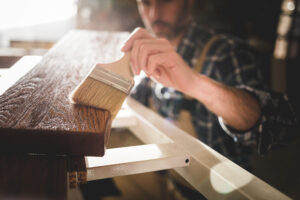
- Sanding: This is done in several stages, starting with a coarse sandpaper to remove the old finish and ending with a very fine paper to make the wood smooth.
- Buffing: A final smoothing pass to ensure the wood is ready for stain.
- Staining: If you want to change the color, the stain is applied now.
- Sealing: Multiple coats of polyurethane are applied to protect the wood.
DIY vs. Professional Refinishing
It can be tempting to rent a sander from a local hardware store to save on labor. However, this is one of the most difficult DIY projects a homeowner can take on.
The Risks of DIY Sanding
A professional drum sander is a heavy, powerful machine. If you stop moving for even a second, the machine will dig a “drum mark” into your floor that is very hard to fix. Furthermore, professional contractors have access to high-grade stains and sealers that are not always available to the public.
When a Pro is Mandatory
If you are dealing with solid vs. engineered refinishing, you should almost always call a professional. Because the top layer on engineered wood is so thin, there is no room for error. A professional will know exactly how much wood they can safely remove.
Spring and summer are the busiest seasons for home improvement projects — top-rated contractors book up fast. Lock in your estimate now before demand peaks.
Check Availability in Your Area →Regional Cost Variations Across the US
Costs vary based on where you live. Homeowners in the Northeast and West Coast should budget 20% to 30% more for labor compared to those in the Midwest or South.
Additional Fees
- Stairwork: Refinishing stairs is manual work. Expect to pay $40 to $75 per standard tread and up to $140 per step for complex or curved stairs.
- Furniture Moving: Some crews charge $50 to $200 per room to move your sofas and beds.
- Baseboard Removal: To get a perfect edge, you may need to remove and reinstall the baseboards.
- Lead Testing: In homes built before 1978, a contractor may be required to test for lead paint before sanding.
The price per square foot for hardwood work changes depending on where you live.
- Northeast and West Coast: Expect to pay $5 to $8 per square foot for refinishing due to higher labor and insurance costs.
- Midwest and South: Prices are often more affordable, ranging from $3 to $5 per square foot.
Seasonal timing can also affect your quote. Many flooring companies are busiest in the summer and fall. Booking your project for January or February can sometimes result in a 10% discount as contractors look to fill their schedules.
FAQs
Ready to Move Forward?
Tell us about your project and get matched with up to 3 pre-screened contractors. Compare quotes, check reviews, and hire with confidence.
Is it cheaper to refinish or replace hardwood?
Refinishing is almost always cheaper. You are only paying for labor and a small amount of finishing products, rather than the high cost of new timber and demolition.
Can I stay in my house during refinishing?
If the contractor is using low-VOC wood finishes and water-based poly, you can often stay in the house, though you won’t be able to walk on the floors for several hours after each coat. If they use oil-based products, the smell is usually too strong for most people to stay inside.
How long do refinished floors last?
A high-quality refinishing job should last 7 to 10 years before it needs another “screen and recoat” to refresh the top layer of protection.
Is engineered hardwood refinishing different?
Yes. Because the real wood layer is thin, it can only be sanded once or twice. You must verify the thickness before you start, or you risk sanding right through to the plywood.
Conclusion
Deciding between hardwood floor refinishing and hardwood floor replacement comes down to the “health” of your wood.
Refinishing is the best financial move for floors that are sound but worn. It saves money, protects the environment, and gives you a massive return on your investment. Replacement is a last resort for floors that are structurally broken or have been sanded too thin over the decades.
If you are weighing other flooring options as part of a larger renovation, our LVP flooring cost guide covers one of the most popular and affordable alternatives to hardwood. And for a broader look at which upgrades pay off most, explore our list of home projects to consider this year.
Connect with top-rated local contractors who can help you with siding, roofing, HVAC, windows, and more. Get free quotes from verified professionals in your area today.