

*Updated November 13th, 2025
A clogged drain is one of those household problems that always seems to happen at the worst time—whether it’s a slow-draining sink, a backed-up shower drain, or a completely blocked drainage pipe. While it’s tempting to reach for a bottle of chemical drain cleaner, there are actually safer, more effective ways to unclog and clear a clog without damaging your pipes.
The good news? Most drain clogs can be fixed with simple DIY methods using items you probably already have at home, like baking soda, vinegar, or a plunger. For tougher drain blockage issues, you may need to bring out a drain snake or consider when it’s time to call a plumber.
In this guide, we’ll walk you through the best ways to unclog a drain, from quick fixes to more advanced solutions. Whether you’re dealing with a slow sink drain or a stubborn clogged drain, we’ve got you covered with practical tips to clean a clogged drain and clear a clogged drain safely.
Reasons Drains Clog
If you notice your sink draining slowly or the shower accumulates standing water, you’re likely dealing with a clogged drain. The faster you clear the clog, the less work it will need, and you may even avoid a call to the plumber.
But why do drains in your home clog? Here are the most common reasons.
Food Scraps
Your kitchen sink isn’t the garbage. If your family doesn’t scrape their plates before putting them in the sink, you could be creating a clogged drain. Large food scraps can instantly clog a kitchen sink, but even small things like coffee grounds and eggshells can build up and block the drain line.
Instead of putting food down the drain, even with a garbage disposal, scrape plates into the garbage and then rinse them. If crumbs or remnants of sauces get down the drain, they’re less likely to cause a blockage, but other large food items will.
Grease and Oil
If you cook with oil, even a small amount going down the drain can be harmful. You won’t see the effects today, though. Instead, the fat or grease builds up on the pipe walls and eventually clogs the drain. If you accidentally send food down the pipe and they’re already caked with grease, it could be a recipe for disaster.
Instead, capture grease and oil in a container before washing your dishes or pans to avoid drain blockage and protect your water system.
Hair
Everyone loses around 100 strands of hair a day, sometimes more, and the shower is the number one place they get loose. If the accumulation of hair becomes too much, it could clog your drain. This is especially true if it combines with other things like soap, soap scum, gunk, grease, or other debris.
To avoid hair creating a clogged drain, add a strainer or drain plug that catches hair in the shower and sink or tub, especially if you bathe your pets. This will catch hair, preventing it from going down the drain and causing drain clogs.
Soap
Soap is probably the last thing you’d think would clog your drain, but many soaps are made with animal fats, which, you guessed it, can lead to a clogged drain over time. Just like grease, the fat can line your pipes, giving less room for anything else to get down them.
If you see a lot of soap scum on your sink or shower walls or your drain seems slower than normal, check your soap ingredients and consider switching to a soap that doesn’t contain animal fat.
Items Besides Toilet Paper in the Toilet
The toilet isn’t a catch-all for anything you want to get rid of; it should only be used for its intended purpose. Paper towels, most feminine products, wipes, and even cat litter do not belong in your toilet; they will cause a clogged drain or even a main line blockage.
These items cannot dissolve enough to get down the drain and pipes, causing a clogged toilet, which usually requires the assistance of a professional plumber to remove a clog.
Built-Up Minerals
If your home has hard water, it can easily clog the drains in your home. You should know if your home has hard water, but if you aren’t sure, here are some signs:
-
Filmy residue on plates, shower walls, and even your skin
-
Dry, itchy scalp and skin
-
Stiff clothing after washing
-
Frequently clogged drains
Hard water leaves behind mineral deposits, which, like grease, begin to line the pipes. Over time, the drainage pipe becomes so corroded that it gets clogged and requires drain cleaning.
To avoid this, consider adding a water softener to your home to reduce the water’s hardness level and help prevent future clogs.
Reasons to Clean a Clogged Drain
If your drain isn’t 100% clogged, meaning you can still use the sink, shower, or tub, you might wonder why you should clean a clogged drain.
It might be tempting to put the job off, but here are some good reasons to unclog a drain immediately.
-
Bad odors – Clogged drains mean whatever you put down the drain isn’t going down, and it sits in the pipe. You can imagine what happens with old food, grease, and even remnants of skin and hair. They begin to stink! The odor can make you feel less than clean after showering, leave a stench on your clothes, and can spread through the room.
-
Water overflow – If water cannot get down the drain properly, it will eventually overflow. Even a partial drain blockage can cause water from the sink or tub to spill over and cause water damage to your floors, cabinets, and walls.
-
Plumbing problems – A clogged drain means more than the water cannot get down. If there is too much pressure on the pipes, it could easily cause leaks or burst pipes, which then leaves you with much larger problems that only a plumber can handle.
6 Ways to Clean a Clogged Drain
Now that you know how frustrating (and messy) a clogged drain can be, let’s talk about ways to unclog it. Whether you’re dealing with a slow bathroom sink, a backed-up kitchen sink, or a shower drain that just won’t clear, there are several ways to tackle the problem. Some methods are quick and easy, while others require a little more effort—but all of them can help unclog a drain and restore proper water flow.
Here are six of the best ways to clean a clogged drain, from simple DIY tricks to heavy-duty fixes.
1. Boiling Water
First, assess the clog. Is the water draining slowly or not at all? If you notice the water drains slowly but still goes down, you don’t have a complete clogged drain yet. This is the best-case scenario and the perfect time to clear a clogged drain.
Start with boiling water down the drain. Boil a half gallon to a gallon of water in a kettle and carefully pour it down the drain, avoiding splashing it on your body or face. After pouring all the boiling water down the drain, run water from the tap for approximately five minutes on hot water.
This may be enough to break up the clog if it was grease, soap, or mineral buildup. Many plumbing experts recommend this as a first step because boiling water to unclog a minor drain blockage is simple and low risk for most drains in your home.
2. Pull the Stopper
If you’re trying to clear a tub or bathroom sink, try pulling out the stopper or drain plug and cleaning it. Sometimes the clog is right at the sink drain; it never went farther down the pipe. This is common with hair clogging the drain. You may have to unscrew the drain pivot rod at the sink’s base to loosen the stopper and lift it to inspect it.
Once removed, clean off any hair and gunk, then rinse the area with hot water to clear clogs close to the surface.
3. Try Dish Soap or Baking Soda and Vinegar
If you think the clog is due to grease, fat, or soap buildup, dish soap, baking soda and vinegar may do the trick. These substances help loosen the buildup, allowing it to flow down the pipe and clear the clog.
Be sure to use a dish soap that doesn’t contain animal fats so you don’t worsen the problem. If using dish soap down a drain, start small. The last thing you need is a sudsy overflow causing more damage to your kitchen sink or bathroom sink.
To use dish soap, squeeze ½ ounce to an ounce down the drain and follow with use boiling water, using the method above, running the tap around five minutes after to help clear a clog.
If you don’t want to use dish soap, try vinegar and baking soda, just like you did in middle school to create a volcanic eruption.
-
Start with ½ cup of baking soda, pour it down the drain.
-
Follow it with ½ cup of distilled white vinegar. You’ll see it immediately bubble—that’s good!
-
Let it sit for a few minutes to loosen the drain.
-
Finish by pouring boiling water down the drain to wash away loosened debris.
You can also add a little table salt with the baking soda for extra scrubbing power. After an hour, check the results of your attempt to clean a clogged drain.
4. Use a Plunger
Plungers aren’t just for toilets; be sure to have a second plunger handy for the sink.
To use a plunger on a toilet, use a toilet plunger (it should have a toilet flange). Fit the flange and the bell of the plunger into the hole and hold it at an angle to let water into the plunger. Next, start to plunge, pumping approximately ten times, and taking a break. Fill the sink or tub or bowl with enough water to cover the bell of the plunger and try again. Repeat until you’ve managed to push the clog through or the water can help carry it away.
To unclog a sink, use a sink plunger. They are often much smaller and don’t have the flange. Start with a small amount of water in the sink; if it’s a bathroom sink, cover the overflow hole at the top. Push the plunger down to use a plunger and force water through the sink drain, uncover the overflow hole, and then release the plunger. Repeat until you unclog a drain and the water starts to move freely.
If you have a double sink in the kitchen, you must cover one of the drains with a cloth or similar item to direct the force to the clogged drain and clear clogs more effectively.
5. Use a Snake
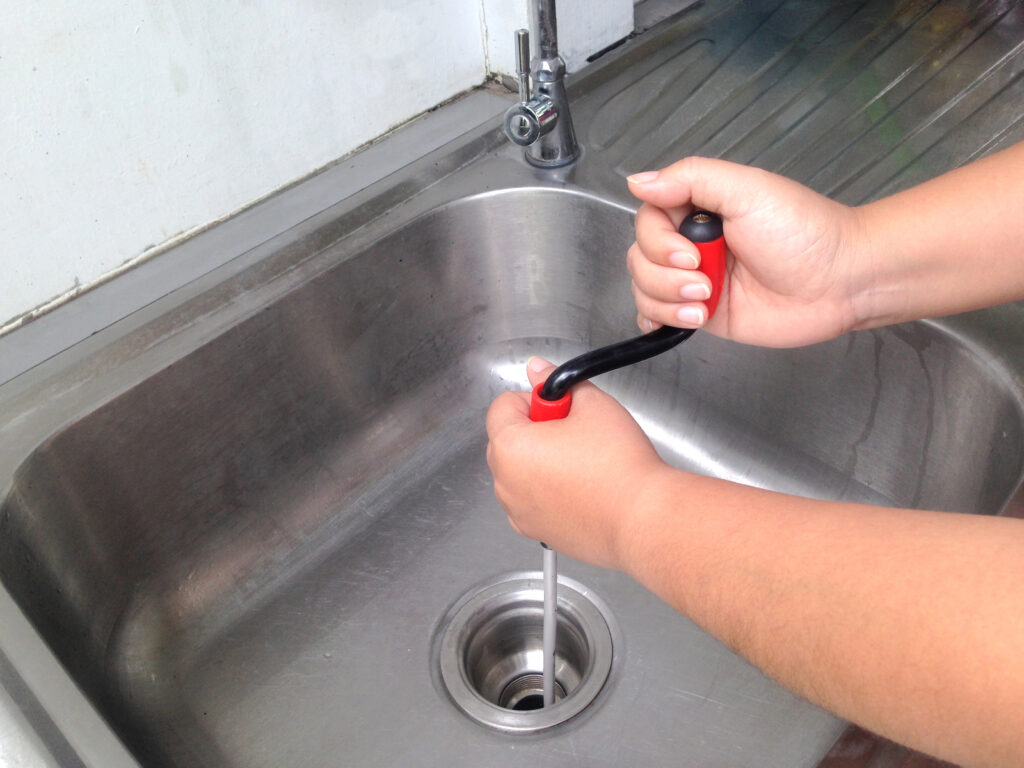
If the above steps don’t work, you may need to invest in a drain snake or auger, which is very inexpensive. If you’re dealing with a clogged shower or bathroom sink drain and think it’s hair, purchase a hair removal tool, which is just a long strip of plastic with barbs meant to catch the hair.
Fish the tool down the drain and slowly pull it out, trying to pull the clog and every bit of hair you can on the way out. Remove a clog, clean the tool, and try again until you can pull it out with no hair on it.
Consider investing in a drain snake if you’re dealing with something more than hair. Using this tool takes some patience and time. It’s made of thin, flexible wire that can snake as long as 20 feet into the pipe.
To use the snake:
-
Place a bucket underneath the P-trap and drain it into a bucket as you disconnect it.
-
Once the P-trap is off, insert the snake into the drain line.
-
Go slow because you’ll likely get stuck on corners and angles in the drainage pipe. If this happens, twist the snake until you feel it push through.
-
If you feel something stuck, turn the snake clockwise to help grab the obstruction; once you think you’ve grabbed it, slowly back the snake toward you.
If you don’t feel obstructions, let the snake go in as far as possible. It may be breaking up debris and things clogging the drain that don’t need to be backed out but were slowing down the water flow.
When completed, pull the snake out and clean it (it will be gross), reconnect the P-trap, and run water. If it runs smoothly, you can go on with your day. If it isn’t quite draining right, try to unclog it again or consider calling a plumber.
6. Call a Plumber
If your DIY tricks fail, it’s time to call a professional. Anything else you might do to the drain and pipes could cause further damage. Plumbing experts have stronger snakes, powered augers, and professional drain cleaning equipment and know how to handle pipes and your home’s vent pipe and main line to remove a clog safely.
While it might not be your first choice, contacting a plumber can prevent even more serious problems from occurring.
What Not to Do With a Clogged Drain
Dealing with a clogged drain can be stressful, but it’s not a time to panic. Doing any of the following could cause more expensive issues.
-
Pushing the clog through the pipes – If you know there is an obstruction, don’t try to force it through the pipes. This could put too much pressure on them, causing the pipes to burst and creating water damage.
-
Using homemade tools – Store-bought snakes or augers are the only tool that should go down the drain. Don’t try wire coat hanger tricks or any other homemade tools you think will “fix the problem.” It will often make things worse.
-
Using harsh chemicals – Chemical drain cleaner products advertised to “clean clogs” usually make them worse, or they can damage your pipes over time. If you have a simple clog, clean it yourself with safer methods, or wait until you can get a plumber to the house rather than relying on chemical drain cleaners.
Ways to Prevent a Clogged Drain
The good news is there are ways to prevent future clogs. While nothing is 100% certain, these steps can help you avoid a serious clogged drain problem.
-
Have a grease container handy – Always have an empty container handy to pour grease into before washing pots and pans. Even a minimal amount of oil or grease can cause a clogged drain over time.
-
Scrape plates – Don’t take chances with any food going down the drain. Take a few seconds to scrape plates, pots, and pans before washing them.
-
Drain strainer – Consider a drain strainer on all sinks and showers to catch large particles, including hair, skin, and other debris.
-
Mind what you flush – Don’t let anyone in the house flush anything except human waste and toilet paper. Have a garbage can next to the toilet for anything else so it doesn’t end up in the drain line.
It’s also a good idea to consider annual drain cleaning by a professional plumber. Consider it an investment in your home’s health and a way to prevent major drain clogs in the future.
Final Thoughts
Knowing how to clean a clogged drain is an essential skill for any homeowner. A quick fix can save you time, money, and the hassle of dealing with slow drains or standing water. Whether you use a natural remedy like baking soda and vinegar, simple boiling water down the drain, or a trusty plunger, staying on top of small clogs can help prevent future clogs and larger plumbing issues down the road.
That said, not every clogged drain is an easy DIY job. If you’re dealing with recurring drain clogs, foul odors, or water backing up in multiple drains in your home, it could be a sign of a more serious issue in your water system or main line. In those cases, it’s best to call a professional plumber. They have the tools and expertise to handle tough clogs and prevent costly damage to your pipes.
So, next time your drain starts acting up, don’t panic—try these methods first to unclog a drain or unclog a sink, and if all else fails, know that expert help is just a phone call away!
FAQ
How do you unclog a severely clogged drain?
Call a plumber immediately if the clog is something you don’t think you can handle. Trying methods you aren’t sure will work could worsen the problem. However, if you want to try to unclog it yourself, stick to pouring boiling water down the drain, following it up with hot tap water for five minutes. If this doesn’t seem to loosen the clog, call a professional for help.
Is it okay to pour boiling water down the drain?
Generally, it is safe to use boiling water and pour it down the drain. However, you should never do this if you have PVC pipe, as it could melt them. You should also consider the type of sink you’re pouring the water down. For example, porcelain sinks may crack under the heat, so this method should be avoided, and another way to unclog a drain may be better.
Is it safe to use baking soda and vinegar to unclog a drain?
Using the baking soda and vinegar trick is effective occasionally, but it shouldn’t be your primary way to clean a clogged drain. Over time, baking soda can cause the pipes to break down because of its abrasive nature. Try other methods first, like a plunger or drain snake, or call a plumber if you can’t fix the issue.
Additional Plumbing Resources
- Why Water Heater Maintenance Matters
- Is Your Plumbing Corroding?
- How to Save Money on Plumbing Bills

Anna has over six years of experience in the home services and journalism industries and serves as the Content Manager at MyHomePros.com, specializing in making complex home improvement topics like HVAC, roofing, and plumbing accessible to all. With a bachelor’s degree in journalism from Auburn University, she excels in crafting localized, comprehensive guides that cater to homeowners’ unique needs. Living on both coasts of the United States has equipped her with a distinctive perspective, fueling her passion for turning any house into a cherished home through informed, personalized decision-making.
Connect with top-rated local contractors who can help you with siding, roofing, HVAC, windows, and more. Get free quotes from verified professionals in your area today.