
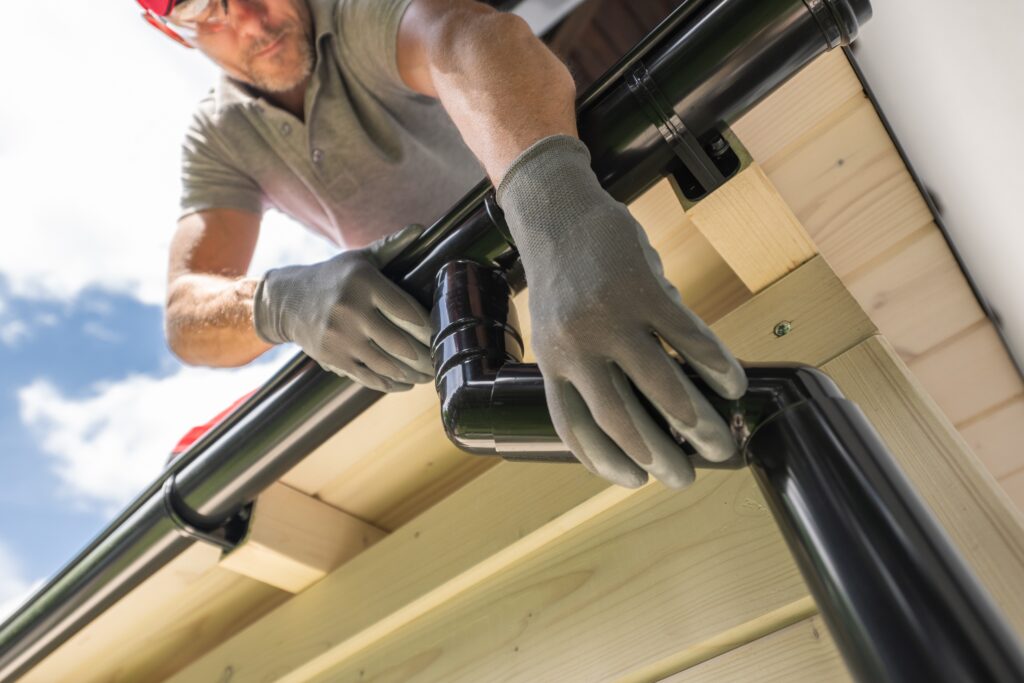
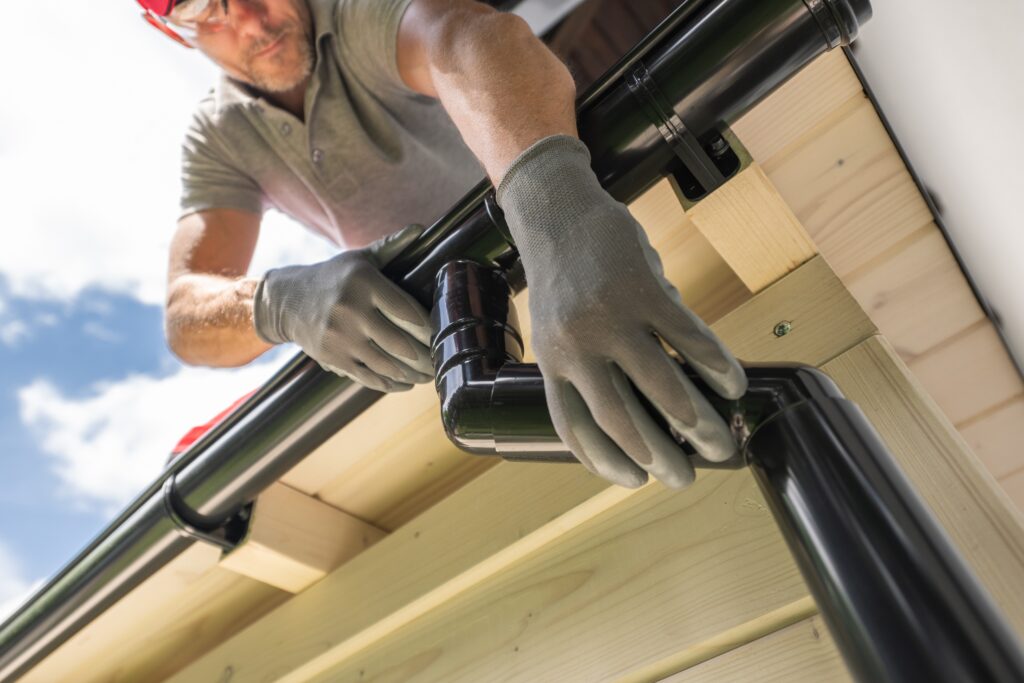
Gutters might not be the most exciting part of your home, but they play a huge role in keeping it safe from water damage. Without a properly installed gutter system, rainwater can pool around your foundation, cause erosion, and even lead to costly repairs. That’s why getting the installation right is just as important as choosing the right gutters.
So, what does the installation process actually look like? In this guide, we’ll walk you through everything you need to know—from selecting the best materials to understanding the timeline, costs, and what to expect on installation day.
Whether you’re replacing old gutters or installing a new system, this will help you feel prepared and confident in the process.
Table of Contents
Signs You Need New Gutters
Not sure if it’s time to replace your gutters? While they may not always be top of mind, ignoring worn-out gutters can lead to serious home damage. Here are a few clear signs that it’s time for an upgrade:
1. Water Pooling Around the Foundation
One of the biggest red flags is water collecting near the base of your home after it rains. Gutters are designed to channel water away, so if you’re noticing puddles forming near your foundation, your system might be clogged, leaking, or simply not doing its job anymore. Over time, this can lead to foundation cracks, basement leaks, and even structural issues—none of which are fun (or cheap) to fix.
2. Sagging or Pulling Away from the House
If your gutters are drooping or pulling away from the fascia, it’s a sign they’re either overloaded, improperly installed, or just past their prime. This could be due to accumulated debris, water weight, or loose fasteners. Once they start detaching, they won’t effectively collect and redirect rainwater, leaving your home exposed to potential water damage.
3. Rust, Cracks, or Holes
Take a close look at your gutters—are there visible cracks, holes, or rust spots? Even small cracks can grow over time, allowing water to leak through instead of flowing properly to the downspouts. Rust is another sign that your gutters are deteriorating, especially if they’re made of steel. If you’re seeing multiple problem areas, patching might not be enough, and a full replacement may be the best long-term solution.
4. Peeling Paint or Water Damage on Exterior Walls
If you notice peeling paint, mildew, or discoloration on your siding, your gutters might be leaking or overflowing. Water that isn’t properly directed away from your home can run down the exterior walls, leading to rot, mold, and costly repairs. Over time, this kind of exposure can weaken your home’s structure and cause aesthetic damage that’s tough to fix.
Choosing the Right Gutter System
When it comes to gutters, one size doesn’t fit all. The right system for your home depends on factors like budget, climate, aesthetics, and how much maintenance you’re willing to do. Here’s a breakdown of your options to help you make an informed decision.
1. Material Options
The material of your gutters impacts everything from durability to maintenance needs. Here are some of the most common options:
- Aluminum: A popular choice due to its lightweight, rust-resistant properties. It’s affordable, easy to install, and comes in various colors. However, it can dent more easily than other materials.
- Vinyl: The most budget-friendly option. Vinyl gutters are lightweight and don’t rust, but they can crack in extreme cold or warp under heavy sun exposure.
- Steel: Heavy-duty and highly durable, steel gutters can handle a lot of weight, making them great for areas with heavy rainfall or snow. However, they are prone to rust if not properly maintained.
- Copper: The premium option, copper gutters are not only durable but also add a stunning architectural detail to your home. They develop a beautiful patina over time but come with a high price tag.
2. Gutter Styles
The style of your gutters impacts both appearance and performance. Here are the main types:
- K-Style Gutters: The most common choice for modern homes. They have a flat back and a decorative front that resembles crown molding. K-style gutters hold more water than half-round gutters, making them ideal for heavy rainfall.
- Half-Round Gutters: These have a smooth, rounded shape and are often used on historic or high-end homes. They provide a classic look but don’t hold as much water as K-style gutters.
- Seamless Gutters: Instead of being assembled from multiple sections, seamless gutters are custom-cut to fit your home. Fewer seams mean fewer leaks and a cleaner look. While they cost more upfront, they tend to last longer and require less maintenance.
3. Downspout Placement & Sizing Considerations
Downspouts are just as important as the gutters themselves since they direct water safely away from your home’s foundation. When planning your gutter system:
- Placement Matters: Downspouts should be positioned at the corners of your home and any low points in your roofline. Water should be directed at least 5-10 feet away from the foundation to prevent erosion and basement flooding.
- Size & Capacity: The larger the downspout, the more water it can handle. Standard residential downspouts are typically 2×3 or 3×4 inches, but homes in high-rainfall areas may need larger sizes to prevent overflow.
The Gutter Installation Process: What to Expect
Getting new gutters installed might seem like a big job, but the process is pretty straightforward when handled by professionals. Here’s a step-by-step breakdown of what happens during installation so you know exactly what to expect.
1. Pre-Installation Prep
Before new gutters go up, your installer will assess the condition of your roofline and fascia. If there’s any rot or damage, it needs to be repaired first to ensure a sturdy foundation for the new system.
Next, they’ll take precise measurements of your roof’s edges to determine the correct gutter length and placement. Proper drainage planning is also key—gutters need to have the right slope so water flows efficiently toward the downspouts rather than pooling in sections.
2. Removal of Old Gutters
If you’re replacing old gutters, the next step is carefully detaching them. This needs to be done without damaging the fascia, siding, or roof. If the existing hangers or brackets are in good shape, some might be reused, but typically, new hardware is installed for a secure fit.
Once the old gutters are down, the area is cleaned up to remove any leftover debris, sealant, or rust.
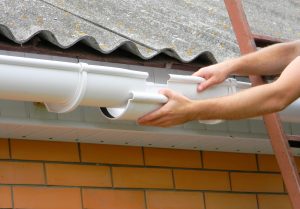
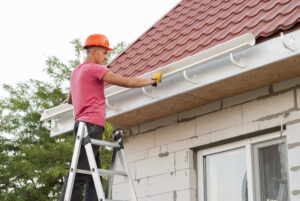
3. Installing the New Gutter System
Now comes the main event—putting up the new gutters! This step involves:
- Cutting & Positioning the Gutters: If you’re getting seamless gutters, they’ll be custom-cut on-site for an exact fit. Sectional gutters are assembled and secured in place piece by piece.
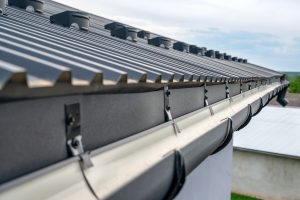
- Securing with Brackets & Hangers: Properly installed brackets and hangers ensure your gutters stay firmly attached to your home, even in heavy rain or snow.
- Setting the Right Slope: Gutters aren’t installed completely level—they need a slight slope (about 1/4 inch for every 10 feet) to guide water smoothly toward the downspouts. Too steep, and the water rushes through too fast; too flat, and you risk standing water and debris buildup.
4. Downspout Installation
Once the gutters are in place, the downspouts are added. These vertical pipes direct water from the gutters safely away from your home’s foundation.
- Placement Matters: Downspouts are positioned strategically—usually at the corners of the house or any low points along the roofline—to ensure proper drainage.
- Extensions & Splash Blocks: Depending on your home’s layout, installers may add downspout extensions or splash blocks to prevent water from pooling too close to your foundation.
5. Final Inspection & Cleanup
Before wrapping up, installers will go over the entire system to ensure everything is secure and functioning properly. This includes:
- Checking for leaks at seams and joints
- Ensuring the gutters are aligned correctly and have the right slope
- Testing the system with water to confirm proper drainage
How Long Does Gutter Installation Take?
If you’re getting new gutters installed, you’re probably wondering how long you’ll have to deal with the process.
The good news? For most standard homes, gutter installation is a pretty quick job—typically finished in a single day. That means minimal disruption and a fast upgrade to your home’s drainage system.
However, there are a few factors that can extend the installation time. Here’s what could impact the timeline:
- Weather Conditions: Since gutter installation happens outdoors, rain, snow, or high winds can slow things down. If the weather is bad, installers may need to reschedule for safety and quality reasons.
- Home Size & Complexity: A straightforward, single-story home with simple rooflines will be much faster to work on than a large or multi-story house with lots of corners, valleys, or steep roof pitches.
- Custom Materials: If you’re opting for seamless gutters, they need to be custom-cut on-site, which adds some time. Specialty materials like copper also require extra care and precision during installation.
- Fascia Repairs: If the fascia (the board your gutters attach to) is damaged or rotting, it will need to be replaced before new gutters can go up, adding extra time to the project.
- Downspout Adjustments or Drainage Solutions: If your home needs additional drainage solutions, such as extended downspouts or underground drainage pipes, these can add extra hours or even an extra day to the installation.
For most homes, you can expect your new gutters to be installed in a day, but factors like weather, custom materials, or structural repairs can extend the timeline. A professional installer can give you a better estimate based on your home’s specific needs, so you know exactly what to expect.
Gutter Installation Cost Breakdown
If you’re planning to install new gutters, you’re probably wondering: How much will it cost? The answer depends on several factors, from the materials you choose to the size of your home. Let’s break it down so you know what to expect.
Factors Affecting Gutter Installation Costs
Several elements influence the final price tag of your gutter installation:
- Material Choice – The type of gutters you choose has a big impact on cost. Basic vinyl gutters are the most affordable, while copper gutters can cost several times more due to their durability and aesthetics.
- Home Size & Roof Complexity – Larger homes require more materials and labor, increasing the overall price. If your roof has multiple levels, steep pitches, or lots of corners, installation may take longer and cost more.
- Labor Costs – Professional installation ensures your gutters are properly secured and sloped for efficient drainage, but labor prices vary based on location and complexity.
- Seamless vs. Sectional Gutters – Seamless gutters are custom-cut on-site and have fewer leak points, but they cost more than traditional sectional gutters, which come in pre-cut pieces.
- Extra Features & Add-ons – Want gutter guards to minimize maintenance? Need extended downspouts for better drainage? These extras add to the total cost but can be worthwhile for long-term performance.
Average Gutter Installation Costs by Type
Here’s a rough idea of what you can expect to pay for different types of gutters (installed):
- Vinyl Gutters: $3 – $6 per linear foot (affordable but less durable)
- Aluminum Gutters: $6 – $12 per linear foot (popular, lightweight, and rust-resistant)
- Steel Gutters: $9 – $20 per linear foot (strong but can rust over time)
- Copper Gutters: $25 – $50 per linear foot (high-end, long-lasting, and stylish)
- Seamless Gutters: $8 – $30 per linear foot (custom-fit for fewer leaks, cost varies by material)
For an average home, gutter installation costs typically range from $1,000 to $3,000, depending on the factors above. Larger homes or premium materials can push that number higher.
Gutter installation is an investment in protecting your home from water damage, foundation issues, and costly repairs. While cheaper materials might save you money upfront, higher-quality options like aluminum or seamless gutters often provide better durability and long-term value.
If you’re ready to get a more precise estimate, reaching out to a professional installer can help you find the best option for your home and budget.
Maintenance Tips After Gutter Installation
Once your new gutters are installed, the job isn’t completely over—regular maintenance is key to keeping them in top shape and protecting your home from water damage. Luckily, with just a little upkeep, you can extend the lifespan of your gutters and avoid costly repairs. Here’s how:
1. Regular Cleaning & Debris Removal
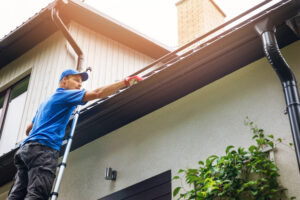
Leaves, twigs, and dirt can quickly build up in your gutters, especially in the fall. If they get clogged, water won’t be able to flow properly, leading to overflow, leaks, and even potential damage to your home’s foundation.
- How often? At least twice a year—once in spring and once in fall. If you have a lot of trees nearby, you might need to check more frequently.
- How to clean? Use a gutter scoop or a garden hose to flush out debris, or try a leaf blower with a gutter attachment for an easier method.
- Pro tip: Wear gloves and be cautious on ladders. If cleaning seems like too much hassle, consider hiring a professional.
2. Checking for Leaks & Proper Drainage
Even with brand-new gutters, small issues can develop over time. Regularly inspect them for leaks, sagging, or water pooling in the wrong places.
- After heavy rain, walk around your home and check for any drips or water escaping from seams.
- Ensure downspouts are directing water away from your foundation—if you notice puddles forming near your home, you may need to extend them.
- Tighten any loose brackets or screws to keep gutters securely attached.
Catching small issues early prevents bigger (and more expensive) repairs later on!
3. Installing Gutter Guards for Reduced Upkeep
Want to cut down on cleaning? Gutter guards can help! These add-ons sit on top of your gutters and block leaves and debris while allowing water to flow through.
- Types of gutter guards: Mesh screens, foam inserts, and surface tension guards are all popular options.
- Less maintenance, but not maintenance-free—while they significantly reduce clogs, occasional cleaning is still necessary to keep them working efficiently.
- Worth the investment? If you have lots of trees near your home or just want to avoid frequent gutter cleaning, gutter guards can be a game-changer.
Keeping your gutters in good shape doesn’t take a ton of work, but a little routine maintenance goes a long way. By cleaning them out, checking for leaks, and considering gutter guards, you’ll keep your home protected and avoid issues down the road.
Conclusion
Installing new gutters might not be the most exciting home improvement project, but it’s one of the most important. A properly installed gutter system helps prevent water damage, protects your foundation, and saves you from costly repairs.
To recap, the installation process includes careful planning, old gutter removal (if needed), precise fitting of new gutters, downspout placement, and a final inspection to ensure everything is working correctly. While some homeowners may consider DIY, a professional installation ensures your gutters are sloped correctly, securely attached, and built to last.
Now is a great time to take a look at your current gutters. Are they sagging, leaking, or overflowing? If so, it might be time for an upgrade. Whether you need a full replacement or just want to explore your options, getting a professional quote is the best way to ensure you get the right system for your home.
Don’t wait until the next big storm to realize your gutters aren’t up to the task. Reach out to a trusted gutter installation professional today for an upgrade.
Additional Gutter Resources

Anna has over six years of experience in the home services and journalism industries and serves as the Content Manager at MyHomePros.com, specializing in making complex home improvement topics like HVAC, roofing, and plumbing accessible to all. With a bachelor’s degree in journalism from Auburn University, she excels in crafting localized, comprehensive guides that cater to homeowners’ unique needs. Living on both coasts of the United States has equipped her with a distinctive perspective, fueling her passion for turning any house into a cherished home through informed, personalized decision-making.
Connect with top-rated local contractors who can help you with siding, roofing, HVAC, windows, and more. Get free quotes from verified professionals in your area today.