
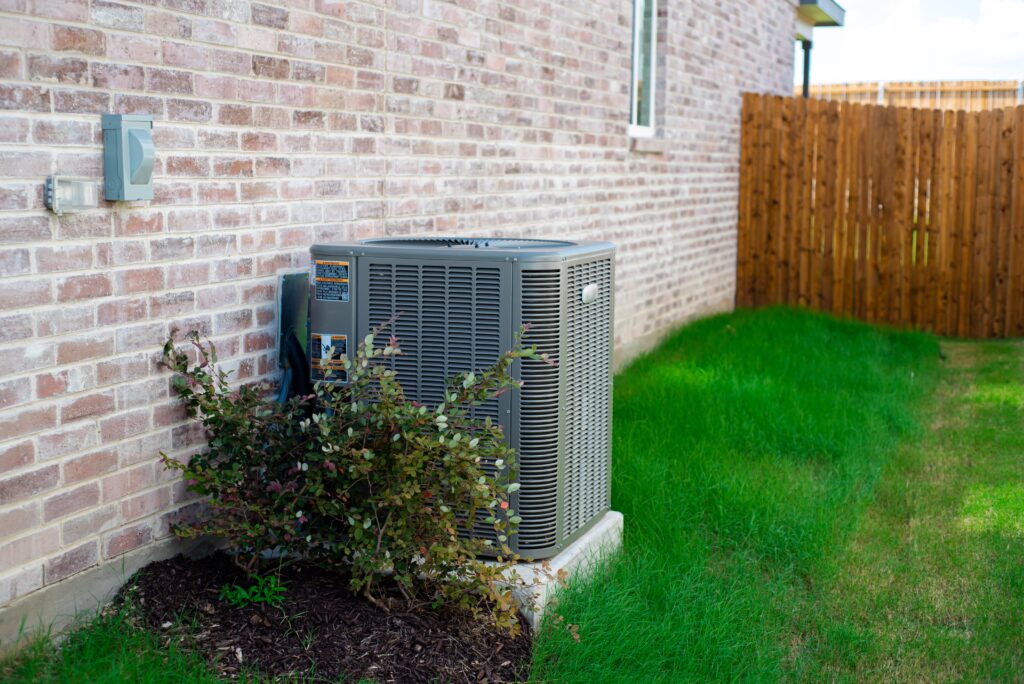
Replacing your home’s heating and cooling system is a major home improvement project and a long-term investment that affects comfort, energy use, and monthly costs for years. As you plan for 2026, you may notice that pricing and equipment options look different than they did a few years ago due to recent regulatory changes and shifts in available incentives. This guide breaks down the important factors that drive HVAC unit costs, which specifications matter most, and how to compare options so you can choose a system that fits your home without paying for features you do not need.
The HVAC Market After the Tax Credit Changes
The most significant change for this year is the conclusion of the federal energy incentives previously provided by the Inflation Reduction Act. The One Big Beautiful Bill Act (OBBBA), signed into law on July 4, 2025, as Public Law 119-21, terminated several residential tax credits on December 31, 2025.
As of January 1, 2026, the Section 25C Energy Efficient Home Improvement Credit and the Section 25D Residential Clean Energy Credit are no longer available. This means the $2,000 annual credit for qualifying heat pumps and the $600 credit for central AC units have ended.
According to the latest Energy Star tax credit guidelines, eligible HVAC systems must have been installed and operational by December 31, 2025, to qualify for those federal tax credit deductions. In practical terms, the total price you see on a contractor’s quote is now your actual out-of-pocket cost. To manage this expense, homeowners must now focus on state-level programs or local utility rebates that offer point-of-sale discounts. While the “sticker price” has effectively increased by the loss of these credits, the long-term savings of high-efficiency equipment remain a primary driver for replacement.
HVAC System Size and Tonnage
The capacity of an HVAC unit is measured in “tons.” In the context of cooling, one ton represents the ability to remove 12,000 BTUs (British Thermal Units) of heat per hour. Most residential systems range from 1.5 to 5 tons. Choosing the correct size is a technical requirement, not a matter of preference.
Manual J Load Calculation
A professional should always perform a Manual J Load Calculation before providing a final quote. This audit is the industry-standard method for determining the exact heating and cooling load of your specific structure. It accounts for your home’s square footage, insulation levels, window orientation, and local climate data. Detailed standards for these audits are maintained by the Air Conditioning Contractors of America (ACCA).
Installing a system that is oversized will lead to “short-cycling,” where the unit turns off before it can properly dehumidify the air. This leaves the home feeling cold and damp. Conversely, an undersized unit will run constantly, leading to excessive energy bills and a shortened equipment lifespan.
Estimated 2026 Costs by System Size
| Unit Size | Typical Coverage | Estimated Installed Cost |
| 1.5 Tons | 600 to 1,000 sq. ft. | $6,500 to $9,500 |
| 2.5 Tons | 1,200 to 1,700 sq. ft. | $8,800 to $13,500 |
| 3.5 Tons | 1,800 to 2,300 sq. ft. | $11,500 to $17,500 |
| 5.0 Tons | 2,600 to 3,200+ sq. ft. | $16,000 to $24,500+ |
Efficiency Standards and SEER2 Ratings
The efficiency of an air conditioner or heat pump is measured by the SEER2 (Seasonal Energy Efficiency Ratio 2) rating. This indicates how much cooling the system provides per watt of electricity used.
SEER (Seasonal Energy Efficiency Ratio) measures the cooling efficiency of an air conditioner or heat pump over an entire cooling season. It is calculated by dividing the total cooling output (in BTUs) by the total energy consumed (in watt-hours). Think of it like a vehicle’s “MPG” rating: the higher the number, the more cooling you get for every dollar spent on electricity.
Understanding SEER2 Requirements
As of January 1, 2023, the industry transitioned to SEER2, a newer standard that uses more realistic testing conditions (higher static pressure) to better reflect how units perform when connected to actual ductwork. Federal law dictates the minimum efficiency you can legally install based on your region, as specified in the DOE appliance standards:
- Northern United States: Minimum 13.4 SEER2.
- Southern and Southwestern United States: Minimum 14.3 SEER2.
While a 14.3 SEER2 unit is the baseline for many, moving to a 17 or 20 SEER2 unit can reduce cooling electricity consumption by 20% to 40%. For homeowners in warmer climates, the monthly energy savings typically pay for the higher upfront cost within several years. If you live in the Sun Belt (FL, TX, AZ), a high SEER2 (18+) is almost always worth the investment because the unit runs for 8 to 10 months a year. In the North, where cooling seasons are short, a baseline 13.4 SEER2 unit may be more cost-effective. For every 1 to 2 point jump in SEER2 rating, you can typically expect to pay an additional $800 to $1,500.
The Move to New Refrigerants
One of the largest drivers of equipment costs in recent years is the transition to low Global Warming Potential (GWP) refrigerants. Following mandates under the EPA’s AIM Act, the older standard refrigerant, R-410A, is no longer used in new equipment.
R-454B and R-32 Safety Standards
Almost all new systems now utilize R-454B or R-32. Because these are classified as “mildly flammable” (A2L), new units are manufactured with integrated leak detection sensors and safety control boards. These components, along with specialized training for technicians, have added approximately 20% to 30% to the manufacturing and installation costs compared to systems from five years ago.
Maintenance on older R-410A systems is also becoming more expensive. As the supply of the older gas is phased down, the price per pound for a refill has risen sharply, making the replacement of an aging, leaky unit a more logical financial choice.
Performance Tiers and Compressor Types
The type of compressor in the outdoor unit determines how steady the temperature stays in your house and how much noise the system makes. You will generally choose between three tiers. You can verify specific model ratings on the AHRI Directory.
- Single-Stage Systems: This is the most affordable technology. The unit is either 100% on or completely off. It is effective for basic cooling, but it can lead to temperature swings of a few degrees as the system cycles.
- Two-Stage Systems: These units have a “high” and “low” setting. They run on the lower setting about 80% of the time, providing better humidity control and more consistent comfort. They only switch to the high setting on the hottest days of the year.
- Variable-Speed Systems: Also known as inverter technology, these are the most advanced and expensive systems. They can adjust their speed in small increments (often between 25% and 100% capacity) to match the weather exactly. They are very quiet and offer the best energy savings because they rarely need to run at full power.
Equipment Tiers and Brand Comparison
While many manufacturers use similar internal parts, such as compressors made by Copeland, their build quality, warranties, and dealer networks differ.
| Brand | Market Position | 3-Ton Installed Price (Avg) | Warranty Highlights |
| Carrier | Premium | $12,500 to $18,000 | 10-year parts; top-tier dealer support. |
| Trane | Premium | $13,000 to $18,500 | 10-year parts; durable aluminum coils. |
| Rheem | Mid-Range | $10,000 to $14,500 | Reliable performance; easier to find parts. |
| Goodman | Value | $8,500 to $12,000 | 10-year parts; strong budget choice. |
| York | Value | $8,000 to $11,500 | Compact designs; straightforward technology. |
Hidden Costs and Infrastructure Upgrades
A quote for a “new unit” usually assumes your home’s existing infrastructure is in good shape. However, modern systems often require upgrades to perform safely and efficiently.
- Ductwork Repair and Replacement: If your ducts are leaky or too small for the new system’s airflow, you will lose a significant portion of your energy savings. Repairing or replacing ducts typically adds $2,000 to $5,000 to the total bill.
- Electrical Work: Newer variable-speed units or heat pumps may require more power than an old AC. This might require a new circuit breaker or an upgrade to your electrical panel to meet current safety codes. This work generally costs between $500 and $1,500.
- Copper Line Sets: The pipes that carry refrigerant between the indoor and outdoor units should generally be replaced when switching to the new refrigerants. Reusing old lines can lead to clogs or chemical reactions that damage the new compressor. This adds $300 to $800 to the project cost.
Deciding Between Repair and Replacement
When your HVAC system starts breaking down, it can be hard to know when repairs stop being worth it. One common guideline contractors use is the Rule of 5,000.
How it works
- Take the age of your system (in years).
- Multiply it by the estimated repair cost.
- If the total is more than 5,000, replacement is often the better long-term investment.
Example: A 12-year-old system with a $600 repair estimate: 12 × 600 = 7,200. Since 7,200 is above 5,000, replacement is usually the smarter choice, especially because many systems are nearing the end of their typical 15 to 20 year lifespan at that age.
Vetting Your HVAC Contractor
The quality of the installation is just as important as the brand and the unit’s features. Research indicates that as many as 90% of HVAC systems are installed with some form of error, often involving improper sizing or refrigerant charge.
- Ask for the Manual J: A reputable contractor will not hesitate to show you the calculations they used to pick your system size.
- Verify Licensing: Ensure they are licensed by your state to handle the new refrigerants and carry liability insurance.
- Read Recent Reviews: Focus on reviews from the last 12 months to see how they handle current installation challenges.
- Check the Warranty: Ask the contractor if they will register the unit for you. Many manufacturer warranties are cut from 10 years to 5 years if the unit is not registered within 60 days of installation.
FAQs
How much does a new HVAC unit cost on average?
In the current market, most homeowners spend between $8,500 and $16,000 for a complete HVAC replacement. For a standard 2,000 square foot home, a mid-range system typically averages around $12,500.
Are high-SEER systems worth it?
High-SEER systems are worth the investment if you live in a warm climate or plan to stay in your home for more than five years. A unit with a 20 SEER2 rating can reduce cooling costs by nearly 50% compared to a ten-year-old baseline model. However, since federal tax credits for energy efficiency expired at the end of 2025, the return on investment (ROI) now depends entirely on your local energy rates and any remaining utility company rebates.
How long does HVAC installation take?
A standard “change-out” typically takes 4 to 8 hours. Most professionals can complete this in a single day. If your home requires a full system overhaul, including new ductwork, electrical upgrades, or a complex heat pump conversion, the timeline usually extends to 3 to 5 days.
Does tonnage affect energy bills?
Yes, the tonnage of your unit has a direct impact on your monthly expenses. If a unit is oversized, it will turn on and off too frequently. This “short-cycling” uses a burst of electricity every time the motor starts and fails to remove humidity. If a unit is undersized, it will run constantly without ever reaching the desired temperature.
Conclusion
The 2026 HVAC market has moved away from the heavy subsidies of previous years. Now that federal tax credits have ended under the OBBBA, the price on your HVAC quote is likely your true out-of-pocket cost. In this environment, the smartest way to protect your investment is to look past the lowest bid and prioritize a high-quality installation that prevents energy waste and premature system failure.
To do so, you need to focus on getting the fundamentals right. Insist on a Manual J load calculation so the system is sized specifically for your home’s layout and insulation, rather than guessed from the unit it is replacing. Choose a contractor who can provide documentation for proper commissioning and strictly follows current safety requirements for A2L refrigerants like R-454B. These technical steps are far more effective at improving comfort and reliability than simply buying a higher-tier model and having it installed incorrectly.
Before you sign a contract, collect two to three itemized quotes to compare what is actually included, such as permits, electrical upgrades, duct repairs, and equipment disposal. Ask specifically about local utility rebates, state-level programs, or seasonal manufacturer incentives that might still be available to reduce the price upfront. By making these decisions carefully, you can ensure your new system delivers consistent comfort and predictable energy bills for the next 15 to 20 years.

Anna has over six years of experience in the home services and journalism industries and serves as the Content Manager at MyHomePros.com, specializing in making complex home improvement topics like HVAC, roofing, and plumbing accessible to all. With a bachelor’s degree in journalism from Auburn University, she excels in crafting localized, comprehensive guides that cater to homeowners’ unique needs. Living on both coasts of the United States has equipped her with a distinctive perspective, fueling her passion for turning any house into a cherished home through informed, personalized decision-making.
Connect with top-rated local contractors who can help you with siding, roofing, HVAC, windows, and more. Get free quotes from verified professionals in your area today.