

A poorly timed roof replacement can mean cracked shingles, voided warranties, and weeks of costly delays. The season you choose affects everything from material performance to labor costs, and getting it wrong can shorten the life of a roof that should protect your home for decades.
Fall is widely considered the ideal season for roofing, but each time of year comes with trade-offs worth understanding before you schedule. This guide breaks down how weather, temperature, and seasonal demand affect roofing projects so you can plan for the best outcome.
What Is the Best Season to Replace a Roof?
Fall is the most recommended season for roof replacement due to stable weather, moderate temperatures, and ideal conditions for shingle adhesion.
Temperatures between 45°F and 85°F create the best working environment for most roofing materials. In that range, asphalt shingles remain pliable enough to cut and nail cleanly, and the thermally activated sealant strips on each shingle bond properly to create a watertight seal.
Fall delivers those conditions more consistently than any other season across most of the United States. Projects completed in September or October have several weeks of moderate weather ahead, giving shingle sealant time to fully cure before winter storms arrive.
Beyond the material science, fall also gives contractors enough daylight hours to maintain productive schedules without the extreme heat that slows crews in midsummer. The main downside is demand.
Fall is peak season for roofing contractors, so you should expect longer lead times and potentially higher pricing. Booking two to three months ahead is common practice to secure your preferred dates.
| Season | Temperature Conditions | Shingle Performance | Contractor Availability | Relative Cost |
|---|---|---|---|---|
| Spring | 45°F to 70°F, rising | Good adhesion, rain risk | Moderate | Average |
| Summer | 75°F to 100°F+ | Softening risk in extreme heat | High availability | Average to high |
| Fall | 45°F to 75°F, stable | Ideal adhesion and curing | Low availability (peak demand) | High |
| Winter | Below 40°F in many regions | Brittle shingles, poor sealing | High availability | Lower, but added labor costs |
Can You Replace a Roof in the Winter?
Winter roofing is possible but carries significant material and safety risks that make it a last resort for most homeowners.
The core issue is temperature. Most asphalt shingle manufacturers set 40°F as the minimum installation temperature for warranty compliance.
Below that threshold, shingles become brittle and can crack during handling or nailing. The thermally activated adhesive strips on the underside of each shingle also fail to bond in cold conditions, which means wind can lift them before they ever seal down.
Some contractors draw the line even further, at 30°F, where the risk of nail over-driving and material fracture increases substantially.
Actual costs depend on your location, project scope, and materials. The best way to know what you'll pay is to get quotes from local contractors.
Get Your Free Estimate →When Winter Roofing Makes Sense
Emergency situations sometimes force the issue. If storm damage has left your roof decking exposed, waiting until spring could mean months of water intrusion and structural decay.
In those cases, a qualified contractor can install shingles in cold weather using hand-applied cold-weather adhesive on every tab. The process is slower, more labor-intensive, and typically 10% to 20% more expensive due to the extra materials and careful handling required.
Metal roofing is more forgiving in cold conditions because it does not rely on adhesive bonding. If you are weighing material options and anticipate a winter timeline, this is worth discussing with your contractor.
Pro Tip: If you must roof in winter, ask your contractor whether they store materials in a heated environment before installation. Cold-stored shingles are far more likely to crack during handling.
Risks of Cold-Weather Installation
Winter installations carry several well-documented risks that go beyond shingle performance. Ice accumulation on the roof deck creates slip hazards for crews, and shorter daylight hours compress the working schedule.
Snow cover can also hide underlying damage like rotted decking or failed flashing. This makes it harder for contractors to assess the full scope of work before tearing off the old roof.
"We matched with a great contractor the same day. The whole process was easy and completely free."
Can You Roof in the Rain?
No reputable contractor will install a roof during rain because moisture compromises materials and voids manufacturer warranties.
Rain during a roofing project is one of the most common concerns homeowners raise, and the answer is unambiguous. No roofing materials should ever be installed in wet conditions.
When the roof deck gets soaked, the consequences affect every layer of the roofing system:
- Sheathing swelling: Oriented strand board or plywood absorbs water and expands, then shifts as it dries, creating gaps and buckled surfaces beneath the shingles.
- Underlayment failure: The waterproof layer between the deck and the shingles requires a completely dry surface to adhere properly.
- Water-and-ice shield delamination: This self-adhesive membrane, critical in valleys and around penetrations, will not bond to a wet deck.
- Trapped moisture: Shingles installed over damp underlayment can seal water in, leading to mold growth in the attic space within months.
What Happens if Rain Starts Mid-Project?
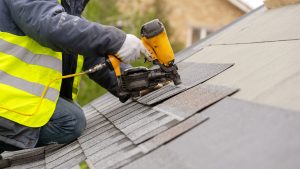
Experienced contractors monitor weather forecasts closely and plan tear-off schedules around clear windows. The standard practice, consistent with OSHA roofing safety guidelines, is to never remove more roofing material than the crew can replace and seal in a single day.
If unexpected rain arrives, professional crews will stop work immediately, cover exposed areas with heavy-duty tarps, and secure them against wind.
Once the rain passes, the crew must wait for all surfaces to dry completely before resuming. Depending on humidity and temperature, this can add a few hours or a full day to the project timeline.
Delays are inconvenient, but they are far less costly than emergency roof leak repairs down the road.
How Does Spring Weather Affect Roofing Projects?
Spring offers moderate temperatures that support good shingle adhesion, but frequent rain and unpredictable storms can cause scheduling delays.
Spring is the second most popular season for roof replacement after fall. Temperatures in the 45°F to 70°F range are well within the ideal installation window, and crews can work comfortably without the heat stress that limits summer productivity.
Many homeowners also discover winter damage during spring, making it a natural time to address signs of roof damage before the problem grows worse.
The primary challenge is rain. April and May bring the heaviest precipitation in many parts of the country, and a single week of wet weather can push a roofing project back by 10 days or more.
If you schedule a spring installation, build at least a one-week buffer into your timeline and discuss contingency plans with your contractor upfront.
Spring is also a good time to schedule a roof inspection if you are unsure whether your roof needs replacement or just repair. Catching problems early, before the summer storm season, gives you time to plan rather than react.
Is Summer a Good Time for Roof Replacement?
Early summer provides long daylight hours and dry conditions, but extreme heat above 90°F can soften shingles and slow crews.
June is one of the most productive months for roofing contractors. Days are long, rain is less frequent in many regions, and temperatures generally stay within the workable range.
If you can book a project in late May or early June, you are likely to see fast turnaround times and minimal weather delays.
The situation changes in July and August. When roof surface temperatures exceed 150°F (common when ambient temperatures reach 90°F or higher), asphalt shingles become excessively soft.
Walking on them during installation can scuff the granular coating that protects against UV damage, reducing the shingle’s effective lifespan. Contractors working in extreme heat also face genuine safety risks, including heat exhaustion, which forces more frequent breaks and longer project timelines.
| Factor | Early Summer (May to June) | Late Summer (July to August) |
|---|---|---|
| Working temperature | 70°F to 85°F | 90°F to 100°F+ |
| Shingle handling | Normal | Softening risk |
| Crew productivity | High | Reduced (heat breaks) |
| Scheduling availability | Moderate | Tighter (peak season) |
Demand also peaks during summer, so pricing may run higher and contractor calendars may be booked four to six weeks out. Early planning is essential if you want a summer installation.
Why Hire a Licensed Professional
- Licensed & insured — protects you from liability
- Warranty coverage — manufacturers require pro installation
- Code compliance — avoids permit issues
- Faster completion — pros finish in days, not weeks
What Temperature Is Too Cold for Roofing?
Most asphalt shingle manufacturers require temperatures of 40°F or above, and installations below 30°F risk voided warranties.
Temperature matters because of how asphalt shingles are engineered. Each shingle has a strip of thermally activated adhesive that bonds it to the shingle below.
This sealant needs sustained warmth, ideally from direct sunlight, to soften and create a permanent bond. According to industry standards from the National Roofing Contractors Association, installations below 40°F may never form that bond properly, leaving shingles vulnerable to wind uplift.
The shingles themselves also become rigid and brittle in cold temperatures. A nail driven into a cold shingle is more likely to crack it than one driven at 60°F, and cracked shingles create entry points for water.
This is why most manufacturer warranties specify a minimum installation temperature. Understanding your shingle options and their temperature requirements can help you make an informed decision about timing.
For EPDM rubber membrane roofing (common on flat roofs), the temperature threshold is even higher. Manufacturers generally recommend 45°F or above because the adhesive used to join membrane seams becomes thick and unworkable in colder conditions.
How Does Roofing Season Affect Cost?
Roofing costs fluctuate by season, with fall and summer commanding the highest prices due to peak demand and winter offering potential discounts.
Contractor pricing is driven by supply and demand. During fall and summer, when most homeowners want roofing work done, contractors can be selective about which jobs they take.
This translates to higher labor rates and less room for negotiation. Winter and early spring, by contrast, are slower periods when many roofing companies actively seek work to keep their crews employed.
Savings during the off-season can range from 5% to 15% on labor costs, though this varies by region and market conditions. However, the lower price comes with trade-offs.
Winter installations require extra materials (cold-weather adhesive, specialized sealant) and take longer to complete, which can offset some of the labor savings. There is also a higher risk of weather delays and potential material damage.
If your roof is not in urgent need of replacement, creating a roofing project budget during the winter months and booking your contractor for a spring or early fall installation is often the most cost-effective strategy. You get the benefit of off-season planning without the risks of cold-weather installation.
DIY vs. Professional: At a Glance
Does the Roofing Material Change the Best Time to Install?
Yes. Asphalt shingles are the most temperature-sensitive material, while metal and slate install across a broader range of conditions.
Different materials respond to weather conditions in different ways, and the best installation window varies accordingly.
Asphalt Shingles
Asphalt shingles are the most popular roofing material in the United States and also the most weather-dependent. The ideal installation temperature is between 45°F and 85°F.
The differences between shingle grades (such as 25-year versus 50-year warranties) do not significantly change this temperature range. Thicker architectural shingles are slightly more resistant to cold-weather cracking than three-tab shingles.
Spring and summer are the busiest seasons for home improvement projects — top-rated contractors book up fast. Lock in your estimate now before demand peaks.
Check Availability in Your Area →Metal Roofing
Metal panels are mechanically fastened and do not depend on adhesive bonding, so they can be installed in a wider temperature range. Cold weather does cause metal to contract, which means installers need to account for thermal expansion by leaving appropriate gaps at fastener points.
Metal roofing costs tend to be higher than asphalt, but the material’s flexibility in scheduling can offset delays.
Tile and Slate
Tile and slate are heavy, durable materials that handle temperature extremes well. Installation in rain is still not recommended because the underlayment beneath them requires dry conditions, but temperature sensitivity is minimal.
The bigger constraint with tile and slate is labor. These materials require specialized crews, so availability may dictate timing more than weather does.
Ready to Move Forward?
Tell us about your project and get matched with up to 3 pre-screened contractors. Compare quotes, check reviews, and hire with confidence.
How Far in Advance Should You Schedule a Roof Replacement?
Plan to book your roofing contractor two to three months ahead, especially if you are aiming for a fall or summer installation.
Timing a roof replacement is not just about picking the right season. It is also about logistics.
Popular contractors fill their calendars quickly during peak months. Waiting until September to call about a fall installation often means getting pushed to November or later.
A practical planning timeline starts with the winter months. Use that time for research: get multiple estimates, verify contractor licensing and insurance, check references, and review what to include in a roofing contract.
Book your project by late winter or early spring to secure a slot during your preferred window. This approach also gives you time to order specialty materials, apply for permits, and coordinate any related work like gutter replacement or attic insulation.
If your roof has active leaks or visible damage, do not wait for the perfect season. The cost of water damage, mold remediation, and structural repair will far exceed any savings from timing the project differently.
In an emergency, knowing the right questions to ask a roofing contractor can help you vet companies quickly and avoid storm chasers who deliver substandard work.
Regional Climate and the Right Time to Roof
Local climate plays a larger role in timing than any national rule of thumb, and homeowners in mild climates have more flexibility.
National advice about “the best season” assumes a temperate four-season climate, but reality varies dramatically by region. In the Southeast, mild winters make year-round roofing feasible, though Atlantic hurricane season (June through November) introduces storm risks.
In the Pacific Northwest, dry summers from July through September may be the only reliable roofing window. The rest of the year brings persistent rain that makes scheduling difficult.
In the Mountain West, altitude-driven temperature swings can shrink the workable season to just four or five months. The best approach is to talk with local contractors who understand your regional weather patterns.
They can recommend the most productive windows for your area and help you avoid the scheduling bottlenecks that hit during peak months.
Planning Your Roof Replacement for the Best Results
The right time to replace your roof depends on your regional climate, your budget, and how urgently the work needs to happen.
Fall is the gold standard in most of the country, but early summer and spring are strong alternatives when you plan ahead. Winter roofing should be reserved for emergencies, and no roofing work should ever proceed in the rain.
If you are planning a roof replacement, start by scheduling a professional inspection to assess your roof’s current condition. A qualified contractor can help you weigh the seasonal trade-offs and build a timeline that protects both your home and your budget.
Ready to get started? MyHomePros connects you with trusted roofing contractors in your area. Get free estimates and compare your options today.
Connect with top-rated local contractors who can help you with siding, roofing, HVAC, windows, and more. Get free quotes from verified professionals in your area today.