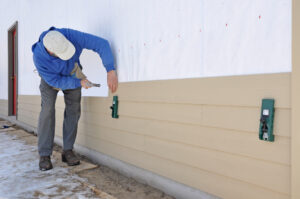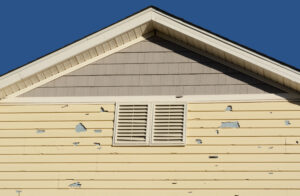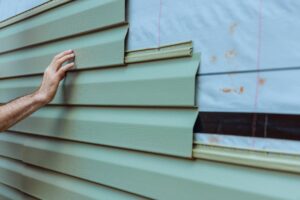


Have you ever heard of Pop-on siding? Maybe that’s what got you clicking on this article in the first place. “Pop-on siding” is a relatively new siding category that can describe a few different sorts of siding options, depending on the provider you talk to. We’re here to help you sort out what a few of those can be, so you can ask providers about their options with some knowledge under your belt before the chat.
Some providers use it to describe an overlay approach, installing new siding over an existing exterior. Others use it for fast-install panel systems, an overlay/reside approach, or a branded “quick turnaround” method that’s unique to their company. And some homeowners use “pop-on” simply to mean “a siding update that feels simpler than a full tear-off.” Some providers won’t label it a “pop-on” approach at all, instead using their own labels and systems.
So, instead of treating “pop-on” as one single product, this guide treats it as what it is… a category. With that, we focus on the part you actually care about: what these approaches tend to currently cost, what makes the price move up or down, and what questions to ask so you can compare bids fairly.
First: What “Pop-On” Usually Means in the Real World
In practical terms, “pop-on siding” most commonly refers to one (or more) of these approaches:
- Overlay / re-side over existing cladding (when suitable)
- Vinyl siding with added underlayment (often fanfold insulation, foam backing, or a smoothing layer)
- Insulated vinyl siding (vinyl panels with integrated rigid foam)
- Panelized / fast-install systems (provider-defined)
- A “quick-install” program that may be branded and not perfectly match the definitions above
Your cost hinges less on what the brochure calls it and more on what the crew must do to create a flat, dry, code-compliant surface and a properly flashed, water-managed wall assembly. If it’s a type that is exclusive to a single provider, you may pay a premium for their unique system.
Key Measurement: What Is a “Square” of Siding?
Siding is often priced “per square.” A square is 100 square feet of wall coverage. Lowe’s and HomeAdvisor both define a siding “square” this way.
That means:
- 10 squares ≈ 1,000 sq ft of wall area
- 20 squares ≈ 2,000 sq ft of wall area
Important: wall area is not the same as your home’s floor plan square footage. A 2,000 sq ft home might have much more (or less) than 2,000 sq ft of exterior wall to side depending on stories, gables, overhangs, mixed materials, and an attached garage.
Pop-On Siding Cost in 2026: Typical Price Ranges
Because “pop-on” is a category, the cleanest way to broadly price it is to anchor to the big public cost datasets for siding—then show where overlay/quick-install approaches can land depending on what’s included.
1) Baseline: Standard vinyl siding installed (common national range)
Multiple national pricing guides consistently place vinyl siding installation around $3 to $12 per square foot installed—which equates to $300 to $1,200 per square.
Use this as the “all-in” market band for a typical re-side project (which often includes removal/cleanup—but always confirm what’s included in any given quote).
2) “Pop-On” overlay / quick-install (when conditions allow)
Overlay projects can sometimes price below a full tear-off re-side because they may reduce demolition and disposal time. But overlay can also require extra prep layers (flattening, furring/strapping, insulation panels), which can offset savings.
A practical 2026 planning range for many “pop-on” bids (vinyl-leaning, overlay-leaning) is often:
- $250 to $1,050 per square (=$2.50 to $10.50/sq ft)
That band stays consistent with the national installed ranges above, but reflects that some overlay bids come in toward the lower middle when demolition is reduced—while others climb if prep and details are extensive.
Actual costs depend on your location, project scope, and materials. The best way to know what you'll pay is to get quotes from local contractors.
Get Your Free Estimate →3) Insulated vinyl “pop-on” systems (common premium tier)
If “pop-on” means insulated vinyl siding (integrated foam), research reports an average around $8/sq ft, with a range of $4 to $12/sq ft—or $400 to $1,200 per square, depending on the home and system.
That’s one reason you’ll see “pop-on” quotes that look surprisingly high: you may be comparing standard vinyl to insulated systems without realizing it. Don’t knock the higher price of insulated siding, it can also affect the long-term energy savings of your home very positively.
Regional Modifiers That Can Move Your Price (Examples)
Even with the same siding product, costs vary by region due to labor rates, seasonality, permitting, and building practices. National sources explicitly call out location as a major cost driver for vinyl siding.
High-level examples:
- High-cost labor markets (many major metros) tend to push projects toward the upper end of the $/sq ft range.
- Storm/hurricane regions may see increased requirements for fastening and detailing, and contractors may price higher due to risk and inspections.
- Cold / moisture / marine climates can increase emphasis on drainage, WRB continuity, and detailing that takes time and skill. Building codes address special WRB requirements in moist/marine climate zones.
Bottom line: treat any “average” as a starting point, and understand the regulations in your area as best you can. Then let 2–3 local quotes define your real market.
How Square Footage and “Coverage Complexity” Change the Price
We wanted to make sure and call this wrinkle out explicitly, because it matters a lot.
Two homes with the same interior square footage can have very different siding needs because of:
- Number of stories (more wall height)
- Gables/dormers (more edges and waste)
- Attached garage size
- Bump-outs and architectural detail
- Partial brick/stone fronts (less area to side—but more transitions/trim)
That last one surprises homeowners: partial masonry can reduce siding area but add detail work at seams and transitions, which can change labor time. Not all homes with brick or stone end up saving a homeowner on overall siding costs, understand how your mixed media will impact your quotes with local professionals.
"We matched with a great contractor the same day. The whole process was easy and completely free."
What’s Usually Included in a “Pop-On” Siding Quote?
This is where people get burned—because two estimates can look “comparable” but include very different scopes.
A) Siding material + installation (the obvious part)
This includes panels, starter strip, J-channel, and standard fastening. These should be a part of every quote you see.
B) House wrap / WRB (Water-Resistive Barrier)
Most modern codes require a water-resistive barrier behind exterior wall coverings. ICC’s code language (as adopted in various states/jurisdictions) includes requirements for WRB application over studs or sheathing.
A practical implication for “pop-on” overlay bids:
If the existing assembly can’t verify WRB continuity, a contractor may recommend tear-off (to re-wrap properly) or a method that achieves code-compliant water management in another way, which is often guided by local requirements. Some jurisdictions publish re-siding guidance emphasizing WRB and flashing requirements.
C) Trim, soffit, fascia, and “wraps”
Many quotes include:
- Corner posts
- Soffit and fascia replacement (or re-wrap)
- Window/door trim (“wraps” / capping)
Whether you “need” these depends on condition and your aesthetic goals, but they can change the price materially.
D) Tear-off + disposal (may be optional in overlay scenarios)
If “pop-on” is being pitched as an overlay, you may see tear-off listed as “not included” (or included only in limited areas).
For budgeting: some published removal data places siding removal (labor + disposal) around $0.80 to $1.50 per sq ft for many removal scenarios, which can be a meaningful chunk of the project. This is how a pop-on project that does not require tear-down or removal can cost a consumer meaningfully less than a full replacement.
When Overlay (“Pop-On”) Is a Good Idea—and When It’s Not
Pop-on siding has its upsides, but any buyer wanting to protect their home should watch out for red flags if taking this approach, especially when it means an overlay solution.
Overlay may be reasonable when:
- Existing siding is flat, stable, and dry
- There’s no evidence of bulk water intrusion
- The wall plane is reasonably straight (to avoid “telegraphing” waves)
- The contractor can detail flashing, WRB, and transitions correctly
Why Hire a Licensed Professional
- Licensed & insured — protects you from liability
- Warranty coverage — manufacturers require pro installation
- Code compliance — avoids permit issues
- Faster completion — pros finish in days, not weeks
Overlay is often inadvisable when:
- There’s rot, mold, staining, or recurring moisture
- Existing walls are uneven or already multi-layered
- You suspect hidden damage at windows/doors
- Local codes/inspectors require tear-off to verify WRB, flashing, or sheathing condition
Building science guidance is very direct when it comes to moisture: for insulated vinyl siding retrofits, DOE/PNNL guidance states insulated vinyl siding must not be installed over wall systems showing evidence of moisture problems until underlying causes are addressed.
Practical takeaway for conscientious homeowners:
If a contractor says “overlay is fine,” it’s fair to ask:
“How did/will you confirm there’s no moisture issue behind the existing siding?”
How Building Codes Affect “Pop-On” Options
Overlay/residing is common. But your risk of being forced into tear-off goes up when:
- Your local jurisdiction is strict about WRB/flashings/inspection access
- The existing siding type is problematic (e.g., multiple layers, failing substrates)
- You’re in a climate zone where moisture management details are often a concern
Code language for WRB requirements is widely adopted via ICC/IRC pathways (again, local adoption can vary). And some state/local agencies publish “re-siding” guidance that spells out WRB overlap and flashing requirements.
The homeowner-friendly rule:
Ask each contractor: “Will this pass inspection here?” and “What standard are you installing to—manufacturer instructions, VSI/ASTM practices, local code?”
Material Choices: Vinyl First, But Don’t Ignore the Alternatives
Vinyl (most common “pop-on” context)
Vinyl pricing shows wide ranges in public datasets, roughly $3 to $12 per sq ft installed in many national guides. It’s also commonly sold and estimated in squares (100 sq ft).
DIY vs. Professional: At a Glance
Insulated vinyl (often the “upgrade” pop-on)
If your “pop-on” quote includes integrated foam, national cost guides frame it as a higher-cost tier on average.
Fiber cement and engineered wood (secondary, but relevant)
If a provider uses “pop-on” to describe a fast-install method for fiber cement or engineered wood, your price can jump mainly due to:
- Material cost
- Labor intensity
- Finish requirements (painting, caulking, detailing)
Fiber cement generally starts at costs higher than vinyl.
Common Add-Ons That Change Pop-On Pricing
These are the line items that most often explain why one quote is thousands higher than another:
- Tear-off + disposal (when required or recommended)
- WRB / house wrap refresh (code + best practice considerations)
- Rot repair / sheathing replacement (discovered once opened)
- Window/door re-flashing and trim wrap (time-consuming, high value)
- Soffit/fascia (especially if ventilation changes are needed)
- Insulation upgrades (fanfold, rigid foam, insulated vinyl)
- Multiple stories / steep lots / difficult access
A good bid doesn’t just list these—it explains which are optional vs required.
Spring and summer are the busiest seasons for home improvement projects — top-rated contractors book up fast. Lock in your estimate now before demand peaks.
Check Availability in Your Area →Example Budget Scenarios
These are rough planning examples to help homeowners visualize cost. These are based on a 1,500 to 2,500 square foot home, so your square footage can give you some basis of comparison. Your actual “squares” will depend on your specific wall area.
Scenario 1: “Cleaner overlay” pop-on (best-case substrate)
- 16–22 squares of coverage
- Standard vinyl overlay-leaning install
- Minimal trim replacement
Planning range: often lands within the broader $3–$12/sq ft installed bands published for vinyl projects, but can trend mid-range when demolition is limited.
Scenario 2: Overlay + significant trim/soffit/fascia work
- Similar squares of coverage
- More accessory labor and custom detailing
Planning range: commonly shifts upward due to labor/time, even if “pop-on” is the headline.
Scenario 3: Tear-off required + repairs discovered
- Removal + disposal added (and possibly sheathing repair)
- More time for WRB/flashing continuity
Planning range: expect higher totals; removal alone can be a meaningful cost component.
Ready to Move Forward?
Tell us about your project and get matched with up to 3 pre-screened contractors. Compare quotes, check reviews, and hire with confidence.
ROI and “Value” Context (Optional but Helpful)
So is re-siding your house worth it, with all the complexities? If you want a reality check on how the market values siding replacement, Zonda’s Cost vs. Value reporting lists national averages for vinyl and fiber cement siding replacement job costs and value-at-sale, and in most cases, it is an investment well worth making.
That’s not a promise of resale returns, just a useful reference point for how exterior projects often compare to many interior remodels.
Financing, Promotions, and “Why Multiple Quotes Matters”
Here’s the practical truth. Some contractors do offer:
- seasonal promotions,
- manufacturer rebates,
- or financing programs.
But whether those apply depends on credit, lender availability, time of year, and the specific product line. The safest consumer move is not to chase a promo—it’s to compare scope and total value across 2–3 providers, because bids often vary as much by what’s included as by price.
A Quick Bid Checklist for “Pop-On” Siding
When you’re comparing estimates, ask each contractor:
- What exactly do you mean by “pop-on”? (overlay, insulated vinyl, panels, branded system?)
- Is tear-off included? If not, what conditions would trigger it?
- How are you addressing WRB/house wrap and flashing? (local code + best practices)
- How will you confirm there’s no hidden moisture issue? (especially for insulated systems)
- What’s included in trim/soffit/fascia/window wraps?
- What warranty applies to materials and labor—and what voids it?
This tends to surface whether you’re comparing apples to apples.
Bottom Line: What Pop-On Siding Costs in 2026
In 2026, many “pop-on siding” projects fall into the same broad market bands as siding replacement generally, because even “quick install” work must still be properly prepped, flashed, and water-managed. The costs you save tend to come from work that doesn’t need to be done for the pop-on solution that may be available to you.
Use these as your initial planning anchors:
- Standard vinyl installed: about $3–$12/sq ft (≈ $300–$1,200 per square)
- Insulated vinyl installed: often $4–$13/sq ft (avg ~$8/sq ft)
- Removal/disposal (when needed): published ranges like $0.80–$1.50/sq ft can materially change totals
Then let local reality finish the job: get 2–3 estimates, compare scope, options, and deals. Then ask each provider to explain what’s optional vs required in your home’s condition and local code environment. Compare not only their pricing, but their complete answers and proposals. This will help you get the most appropriate and cost-effective solution in place for your needs.
Compare scope side-by-side—especially to clarify whether your “pop-on” option is truly an overlay or actually a full re-side with tear-off.
Connect with top-rated local contractors who can help you with siding, roofing, HVAC, windows, and more. Get free quotes from verified professionals in your area today.