

Your home’s siding takes a beating year-round. Dirt, pollen, mold, mildew, algae, and grime can all build up over time, leaving your exterior looking dull and worn down. That’s why many homeowners turn to power washing as a fast way to freshen up their home’s appearance.
Done correctly, power washing siding can improve curb appeal and help extend the life of your exterior. Done incorrectly, though, it can lead to water damage, cracked siding, or costly repairs.
Before you grab a pressure washer, here’s what you need to know about safely cleaning your siding and when it may make sense to call in a professional.
What Is Power Washing?
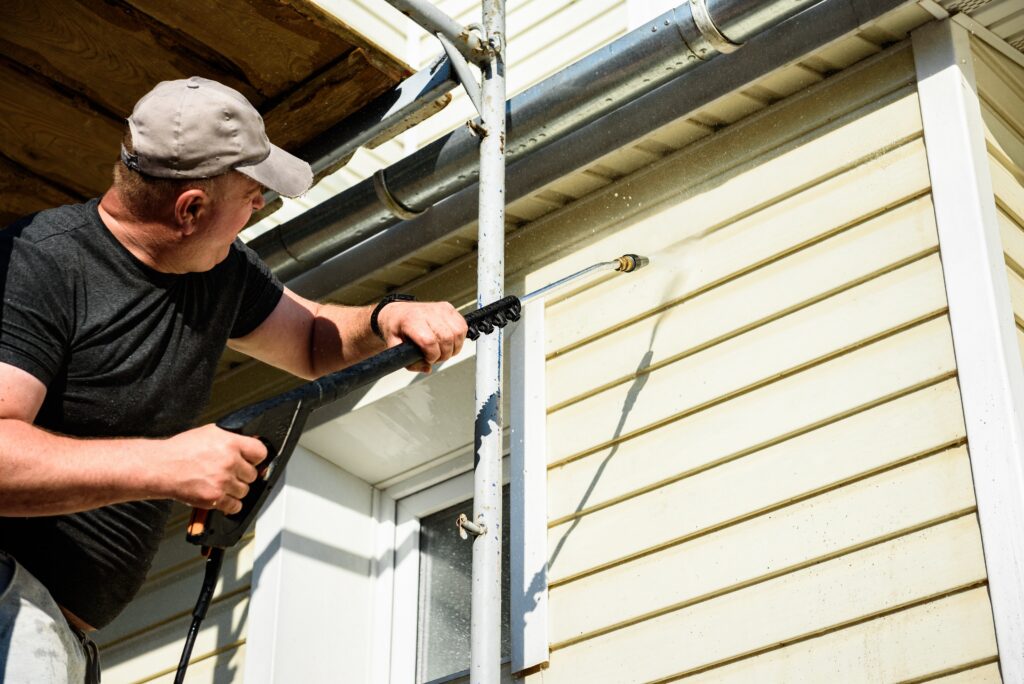
Power washing uses high-pressure water to clean dirt, mildew, mold, and buildup from exterior surfaces. It’s commonly used on siding, driveways, decks, and patios.
You’ll also hear the term pressure washing, which is very similar.
Power Washing vs. Pressure Washing
The main difference is heat:
- Power washing uses heated water
- Pressure washing uses unheated water
For most residential siding projects, pressure washing is more common. The high-pressure spray alone is usually enough to remove dirt and mildew buildup.
Why Homeowners Power Wash Siding
Siding naturally collects debris over time, especially in humid or heavily wooded areas. Power washing helps remove buildup that can make your home look older or poorly maintained.
Common reasons homeowners clean their siding include:
- Removing dirt and grime
- Eliminating mold and mildew
- Washing away pollen and algae
- Improving curb appeal
- Preparing siding for painting or repairs
- Maintaining the exterior of the home
A good siding cleaning can make a surprisingly big difference in how your home looks from the street.
Can You Power Wash All Types of Siding?
Not every siding material handles pressure washing the same way. Some materials are more durable, while others require a softer approach.
Vinyl Siding
Vinyl siding is one of the most commonly pressure-washed materials. It generally handles cleaning well as long as the pressure isn’t too high.
Tips for vinyl siding:
- Use lower PSI settings
- Spray at a downward angle
- Avoid forcing water behind panels
- Use a wide spray nozzle
Fiber Cement Siding
Fiber cement siding is durable, but homeowners should still follow manufacturer recommendations when cleaning it.
Too much pressure can damage the finish or force moisture into seams and joints.
Wood Siding
Wood siding requires extra caution. High-pressure spray can:
- Splinter wood
- Strip paint
- Cause moisture damage
- Wear down protective finishes
In many cases, soft washing is safer for wood siding.
Brick and Stucco Exteriors
Brick and stucco can be cleaned with pressure washers, but porous materials require careful handling.
Too much pressure may:
- Crack stucco
- Damage mortar joints
- Push water into small openings
Actual costs depend on your location, project scope, and materials. The best way to know what you'll pay is to get quotes from local contractors.
Get Your Free Estimate →Aluminum and Steel Siding
Metal siding can usually be cleaned effectively with moderate pressure washing.
The key is avoiding excessive pressure that could dent panels or scratch protective coatings.
Benefits of Power Washing Siding
Power washing isn’t just about appearance. Regular siding maintenance may also help protect your home over time.
Improves Curb Appeal
One of the biggest benefits is simply making your home look cleaner and newer.
Removing years of grime and discoloration can dramatically brighten the exterior.
Helps Prevent Long-Term Damage
Mold, algae, and mildew can slowly wear down siding materials if left untreated.
Dirt buildup may also trap moisture against your home, which can contribute to deterioration over time.
Prepares Siding for Painting or Repairs
If you’re planning exterior painting or siding repairs, cleaning the surface first is essential.
Paint adheres much better to a clean surface free from dirt and mildew.
"We matched with a great contractor the same day. The whole process was easy and completely free."
May Help Protect Home Value
A well-maintained exterior can make a home more attractive to potential buyers and help preserve resale value.
Risks of Improper Power Washing
While pressure washing can be effective, it’s easy to accidentally damage siding if you use the wrong technique.
Water Damage Behind Siding
One of the biggest risks is spraying water upward underneath siding panels.
This can trap moisture behind the siding and potentially lead to:
- Mold growth
- Rot
- Insulation damage
- Interior water issues
Cracked or Loose Siding
Too much pressure can crack vinyl panels, loosen siding sections, or damage caulking and trim.
Paint Stripping and Surface Damage
Older painted siding is especially vulnerable to peeling or stripping under high pressure.
Personal Safety Risks
Pressure washers are powerful tools and can cause injuries if used improperly.
There’s also added risk when using ladders to clean second-story areas.
How to Safely Power Wash Siding
If you decide to tackle the job yourself, proper technique matters.
Use the Correct Pressure Settings
Different siding materials require different PSI levels.
In general:
- Lower pressure is safer
- Start gently and increase only if needed
- Avoid using the highest pressure settings on siding
Choose the Right Cleaning Solution
Many homeowners use siding-safe detergents to loosen dirt, mold, and algae.
Avoid harsh chemicals that may:
- Damage siding finishes
- Kill landscaping
- Harm nearby plants or grass
Why Hire a Licensed Professional
- Licensed & insured — protects you from liability
- Warranty coverage — manufacturers require pro installation
- Code compliance — avoids permit issues
- Faster completion — pros finish in days, not weeks
Spray at the Correct Angle
Always spray downward or straight-on rather than upward.
This helps prevent water from getting behind the siding.
Test a Small Area First
Before cleaning the entire house, test a hidden section to make sure the pressure and cleaner aren’t causing damage.
Protect Landscaping and Windows
Cover nearby plants if needed and make sure windows and doors are fully sealed before washing.
DIY vs. Hiring a Professional
Some homeowners feel comfortable pressure washing siding themselves, while others prefer hiring a professional exterior cleaning company.
When DIY Power Washing Makes Sense
DIY may work well for:
- Small homes
- Light dirt buildup
- Single-story properties
- Homeowners familiar with pressure washers
Renting a pressure washer can be relatively affordable for smaller projects.
DIY vs. Professional: At a Glance
When to Hire a Professional
Hiring a pro may be the safer option for:
- Multi-story homes
- Delicate siding materials
- Heavy mold or algae growth
- Older siding
- Existing damage or loose panels
Professionals typically know how to adjust pressure levels based on siding type and condition.
Average Cost to Power Wash Siding
The cost to power wash siding varies depending on:
- Home size
- Siding material
- Amount of buildup
- Local labor costs
Many homeowners spend anywhere from a couple hundred dollars to several hundred dollars for professional siding cleaning.
How Often Should You Power Wash Siding?
Most homes benefit from exterior cleaning every one to two years.
However, some homes may need more frequent cleaning depending on:
- Humid climates
- Heavy pollen exposure
- Nearby trees
- Shade and moisture levels
- Mold or algae growth
Homes in damp or wooded environments often develop mildew faster.
Common Mistakes to Avoid When Power Washing Siding
Avoiding a few common mistakes can help protect your siding from damage.
Using Too Much Pressure
Higher pressure isn’t always better. Excessive force can crack or loosen siding panels.
Spring and summer are the busiest seasons for home improvement projects — top-rated contractors book up fast. Lock in your estimate now before demand peaks.
Check Availability in Your Area →Spraying Water Upward
Always avoid aiming water upward beneath siding seams.
Ignoring Manufacturer Guidelines
Some siding manufacturers recommend specific cleaning methods or pressure limits.
Using the Wrong Nozzle
Narrow spray nozzles can concentrate pressure too aggressively for siding surfaces.
Skipping Safety Equipment
Wear eye protection, closed-toe shoes, and use caution on ladders or wet surfaces.
Frequently Asked Questions About Power Washing Siding
Ready to Move Forward?
Tell us about your project and get matched with up to 3 pre-screened contractors. Compare quotes, check reviews, and hire with confidence.
Can Power Washing Damage Vinyl Siding?
Yes, if the pressure is too high or water is sprayed underneath the panels.
Is Soft Washing Better for Some Siding Types?
Yes. Soft washing is often safer for wood siding, painted surfaces, and older exteriors.
Should You Use Bleach on Siding?
Some cleaners contain diluted bleach, but improper use can damage landscaping and certain siding materials.
Can You Power Wash Siding Yourself?
Many homeowners can safely DIY smaller jobs, but larger or more delicate projects may require professional help.
What Time of Year Is Best for Power Washing?
Spring and early fall are popular times because temperatures are moderate and pollen or mildew buildup is common.
Final Thoughts
Power washing siding can be an effective way to improve curb appeal, remove grime, and help maintain your home’s exterior. But using the wrong pressure or technique can lead to costly damage if you’re not careful.
If your siding has heavy buildup, existing damage, or hard-to-reach areas, it may be worth bringing in a professional for help.
Need help cleaning or restoring your siding? Connect with local siding professionals today and compare free quotes from trusted experts near you.
Connect with top-rated local contractors who can help you with siding, roofing, HVAC, windows, and more. Get free quotes from verified professionals in your area today.