

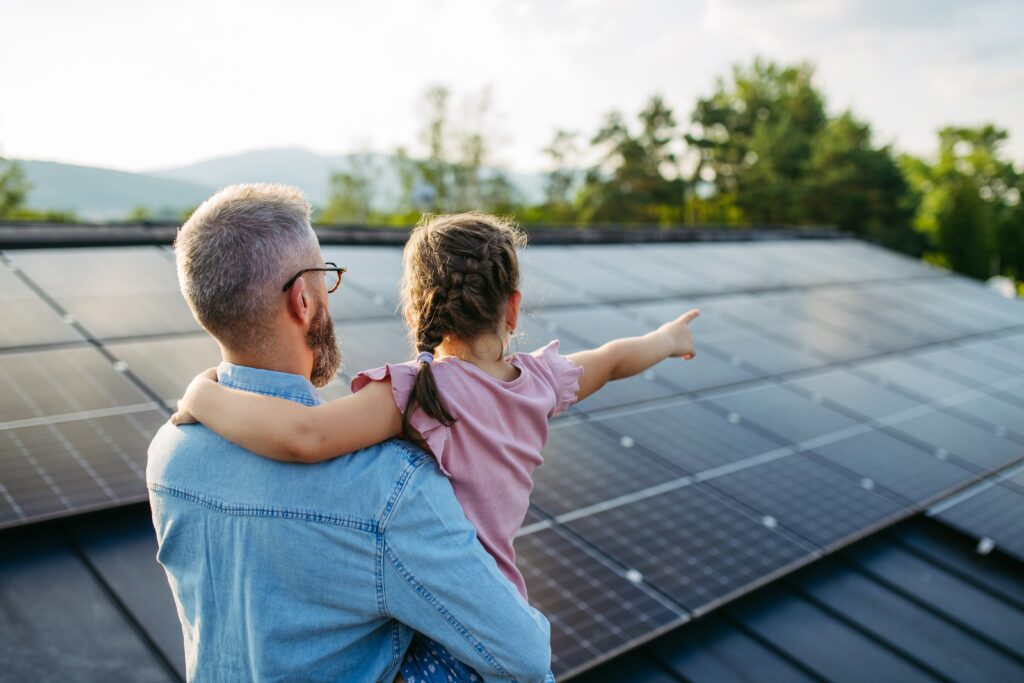
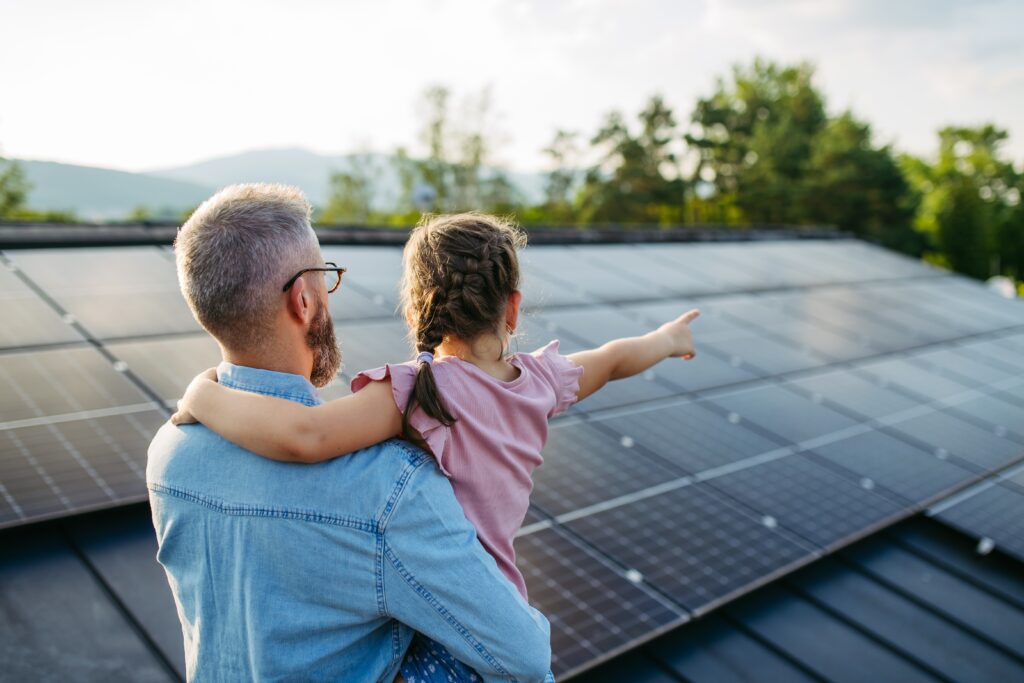
Thinking about going solar? With energy bills on the rise and a growing interest in sustainable living, more homeowners are looking to solar for answers—and savings.
Whether you’re curious about the costs, how solar panels actually work, or what kind of incentives are out there, this FAQ guide has you covered.
We’ll break down the most common questions homeowners ask when considering solar, so you can decide if it’s the right move for your home and budget.
Table of Contents
- 1. Is Solar Power Worth It for My Home?
- 2. How Much Do Solar Panels Cost?
- 3. How Much Can I Save with Solar?
- 4. What Incentives or Tax Credits Are Available?
- 5. Do Solar Panels Work During Cloudy Days or Power Outages?
- 6. How Long Do Solar Panels Last?
- 7. Will Solar Panels Damage My Roof?
- 8. Can I Install Solar on a Roof That Needs Repairs?
- 9. Are Solar Panels Covered by Homeowners Insurance?
- 10. What Happens If I Move After Installing Solar Panels?
- 11. How Do I Choose the Right Solar Installer?
1. Is Solar Power Worth It for My Home?
That’s the big question, right? And the honest answer is: it depends—but for many homeowners, the payoff is absolutely worth it.
First, think about your roof. Is it big enough to fit a decent number of panels? Does it get a lot of direct sunlight throughout the day? A shady roof or one that faces the wrong direction could limit how much energy your system produces, which affects how much you save. On the flip side, if your roof is sunny and spacious, you’re already ahead of the game.
Then there’s the financial side. Yes, solar panels come with upfront costs, but there are also some serious long-term benefits. Over time, you could save thousands on electricity bills. Plus, depending on where you live, you might qualify for local rebates, state tax credits, or net metering programs that pay you for extra energy your panels produce.
Bottom line: If your home is a good fit and you plan to stay there for a while, solar can be a smart, money-saving investment.
2. How Much Do Solar Panels Cost?
Alright, let’s talk dollars and cents. Nationwide, here’s what you can expect to pay:
- Before tax credits: On average, homeowners see a sticker price around $29,360 for an 11 kW system (that’s enough to power most three‑bedroom homes) Solar.comNerdWallet.
- After the 30% federal tax credit: That same system drops to about $20,552 net out‑of‑pocket Solar.comEnergySageEnergySage.
Actual costs depend on your location, project scope, and materials. The best way to know what you'll pay is to get quotes from local contractors.
Get Your Free Estimate →But wait—there’s more than just panels on your roof!
- Inverter(s):
- Converts your panels’ DC power to AC.
- Expect 10% of total system cost here—typically $2,500–$3,000 for a mid‑range inverter setup EnergySage.
- Converts your panels’ DC power to AC.
- Labor & Permits:
- Installation labor is actually only ≈7% of the total price (around $2,000 on a $29,000 system), while permitting/interconnection fees add another 8% (roughly $2,300) EnergySage.
- Angi’s breakdown shows materials are half your cost, labor + permits about 25%, and overhead/maintenance the rest Angi.
- Installation labor is actually only ≈7% of the total price (around $2,000 on a $29,000 system), while permitting/interconnection fees add another 8% (roughly $2,300) EnergySage.
- Other hardware & overhead:
- Racking, wiring, sales & marketing, overhead—these all add up. In total, non‑panel equipment and “soft costs” can be nearly 40–50% of what you pay EnergySage.
- Racking, wiring, sales & marketing, overhead—these all add up. In total, non‑panel equipment and “soft costs” can be nearly 40–50% of what you pay EnergySage.
Yes, solar panels are a significant upfront investment—think $12,000–$24,000 after tax credits, depending on size. But when you break down panels vs. inverters vs. labor vs. permits, most of that cost is materials & equipment, with labor and permits being a much smaller slice of the pie. And remember, with net metering and low maintenance, you’ll be offsetting your electric bills for 25+ years—often paying back your system in 6–8 years.
3. How Much Can I Save with Solar?
One of the biggest perks of going solar is cutting down those monthly utility bills. Depending on how much electricity your system generates and how much you typically use, you could reduce your bill by 50% to even 100% in some cases.
Now let’s talk about net metering, because this is a huge part of how those savings stack up. With net metering, any extra energy your solar panels produce gets sent back to the grid. In return, you earn energy credits. So when your panels aren’t producing as much—like at night or on cloudy days—you can use those credits to offset your usage.
As for the payback period, that’s the time it takes for your energy savings to equal what you spent on your system. Most homeowners see a payback period of 6 to 10 years, depending on their location, energy usage, and available incentives. After that, the electricity your panels produce is basically free, and your savings just keep adding up year after year. So while solar is an investment upfront, it’s one that pays you back.
4. What Incentives or Tax Credits Are Available?
If you’re thinking about installing solar panels, one of the best parts—aside from the energy savings—is the variety of financial incentives that can help lower your upfront costs. Here’s a breakdown of the most common ones:
"We matched with a great contractor the same day. The whole process was easy and completely free."
Federal Solar Tax Credit (ITC)
The big one is the Residential Clean Energy Credit, formerly known as the Investment Tax Credit (ITC). This allows you to deduct 30% of your total solar installation cost from your federal taxes. That includes everything from the panels and inverters to labor and even battery storage systems.
So, let’s say your system costs $20,000—you could be eligible for a $6,000 tax credit. The 30% rate is locked in through 2032, but it does step down to 26% in 2033 and 22% in 2034 unless extended again.
State and Local Incentives
Beyond the federal credit, many states and local governments offer additional perks. These can include:
- Property tax exemptions for the added value solar brings to your home
- Cash rebates from utilities or municipalities
- Sales tax exemptions on solar equipment
- Net metering programs that give you credit for excess energy your system sends back to the grid
Not every area offers all of these, so it’s worth checking with your local utility or a licensed solar installer to see what’s available in your region.
Solar Renewable Energy Certificates (SRECs)
In some states, you can earn Solar Renewable Energy Certificates (SRECs) for the electricity your system produces. Each SREC typically represents 1,000 kilowatt-hours (kWh) of solar energy. These certificates can be sold to utility companies that need to meet renewable energy quotas, giving you a potential income stream.
Keep in mind, not all states have active SREC markets, so this incentive isn’t available everywhere. But where it is, it can be a nice bonus on top of your energy savings.
These incentives can take a big bite out of your solar costs and improve your overall return on investment. A qualified solar installer can walk you through what applies to your home and help make sure you don’t leave any money on the table.
5. Do Solar Panels Work During Cloudy Days or Power Outages?
This is a super common question—and totally fair! Let’s start with cloudy days.
Yes, solar panels do still work when it’s cloudy, just not at full capacity. Think of it like a phone screen with the brightness turned down. Your panels are still soaking up sunlight, just at a reduced rate. Depending on how thick the cloud cover is, your system might produce anywhere from 10% to 60% of its normal output. So while you might not be powering the whole house, you’re still generating energy.
Now, what about power outages? If your system is tied to the grid and doesn’t have a battery backup, it will shut off during a power outage. That’s a safety feature to protect utility workers fixing downed lines—so energy from your panels doesn’t flow back into the grid while they’re working.
The solution? Solar batteries. A battery storage system lets you store excess energy your panels generate during the day, so you can use it at night—or during an outage. Some systems are even smart enough to automatically kick in when the power goes out, keeping essentials like your fridge or Wi-Fi running.
In summary, panels can still produce on cloudy days, and with the right battery setup, you can keep the lights on even when the grid goes down.
6. How Long Do Solar Panels Last?
One of the best things about solar panels is how long they stick around. On average, most residential solar panels last 25 to 30 years—sometimes even longer. That doesn’t mean they just stop working after that, though.
It just means they might produce a bit less electricity than they did when they were brand new. Most panels lose a tiny bit of efficiency each year (we’re talking around 0.5% to 1% annually), so even after 25 years, your system could still be generating 80–90% of its original output.
When it comes to warranties, you’re usually covered in two ways:
- Performance warranties, which typically guarantee that your panels will produce at least 80% of their original capacity for 25 years.
- Product warranties, which cover things like manufacturing defects or premature failure, usually for 10 to 25 years.
As for maintenance, there’s really not much to it. Solar panels don’t have moving parts, so there’s less chance of something breaking. You might need to rinse them off occasionally if they get dusty or covered in leaves, but for the most part, rain does a good job of cleaning them.
Why Hire a Licensed Professional
- Licensed & insured — protects you from liability
- Warranty coverage — manufacturers require pro installation
- Code compliance — avoids permit issues
- Faster completion — pros finish in days, not weeks
7. Will Solar Panels Damage My Roof?
It’s totally normal to worry about sticking a bunch of equipment on your roof—but good news: solar panels won’t damage your roof when they’re installed properly. In fact, they might actually help protect the parts of the roof they cover from sun, wind, and rain.
Here’s how it works: during installation, your solar contractor will carefully secure mounting hardware to your roof structure. These mounts are designed to be weather-tight and are sealed with flashing and waterproof materials so nothing leaks through. Think of it like installing a skylight—done right, it’s clean, secure, and long-lasting.
However, your roof needs to be in decent shape before installation. If it’s old or showing signs of wear, it’s usually smart to take care of repairs or a full replacement first—so you don’t end up removing the panels just to fix the roof a few years later.
And this is key: always work with a licensed, experienced solar installer. A reputable pro will know how to assess your roof’s structural integrity, follow local building codes, and install everything safely without causing damage. Plus, many installers offer warranties that cover not just the panels but also any roof-related issues caused by the installation—just in case.
So while it may seem risky, with the right prep and a skilled team, adding solar to your roof is not only safe—it might even help it last longer.
8. Can I Install Solar on a Roof That Needs Repairs?
Technically, you can install solar on a roof that’s seen better days—but it’s usually not the best idea. Solar panels are designed to last 25+ years, and the last thing you want is to pull them off just a few years in to fix or replace your roof. That’s extra time, hassle, and cost you can avoid with a little planning upfront.
Ideally, your roof should be in good condition before you go solar. No missing shingles, no soft spots, no signs of water damage or major wear. If your roof is nearing the end of its lifespan—say it’s 15-20 years old for asphalt shingles—it’s probably smart to replace or repair it before installing panels. That way, your solar system and your roof can age together without surprises.
Many solar installers will check your roof as part of the consultation and give you an honest heads-up. Some companies even offer roofing services or work with local roofers to bundle the job, which can save time and streamline the process.
Bottom line: If your roof’s in rough shape, fix it first. You’ll avoid future headaches and protect your solar investment from day one.
DIY vs. Professional: At a Glance
9. Are Solar Panels Covered by Homeowners Insurance?
Yes, solar panels are usually covered by your homeowners insurance! In most cases, once they’re installed on your home, your panels are considered a permanent structure, just like your roof or garage. That means if something like hail, fire, or a falling tree damages them, your standard policy will likely help cover the repair or replacement costs.
Coverage can vary slightly depending on your provider and how the panels are mounted. Roof-mounted systems are typically treated as part of the building, but ground-mounted panels or solar carports might need to be added as separate structures.
To be safe, it’s a smart move to call your insurance provider and ask a few key questions:
- Are my solar panels automatically covered under my current policy?
- Will installing solar increase my home’s replacement value?
- Do I need to raise my coverage limits to fully protect the system?
- Are there any exclusions or specific risks I should be aware of?
Also, keep in mind that increasing your home’s value with solar could mean slightly higher premiums—but in exchange, you’re protecting a major investment.
So before your system goes live, give your insurance company a quick call to make sure everything’s squared away.
10. What Happens If I Move After Installing Solar Panels?
Thinking about moving after going solar? You’re not stuck—but there are a few things to keep in mind.
First off, selling a home with solar panels can actually be a big plus. More and more buyers are looking for energy-efficient homes, and lower utility bills can be a major selling point. In many cases, solar can boost your home’s value and help it stand out in a crowded market.
Now, if you bought your system outright, it’s pretty straightforward. The panels stay with the house, and the new owner gets all the perks.
If you’re leasing your system or have a solar loan, things get a little more detailed. You’ll typically have a few options:
- Transfer the lease or loan to the new homeowner (many buyers are fine with this if the monthly payment is lower than what they’d pay for electricity).
- Buy out the remaining lease before selling the home.
- Pay off the loan at closing, so the new buyer gets the system free and clear.
Whatever the setup, it’s a good idea to have clear records of your system’s performance, warranties, and savings. This makes it easier to show potential buyers the value they’re getting.
11. How Do I Choose the Right Solar Installer?
Picking the right solar installer is just as important as choosing the panels themselves. A good installer will not only make sure everything’s set up safely and correctly—they’ll also walk you through permits, incentives, warranties, and all the little details that can make or break your solar experience.
So, how do you find the right one?
Start by looking for certifications. The gold standard in the industry is NABCEP (North American Board of Certified Energy Practitioners). It’s basically the stamp of approval that tells you the installer knows their stuff. Also check if they’re licensed, bonded, and insured in your state—that’s non-negotiable.
Next, read online reviews and check out their portfolio. Look for consistent feedback, especially about customer service, timeliness, and how well the system has performed over time. Sites like Google, Yelp, or EnergySage can be helpful, but don’t be afraid to ask the company directly for references.
And before you sign anything, ask a few key questions:
- What brands of panels and inverters do you use?
- Do you handle permitting and inspections?
- What warranties are included—for the equipment and the installation?
- What happens if my roof needs repair in the future?
- Who do I call if there’s a problem after installation?
Take your time, ask questions, and go with a company that’s transparent, experienced, and makes you feel confident.
Spring and summer are the busiest seasons for home improvement projects — top-rated contractors book up fast. Lock in your estimate now before demand peaks.
Check Availability in Your Area →Conclusion
Going solar can be a smart move for homeowners looking to cut energy costs, increase their home’s value, and reduce their carbon footprint. With modern technology, great incentives, and long-lasting systems, it’s easier than ever to make the switch.
FAQs
Ready to Move Forward?
Tell us about your project and get matched with up to 3 pre-screened contractors. Compare quotes, check reviews, and hire with confidence.
Can I DIY a solar panel system?
Technically, yes—you can install a solar system yourself if you’re pretty handy and comfortable working on a roof and with electrical systems. But keep in mind, there’s a reason most people hire a pro. You’ll need permits, inspections, and a really solid understanding of how everything ties into your home and the power grid. Plus, many tax credits and warranties only apply if the system is professionally installed. So unless you’re a seasoned DIYer with electrical experience, hiring a certified installer is usually the safer way to go.
What is the best direction for panels to face?
In the U.S., the sweet spot is usually south-facing, since that gives your panels the most direct sunlight throughout the day. East- or west-facing panels can still work well too, especially if your roof doesn’t have a good southern exposure. It all depends on your roof layout, local climate, and when you use the most energy. A good installer can help figure out the best setup for your specific home.
Do panels work in winter?
Yes, solar panels absolutely work in the winter! In fact, cooler temperatures can actually help them operate more efficiently. The days are shorter, so you might generate less power overall, but you’re still pulling in sunlight—even when it’s cold. Snow can temporarily block sunlight if it piles up, but panels are usually installed at an angle, so most snow slides right off. And once the panels are clear, they get right back to work.
If you’re thinking about it, don’t go it alone—reach out to a trusted local solar expert who can walk you through your options and help you figure out what makes the most sense for your home.
Additional Solar Resources
- Guide to Solar Panel Cleaning
- Are There Really Free Solar Panels?
- How Often Do You Need to Repair or Replace Solar Panels?
Connect with top-rated local contractors who can help you with siding, roofing, HVAC, windows, and more. Get free quotes from verified professionals in your area today.