

A single carpenter bee can drill a half-inch hole through your wood siding in under a week. Leave it unchecked, and by next spring, you could have dozens more expanding tunnels that weaken your exterior, invite moisture damage, and attract woodpeckers that tear the wood apart searching for larvae. Bees, wasps, and woodpeckers are three of the most common siding pests homeowners face, and the damage they cause tends to compound quickly when ignored.
Whether you are dealing with an active infestation or trying to stop one before it starts, understanding how these three pests interact with your home’s exterior is the first step toward protecting it.
Why Do Carpenter Bees Drill Into Siding?
Carpenter bees bore into bare or weathered wood siding to create nesting tunnels for their eggs, not to eat the wood itself.
Unlike honeybees that build hives, carpenter bees are solitary insects. Each female drills a perfectly round entry hole (about the diameter of a fingertip), then turns 90 degrees and tunnels along the grain of the wood for roughly six inches. She deposits about six eggs inside, each in its own chamber. The young adults emerge in about seven weeks.
The problem scales fast. Carpenter bees return to the same nesting area year after year, and females from the previous generation will either reuse old tunnels or excavate new ones nearby. Within two or three seasons, a couple of bees can turn into dozens, and those six-inch tunnels can extend to several feet as generations expand them. Over time, the network of tunnels compromises the structural integrity of your siding boards and creates entry points for moisture and water damage.
How to Identify Carpenter Bee Damage
Look for these signs on your exterior:
- Perfectly round holes about half an inch in diameter, typically on the underside of fascia boards, eaves, or exposed siding edges
- Fine sawdust (called frass) piling up below the entry holes
- Yellow-brown staining around the openings from bee excrement
- Large bees hovering near the roofline or siding. Males are territorial and will dive-bomb passersby, though they cannot sting
Carpenter bees prefer softwoods like cedar, redwood, pine, and fir. Hardwoods like oak are less attractive because they are harder to drill through. If you have wood siding, especially unfinished or weathered boards, your home is a prime target.
Actual costs depend on your location, project scope, and materials. The best way to know what you'll pay is to get quotes from local contractors.
Get Your Free Estimate →How to Prevent and Treat Carpenter Bees
The best results come from combining surface treatments that make your wood less appealing with targeted action against active nests.
Paint or Stain All Exposed Wood Surfaces
Carpenter bees strongly prefer bare, untreated wood. A solid coat of exterior paint is one of the most effective deterrents. Stain offers some protection but is less reliable because bees can still detect the wood grain beneath it. Both sides of siding boards and fascia should be finished, not just the visible face, since bees will attack the unfinished backside. If your siding needs a fresh coat, understanding exterior painting costs can help you plan accordingly.
Seal Existing Holes in the Fall
Wait until autumn when bees have left the tunnels, then fill the holes with wood putty, dowels, or exterior caulk. Plugging active nests during nesting season can backfire because trapped bees will simply drill new exit holes.
Use Citrus-Based Repellents
Carpenter bees are sensitive to citrus oils. Spraying a citrus oil and water solution on vulnerable wood surfaces in early spring can help discourage nesting. Reapply every few weeks through peak season.
Apply Insecticidal Dust to Active Tunnels
For established infestations, insecticidal dust applied directly into the tunnel openings is more effective than surface sprays. The returning bees track the dust deeper into the nest. Treat in the evening when bees are inside, then seal the holes a few days later once activity has stopped.
Pro Tip: Hanging untreated wood blocks or “bee houses” away from your home can redirect carpenter bees to a more appealing nesting spot. Pair this with citrus oil treatment on your siding for a two-pronged approach.
How Do Wasps Build Nests in Siding?
Wasps nest behind or on house siding because gaps, cracks, and overhangs provide warm, sheltered, undisturbed spaces for colonies.
Paper wasps, yellow jackets, and hornets are the most common species that cause problems around siding. Paper wasps build open, umbrella-shaped nests on the surface under eaves and overhangs. Yellow jackets and hornets are more aggressive and tend to build concealed nests inside wall cavities, entering through small gaps in siding panels.
The risk with wasps goes beyond stings. A hidden nest inside your wall cavity can grow to hold thousands of insects by late summer. Abandoned nests left inside walls attract secondary pests like carpet beetles, moths, and other scavengers. And unlike carpenter bees, wasps are highly defensive of their nests, making removal significantly more dangerous for anyone with allergies or sensitivity to stings.
Signs of a Wasp Nest in Your Siding
Keep an eye out for these indicators, especially from spring through fall:
- A steady stream of wasps flying in and out of the same spot on your exterior
- Buzzing or tapping sounds coming from inside walls or corners
- Visible nest material (a papery, grayish mass) under eaves or behind loose siding panels
- Small chewed-looking holes along siding edges where wasps have widened a gap for access
If you notice any of these signs of siding damage, act before the colony grows larger and removal becomes more complex.
"We matched with a great contractor the same day. The whole process was easy and completely free."
How to Prevent and Remove Wasp Nests
Prevention focuses on eliminating access points, while removal depends on the nest’s location and the species involved.
Seal Entry Points Before Nesting Season
In late winter or early spring, walk the perimeter of your home and caulk any gaps, cracks, or openings in your siding. Pay special attention to where siding panels meet trim, window frames, and utility penetrations. Installing insect screens behind exterior vents adds another layer of protection.
Treat Visible Nests in the Evening
Wasps are less active and less aggressive at dusk. For small, accessible paper wasp nests on the surface of your siding, an aerosol wasp spray with a long-range nozzle is usually effective. Soak the nest thoroughly, wait 24 hours to confirm all activity has stopped, then scrape the nest away and dispose of it in a sealed bag.
Use Insecticidal Dust for Hidden Nests
If wasps are entering a wall cavity through a gap in your siding, do not seal the opening while the colony is active. Trapped wasps will find (or create) another way out, often into your home’s interior. Instead, apply insecticidal dust into the entry point at dusk and allow several days for the product to work through the colony. Once activity has stopped completely, seal the gap and remove any accessible nest material.
Why Hire a Licensed Professional
- Licensed & insured — protects you from liability
- Warranty coverage — manufacturers require pro installation
- Code compliance — avoids permit issues
- Faster completion — pros finish in days, not weeks
Call a Professional for Large or Aggressive Colonies
Yellow jacket and hornet nests inside walls often require professional pest control and potentially some siding removal to fully extract the nest. A pest control technician has the protective equipment and chemical solutions to handle aggressive colonies safely, and a siding contractor can reseal and repair the area afterward.
Warning: If anyone in your household is allergic to wasp or bee stings, skip the DIY approach entirely. Disturbing a concealed nest can trigger a mass stinging response, and yellow jackets release an attack pheromone that draws more wasps toward you.
Why Do Woodpeckers Damage House Siding?
Woodpeckers peck house siding to find insects, create nesting cavities, and establish territory through loud drumming on resonant surfaces.
According to Cornell Lab of Ornithology research, roughly one-third of houses in a study of over 1,000 homes in Ithaca, New York had some form of woodpecker issue, either physical damage or noise disturbance. The damage falls into three categories.
- Foraging holes are small, irregular clusters where a woodpecker is pulling insects or larvae out of the wood. If you have carpenter bees, you are almost guaranteed to attract woodpeckers. They can hear larvae moving inside the tunnels and will tear through siding to reach them.
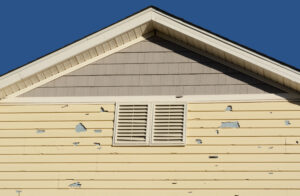
- Nesting cavities are large, round holes (typically two to three inches in diameter) that the bird excavates for shelter and breeding. These cause the most structural damage and can allow moisture, other pests, and even wildlife into your walls.
- Territorial drumming is rapid-fire pecking on a resonant surface, often metal gutters, chimney caps, or hollow siding. The goal is noise, not holes. This behavior is usually seasonal (spring mating season) and does not cause significant structural damage, though it can be extremely loud.
One critical legal note: woodpeckers are federally protected under the Migratory Bird Treaty Act. It is illegal to kill, trap, or harm them, or to disturb their active nests. All control methods must be non-lethal deterrents.
DIY vs. Professional: At a Glance
How to Prevent and Deter Woodpeckers
Since lethal methods are off the table, effective woodpecker control relies on removing what attracts them and making your siding less rewarding to drill.
Eliminate the Food Source First
The single most important step is treating any insect infestation in your siding. If carpenter bees, termites, or carpenter ants are living in your wood, woodpeckers will keep coming back regardless of any deterrents you install. Address the underlying pest and termite damage before focusing on the birds.
Install Visual Deterrents
Reflective tape, Mylar balloons, pinwheels, and predator decoys (like plastic owls or hawks) can discourage woodpeckers from targeting your siding. These work best when moved periodically so the birds do not become accustomed to them.
Use Physical Barriers
Bird netting installed at least three inches from the siding surface prevents woodpeckers from reaching the wood. It should be taut and secured at the edges so birds cannot become trapped behind it. Hardware cloth or metal flashing over damaged areas also stops woodpeckers from returning to the same spot.
Provide Alternative Habitat
Roosting boxes placed near the edges of your property give woodpeckers a more appealing nesting option than your siding. Suet feeders positioned away from the house can redirect foraging behavior, though use caution because feeders may attract additional woodpeckers to your property.
Repair Damage Promptly
Open holes in your siding draw more woodpeckers to investigate the potential food source or nesting site. Fill small foraging holes with exterior wood filler or epoxy putty, sand them smooth, and paint or stain to match. For large nesting cavities, ensure the hole is empty before sealing it with metal flashing or hardware cloth that the birds cannot peck through.
Which Siding Materials Resist Pest Damage?
Fiber cement siding is the most pest-resistant option, since insects cannot burrow into it and woodpeckers cannot drill through it.
Your choice of siding material plays a major role in how vulnerable your home is to bees, wasps, and woodpeckers. Here is how the most common options compare.
| Siding Material | Carpenter Bee Risk | Wasp Nesting Risk | Woodpecker Risk | Overall Pest Resistance |
|---|---|---|---|---|
| Wood (cedar, pine, redwood) | High, preferred nesting target | Moderate, gaps in aged boards | High, primary target | Low |
| Vinyl | None, cannot burrow | High, gaps from expansion/contraction | Low to moderate, may drum on surface | Moderate |
| Fiber Cement | None, material too hard | Low, tight fit limits gaps | Very low, too dense to drill | High |
| Engineered Wood | Moderate | Moderate | High, still attracts drilling | Low to moderate |
| Metal/Steel | None | Low | Low, but may drum for noise | High |
Wood siding is the most vulnerable across all three pest types. Carpenter bees actively target it for nesting, woodpeckers drill into it for both food and shelter, and deteriorating wood creates gaps that wasps exploit. If you currently have wood siding with recurring pest problems, upgrading to a pest-resistant material like fiber cement panels may be a more permanent solution than ongoing treatments. For a broader comparison of your options, our guide to siding pros and cons covers durability, cost, and maintenance across all major materials.
Vinyl siding eliminates the carpenter bee problem but introduces a different vulnerability. The expansion gaps required during installation give wasps, hornets, and other insects a way behind the panels and into your home’s structure. Regular siding inspections help catch these issues early before they become serious infestations.
Fiber cement siding resists all three pest types. The material is too dense and hard for insects to burrow into, offers nothing edible for woodpeckers to hunt, and fits tightly enough to minimize gaps where wasps might enter. It is also resistant to fire, moisture, and rot, which makes it a strong long-term investment for pest-prone properties.
When Should You Call a Professional?
Call a pest control professional when a colony is inside your walls, the pest species is aggressive, or DIY treatments have not stopped the damage.
Small-scale problems, like a few carpenter bee holes or a single visible paper wasp nest, are usually manageable with the DIY methods described above. But several situations call for professional intervention.
Spring and summer are the busiest seasons for home improvement projects — top-rated contractors book up fast. Lock in your estimate now before demand peaks.
Check Availability in Your Area →Large or Concealed Wasp Colonies
If wasps are entering your siding through a gap and you suspect a large colony inside the wall, do not attempt removal yourself. Yellow jackets and hornets are aggressive when their nest is threatened, and incorrect treatment can drive them into your home’s interior.
Recurring Woodpecker Damage
If woodpeckers keep returning despite deterrents, the underlying insect problem may be more extensive than you realize. A pest control inspection can identify hidden infestations that are drawing the birds, and a siding professional can assess whether sections of your exterior need to be replaced.
Ready to Move Forward?
Tell us about your project and get matched with up to 3 pre-screened contractors. Compare quotes, check reviews, and hire with confidence.
Structural Siding Damage
Extensive carpenter bee tunneling or large woodpecker nesting holes can compromise the integrity of your siding boards and allow moisture into your wall assembly. When the damage goes beyond surface-level patching, a siding contractor can evaluate whether repair or partial re-siding is the right move. Understanding the cost to re-side a house helps you weigh repair costs against a longer-term solution.
Honeybee Removal
Honeybees are protected in many areas due to their ecological importance. If honeybees have established a hive inside your wall, contact a local beekeeper rather than an exterminator. Beekeepers can safely relocate the colony, and they often perform this service at little or no cost. After removal, all wax, honey, and pheromone residue must be cleaned out of the wall cavity. Leaving it behind will attract a new swarm.
Keeping Your Siding Pest-Free Long Term
Preventing pest damage to your siding is not a one-time project. It requires a seasonal routine that combines regular inspections, prompt repairs, and proactive maintenance. Walk your home’s exterior at least twice a year, once in early spring before nesting season and again in fall after activity has slowed. Look for new holes, gaps, nests, and signs of insect activity. Seal any openings you find, keep all wood surfaces painted or stained, and address insect problems immediately before they attract woodpeckers.
A well-maintained exterior is your best long-term defense. When siding is in good condition, tightly fitted, properly sealed, and finished on all surfaces, it gives pests far fewer opportunities to establish themselves.
Ready to protect your home from siding pests? Find a trusted siding or pest control professional near you to inspect your exterior and get a plan in place before the next nesting season.
Connect with top-rated local contractors who can help you with siding, roofing, HVAC, windows, and more. Get free quotes from verified professionals in your area today.