

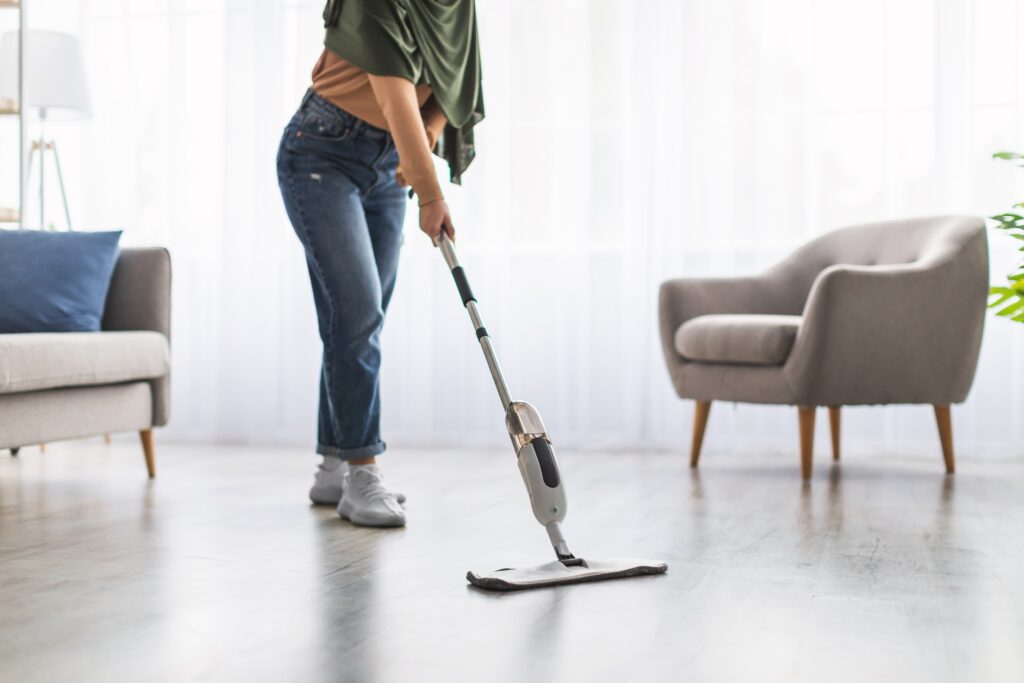
Laminate flooring is one of the easiest floors to live with. It looks great, holds up well, and doesn’t need constant upkeep. But here’s the catch: cleaning it the wrong way can actually do more harm than good. Too much water, the wrong products, or harsh scrubbing can leave you with warped boards, dull spots, or streaks that won’t go away.
Keeping laminate floors clean (and damage-free) is pretty simple once you know what to do and what to avoid.
What Makes Laminate Flooring Different?
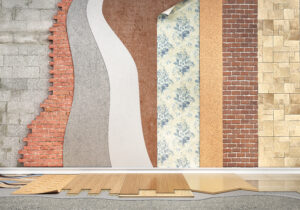
Laminate isn’t the same as hardwood or vinyl. It’s made of multiple layers, including a tough wear layer on top and a core layer underneath that’s sensitive to moisture. That top layer is durable, but once water seeps into the seams, it can cause swelling or warping that’s hard to fix.
That’s why the number one rule with laminate flooring is simple: keep moisture to a minimum.
What to Avoid When Cleaning Laminate Floors
Before we get into how to clean your floors, it’s just as important to know what not to do.
Actual costs depend on your location, project scope, and materials. The best way to know what you'll pay is to get quotes from local contractors.
Get Your Free Estimate →Need professional help with your project?
Get quotes from top-rated pros.
Find Local ProsAvoid using too much water. Soaking your floors or leaving puddles behind is one of the fastest ways to damage laminate. Steam mops are another big no. Even though they work great on tile, the heat and moisture can cause laminate to swell over time.
You’ll also want to skip abrasive scrubbers like steel wool and harsh cleaners like bleach or ammonia. These can wear down the protective top layer and leave your floors looking dull or scratched.
"We matched with a great contractor the same day. The whole process was easy and completely free."
Best Way to Clean Laminate Flooring (Step-by-Step)
Cleaning laminate floors doesn’t take much effort. It’s really about using the right method.
Start with a dry clean. Use a microfiber dust mop or a vacuum with a hard-floor setting to pick up dirt, dust, and debris. This helps prevent scratches when you move on to mopping.
Next, use a damp mop. Lightly dampen a microfiber mop and wring it out well so it’s barely wet. Work in small sections and avoid letting water sit on the surface.
Once you’ve gone over the floor, follow up with a dry microfiber cloth or mop. This step helps prevent streaks and makes sure no moisture is left behind.
What Cleaning Solutions Are Safe for Laminate Floors?
You don’t need anything fancy to clean laminate floors, just something gentle and low-moisture.
Store-bought laminate floor cleaners are a safe bet, since they’re designed specifically for this type of surface. If you prefer a DIY option, a simple mix of water with a small amount of vinegar or mild dish soap works well.
The key is to use just enough solution to clean, not soak. A light mist or damp mop is all you need.
How Often Should You Clean Laminate Floors?
A little routine maintenance goes a long way.
For most homes, sweeping or dust mopping a few times a week keeps dirt from building up. If you have pets or high foot traffic, you may want to do this daily.
Mopping can be done every one to two weeks, depending on how much use your floors get. High-traffic areas like kitchens and entryways may need a little extra attention.
Why Hire a Licensed Professional
- Licensed & insured — protects you from liability
- Warranty coverage — manufacturers require pro installation
- Code compliance — avoids permit issues
- Faster completion — pros finish in days, not weeks
How to Remove Common Stains from Laminate Flooring
Spills and stains happen, but the key is dealing with them the right way.
For everyday food and drink spills, blot them up right away and wipe the area with a damp cloth and a mild cleaner. Don’t let liquids sit, especially near seams.
Grease or oil stains can be tackled with a small amount of dish soap and a damp cloth. Just be sure not to oversaturate the area.
Scuff marks from shoes or furniture can usually be removed with a soft cloth or even a pencil eraser. For tougher marks, a light baking soda paste can help, just don’t scrub too hard.
For stubborn stains like ink or paint, a small amount of rubbing alcohol or acetone can work. Apply it sparingly and only to the affected area, then wipe clean.
DIY vs. Professional: At a Glance
How to Prevent Damage to Laminate Floors
Keeping your floors clean is only part of the equation. Preventing damage in the first place makes a big difference.
Adding furniture pads to the legs of chairs and tables helps prevent scratches. Rugs or mats in high-traffic areas can reduce wear and tear, especially near entrances.
It’s also a good idea to clean up spills as soon as they happen and avoid dragging heavy furniture across the floor.
Spring and summer are the busiest seasons for home improvement projects — top-rated contractors book up fast. Lock in your estimate now before demand peaks.
Check Availability in Your Area →Can You Use a Steam Mop on Laminate Floors?
Short answer: no, it’s not recommended.
Steam mops use heat and moisture, which can seep into the seams of laminate flooring and cause swelling or warping over time. Even if the damage isn’t immediate, repeated use can shorten the life of your floors.
Stick with a damp microfiber mop instead. It’s safer and just as effective.
Common Laminate Cleaning Mistakes to Avoid
A few small mistakes can lead to long-term damage.
Using too much water is the biggest one. Even if your floors look durable, excess moisture can still get into the seams. Skipping regular cleaning can also cause dirt buildup, which can scratch the surface over time.
Another common issue is using the wrong cleaning products. Harsh chemicals may seem effective, but they can wear down the protective layer and leave your floors looking dull.
Ready to Move Forward?
Tell us about your project and get matched with up to 3 pre-screened contractors. Compare quotes, check reviews, and hire with confidence.
Signs Your Laminate Flooring Is Being Damaged
If something’s off with your floors, it usually shows.
Warping or swelling is a clear sign of moisture damage. You might also notice fading, dullness, or peeling edges where the laminate is starting to break down. Persistent streaking can also indicate that too much water or the wrong cleaner is being used.
Catching these signs early can help you adjust your cleaning routine before the damage gets worse.
Final Thoughts: Keep Your Laminate Floors Looking New
Laminate flooring is built to last, but only if you treat it right. The key is keeping things simple: clean regularly, use minimal moisture, and avoid harsh products.
Connect with top-rated local contractors who can help you with siding, roofing, HVAC, windows, and more. Get free quotes from verified professionals in your area today.