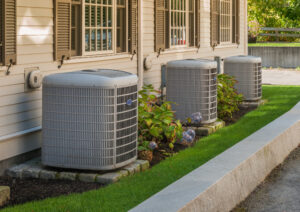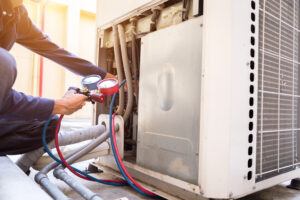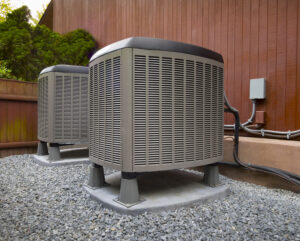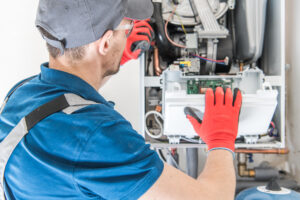

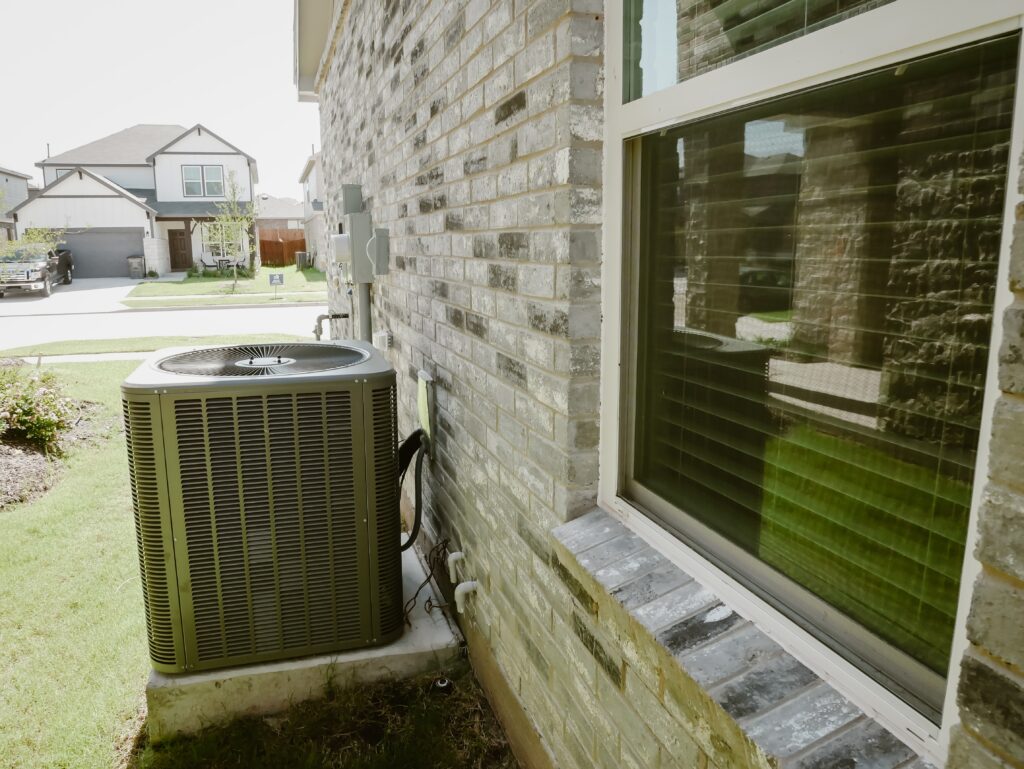
Most homeowners finance their HVAC replacement rather than paying the full $5,000 to $15,000 cost upfront. Common options include personal loans, dealer financing with 0% introductory rates, home equity loans, and credit cards. Home warranty plans and government rebates can also offset part of the expense.
This guide covers each payment method, what credit score you’ll need, how home warranties handle HVAC claims, and how to calculate whether the long-term energy savings and home value increase justify the cost.
How Much Does a New HVAC System Cost?
A full HVAC system replacement typically costs between $5,000 and $15,000, with high-efficiency and geothermal systems running $20,000 or more.
The total price depends on the type of equipment, your home’s size, ductwork condition, and regional labor rates. Here’s a general breakdown of what homeowners pay in 2026.
| System Type | Typical Installed Cost |
|---|---|
| Central air conditioner | $3,500 to $7,500 |
| Gas furnace | $2,500 to $6,500 |
| Air-source heat pump | $4,000 to $8,000 |
| Ductless mini-split (single zone) | $2,000 to $5,000 |
| Full system replacement (AC + furnace) | $7,000 to $15,000 |
| Geothermal heat pump | $15,000 to $35,000 |
These ranges include equipment, labor, permits, and basic ductwork connections. Additional costs such as duct replacement, electrical panel upgrades, or permit fees can add $1,000 to $3,000 or more. For a deeper breakdown by tonnage and efficiency rating, see our guide to HVAC unit prices, SEER2 ratings, and replacement costs.
Can You Finance a New HVAC System?
Yes. Most homeowners can finance a new HVAC system through personal loans, dealer programs, home equity loans, or credit cards.
Financing allows you to spread the cost over months or years instead of paying $7,000 to $15,000 out of pocket. Nearly every major HVAC brand and many independent contractors offer some form of payment plan, and third-party lenders offer personal loans designed specifically for home improvement projects.
The right financing method depends on your credit score, how much equity you have in your home, how quickly you need the system installed, and whether you want a fixed or variable interest rate.
What Are the Most Common HVAC Financing Options?
Homeowners can choose between personal loans, dealer financing, home equity loans, and promotional credit cards for HVAC.
Each option differs in interest rates, approval speed, and risk. Here’s how they compare.
Personal Loans (Unsecured)
A personal loan is one of the most popular ways to finance HVAC replacement. You receive a lump sum, typically $1,000 to $100,000, and repay it in fixed monthly installments over two to seven years.
Key advantages of personal loans include predictable payments, no collateral required, and fast funding. Many online lenders can approve and fund a loan within one to two business days. Interest rates typically range from 6% to 36% depending on credit score, income, and debt-to-income ratio.
Pro Tip: Pre-qualifying with multiple lenders lets you compare rates without affecting your credit score. Always check the APR, not just the interest rate, since it includes origination fees.
HVAC Dealer and Contractor Financing
Many HVAC companies partner with lending institutions to offer financing at the point of sale. These programs often feature promotional rates, including 0% APR for 12 to 60 months, depending on the brand and dealer.
This setup is convenient because you get one point of contact for equipment selection, installation, and payment setup. However, there are important caveats to watch for.
- Deferred interest traps. If you don’t pay off the full balance before the promotional period ends, interest is often charged retroactively on the original purchase amount, sometimes at rates of 26% to 29% APR
- Limited comparison shopping. You’re locked into that dealer’s equipment and pricing
- Credit requirements. Most 0% APR promotions require a credit score of 640 or higher
Home Equity Loans and HELOCs
If you’ve built substantial equity in your home, a home equity loan or home equity line of credit (HELOC) may offer lower interest rates than unsecured personal loans. Rates on these loans tend to fall between 7% and 10% as of 2026, and interest may be tax-deductible if the funds are used for home improvements.
The major drawback is that your home serves as collateral. If you default on the payments, the lender can foreclose. HELOCs also carry variable interest rates, meaning your monthly payment could increase over the life of the loan. This option works best for homeowners who have significant equity in their home and stable income.
Credit Cards With 0% APR Promotions
A 0% introductory APR credit card can work for smaller HVAC expenses, such as a single-zone ductless mini-split or a furnace-only replacement. Promotional periods typically last 15 to 21 months.
The risk here is similar to dealer financing. Any remaining balance after the promotional period ends will accrue interest at the card’s standard rate, which can be 20% or higher. This approach makes the most sense if you’re confident you can pay off the full balance within the interest-free window.
What Credit Score Do You Need for HVAC Financing?
Most HVAC financing requires a minimum credit score of 580 to 640. Borrowers with scores above 720 qualify for the lowest rates.
Your credit score determines not just whether you qualify but what interest rate you’ll receive. Here’s a general breakdown.
| Credit Range | Likely Options | Typical APR |
|---|---|---|
| 740 and above (excellent) | Personal loans, dealer 0% APR, HELOCs | 6% to 12% |
| 670 to 739 (good) | Personal loans, some dealer promos | 10% to 18% |
| 580 to 669 (fair) | Personal loans, lease-to-own, some dealer plans | 18% to 30% |
| Below 580 (poor) | Lease-to-own, no-credit-check programs | 25% to 36%+ |
Homeowners with lower credit scores still have options. Some HVAC companies offer lease-to-own programs with no credit check, though the total cost over the life of the agreement is typically much higher than a traditional loan. If your system isn’t in an emergency state, improving your credit score by even 50 points before applying can save you thousands in interest over the loan term.
Does a Home Warranty Cover HVAC Replacement?
Home warranties can cover HVAC repair and replacement costs, but coverage limits typically range from $1,500 to $5,000 per claim.
A home warranty is a service contract that covers the cost of repairing or replacing major home systems and appliances when they fail due to normal wear and tear. Most mid-tier and premium plans include HVAC coverage for central air conditioning, furnaces, heat pumps, ductwork, and thermostats.
However, home warranty coverage for HVAC comes with limitations that homeowners need to understand before relying on it as a financial strategy:
- Coverage caps vary widely. Some providers cap HVAC payouts at $1,500 to $2,000, while others offer up to $5,000. A few premium plans provide higher limits, but full system replacements costing $10,000 or more will almost always require significant out-of-pocket spending
- Service fees (also called deductibles) typically range from $75 to $150 per visit
- Pre-existing conditions are usually excluded. If your HVAC system had problems before the warranty contract began, claims will likely be denied
- Maintenance requirements are enforced by most providers. Skipping annual tune-ups or filter changes can give the warranty company grounds to deny your claim
For a full overview of what these contracts include and how to evaluate them, see our guide to understanding your home warranty.
What Should You Look for in a Home Warranty for HVAC?
Look for HVAC coverage limits of $5,000 or more, refrigerant inclusion, no age restrictions, and clear terms on repair vs. replacement.
Not all home warranty plans treat HVAC coverage equally. When comparing providers, pay attention to these specific factors:
Coverage Limits and Refrigerant
The single most important number is the per-item coverage cap. A $2,000 cap might cover most repairs, but it won’t come close to covering a full system replacement. Plans with $5,000 or higher caps provide more meaningful protection.
Refrigerant coverage is another area where plans diverge sharply. Some providers exclude refrigerant entirely on base plans or cap it at a low dollar amount. Others include unlimited refrigerant only on premium tiers. With the EPA’s transition to A2L refrigerants (such as R-32 and R-454B) in new systems, confirm that your provider covers newer refrigerant types.
Age Restrictions and Maintenance Records
Some warranty companies reduce or deny coverage for HVAC systems older than 10 to 15 years. Others have no age restrictions but require proof of regular maintenance. Before purchasing a plan, ask specifically whether your system’s age affects coverage and what maintenance documentation is required. To better understand what separates a helpful warranty from a costly one, review our guide on key questions to ask when comparing home warranty companies.
Are Federal Tax Credits Still Available for HVAC Systems in 2026?
The Section 25C federal tax credit for HVAC expired on December 31, 2025, but state and utility rebates remain available in many areas.
The Inflation Reduction Act’s Energy Efficient Home Improvement Credit (Section 25C) previously offered homeowners up to $2,000 for qualifying heat pump installations and up to $600 for high-efficiency central air conditioners or furnaces. The maximum combined credit was $3,200 per year. Congress terminated this credit as part of the One Big Beautiful Bill Act passed in July 2025, effective for any equipment installed after December 31, 2025.
Important: If you installed a qualifying HVAC system on or before December 31, 2025, you can still claim the credit on your 2025 tax return filed during the 2026 tax filing season. Use IRS Form 5695 and retain your manufacturer’s certification statement.
What Incentives Are Still Available in 2026?
Although the federal credit has expired, homeowners still have options to offset costs:
- State rebates and incentives vary significantly by location. Many states offer their own rebates for high-efficiency HVAC installations through energy offices or utility commissions. Check the Database of State Incentives for Renewables & Efficiency (DSIRE) for programs in your area
- Utility company rebates are offered by many local electric and gas utilities for equipment meeting specific efficiency thresholds. These can range from $200 to $1,000 or more depending on the equipment type and your utility provider
- HEEHRA rebates (Home Efficiency and Electrification Rebates) are rolling out through state programs. Income-eligible households earning below 80% of their area’s median income may qualify for up to $8,000 toward a heat pump installation. Households earning up to 150% of area median income may receive partial rebates
Pairing available rebates with the right financing can still bring the out-of-pocket cost down considerably. If you’re exploring heat pump options specifically, our guide to heat pump pros, cons, and costs breaks down what to expect.
What Is the ROI on a New HVAC System?
A new HVAC system typically returns 25% to 50% of its cost through increased home value and reduces heating and cooling expenses by 10% to 30%.
Return on investment for HVAC breaks into two categories. The first is the bump in property value at resale. The second is the ongoing savings on energy and maintenance costs.
Home Value Impact
Real estate data consistently shows that a new HVAC system can increase a home’s sale price by 5% to 10%, with direct cost recovery of about 30% to 50% at resale. On a $10,000 system, that translates to roughly $3,000 to $5,000 in added home value.
The impact is even stronger in extreme climates. Buyers in hot southern or cold northern markets place a higher premium on reliable, efficient heating and cooling. A home with a visibly aging or non-functional HVAC system can stall on the market or force significant price concessions. In fact, most mortgage lenders won’t approve a loan for a home without a functional HVAC system.
Energy Savings Over Time
Modern HVAC systems are significantly more efficient than equipment manufactured even 10 years ago. Upgrading from a 10 SEER unit to a 16 SEER2 system can reduce cooling costs by 30% to 40%. For a household spending $2,000 per year on heating and cooling, that’s $600 to $800 in annual savings.
Over the typical 15 to 20 year lifespan of a new system, those savings add up to $9,000 to $16,000, often exceeding the cost of the system itself. The payback period depends on local energy rates, your home’s insulation quality, and the efficiency gap between your old and new equipment. For more ways to lower your utility bills alongside an HVAC upgrade, see our home energy saving tips.
How Do You Choose the Right Financing Option?
Choose your HVAC financing based on urgency, credit standing, available equity, and whether you can pay off the balance during a promotional period.
There’s no single best financing method for every homeowner. Use this decision framework to narrow down the right approach for your situation.
If your system failed and you need fast replacement, a personal loan from an online lender or dealer financing offers the fastest path from approval to installation. Many online lenders fund within one to two business days.
If you have strong credit and home equity, a home equity loan offers the lowest interest rates and potentially tax-deductible interest. This works best for planned upgrades, not emergencies, since the application and approval process can take two to four weeks.
If you want 0% interest, dealer financing promotions and 0% APR credit cards eliminate interest costs entirely, but only if you pay off the balance before the promotional period ends. Calculate your required monthly payment and confirm it fits your budget before signing.
If your credit is below 640, look into lease-to-own programs, no-credit-check options, or consider improving your score before financing. The difference between a 580 and a 680 credit score can save $3,000 or more in interest on a $10,000 loan.
Before signing any financing agreement, get the total installed cost in writing. Your contract should include equipment pricing, labor, disposal fees, permit costs, and any additional charges for ductwork or electrical modifications. To ensure you’re working with a reputable installer, review our checklist of HVAC contractor red flags to watch for.
Should You Repair or Replace Before Financing?
A repair costing $300 to $800 can extend your current system’s life by several years, so confirm replacement is the right call first.
Before committing to financing a full system replacement, make sure you actually need one. Taking on thousands in debt for a new system when a targeted repair would have bought you another three to five years is a costly mistake.
General guidelines for the repair vs. replace decision:
- If the system is under 10 years old and the repair costs less than 50% of a new system, repair is usually the better financial move
- If the system is over 15 years old, uses R-22 or R-410A refrigerant (both being phased out), or requires frequent repairs, replacement makes more sense
- If the repair cost exceeds $3,000 and the system is over 10 years old, replacement typically offers better long-term value
For a detailed decision framework, see our AC repair vs. replacement guide.
The Bottom Line
Most homeowners finance HVAC replacements, and personal loans, dealer programs, and home equity loans each fit different situations.
The right choice depends on your credit, timeline, and comfort with risk. Personal loans fund fast and require no collateral. Dealer promotions can eliminate interest entirely if you pay within the promotional window. Home equity loans offer the lowest rates but put your property on the line.
Home warranties can help offset repair costs but rarely cover the full expense of a system replacement. With the federal Section 25C tax credit expired, state and utility rebates are the primary incentive programs available in 2026. However, the long-term return on investment from energy savings, reduced maintenance costs, and increased home value means a well-timed HVAC upgrade often pays for itself over the system’s lifespan.
Get quotes from multiple contractors, compare at least three financing options, and factor in the total cost of ownership over the system’s lifespan, not just the monthly payment.

Anna has over six years of experience in the home services and journalism industries and serves as the Content Manager at MyHomePros.com, specializing in making complex home improvement topics like HVAC, roofing, and plumbing accessible to all. With a bachelor’s degree in journalism from Auburn University, she excels in crafting localized, comprehensive guides that cater to homeowners’ unique needs. Living on both coasts of the United States has equipped her with a distinctive perspective, fueling her passion for turning any house into a cherished home through informed, personalized decision-making.
Connect with top-rated local contractors who can help you with siding, roofing, HVAC, windows, and more. Get free quotes from verified professionals in your area today.