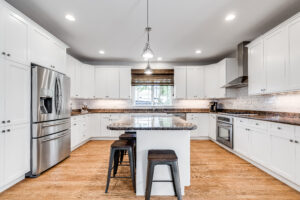

New kitchen countertops cost most homeowners between $1,800 and $4,500, with the national average sitting around $3,140 in 2026. That includes materials, fabrication, and professional installation for a standard 30 to 40 square foot kitchen.
But your project could land well above or below that range depending on what you choose. A laminate countertop swap can come in under $2,000, while a full quartz or granite upgrade with an island easily reaches $6,000 to $12,000.
The material you pick drives the biggest share of the cost. After that, it comes down to your kitchen’s layout, edge profiles, cutouts, and what contractors charge in your area. If you’re weighing whether to tackle the kitchen or bathroom remodel first, countertops are usually the single most impactful upgrade you can make in the kitchen.
This guide breaks down real pricing by material, explains the hidden costs most estimates leave out, and gives you a framework to budget accurately.
How Much Do Kitchen Countertops Cost Per Square Foot?
Most kitchen countertop materials cost between $15 and $200 per square foot installed, depending on the material and project complexity.
The per-square-foot price is the most useful way to compare kitchen countertop costs because it rolls materials and labor into a single number. Budget options like laminate and ceramic tile sit at the low end, while natural stones and specialty surfaces command premium pricing.
Here’s how common countertop materials compare on a per-square-foot basis, including installation:
| Material | Cost Per Sq Ft (Installed) | Durability | Maintenance |
|---|---|---|---|
| Laminate | $20 to $80 | Moderate | Low |
| Ceramic Tile | $15 to $30 | Moderate | Medium (grout care) |
| Butcher Block | $50 to $150 | Moderate | High (regular sealing) |
| Solid Surface (Corian) | $50 to $150 | Good | Low |
| Concrete | $50 to $150 | Good | Medium (sealing) |
| Granite | $40 to $200 | Excellent | Medium (periodic sealing) |
| Engineered Quartz | $40 to $200 | Excellent | Low |
| Marble | $50 to $250 | Good | High (sealing, careful use) |
| Quartzite | $50 to $200 | Excellent | Medium |
| Stainless Steel | $80 to $225 | Excellent | Low (shows scratches) |
These ranges reflect 2026 national averages. Your actual price will vary based on the specific grade, slab origin, edge treatment, and your local labor market.
Hidden Cost Alert: Slab Minimums
Natural stone and quartz are sold by the slab, not by exact square footage. A standard slab runs 55 to 60 square feet. If your kitchen needs 40 square feet of countertop, you’re still paying for the full slab plus fabrication waste. The simple “square feet × price per square foot” math works as a ballpark, but your fabricator’s quote will reflect the full slab cost. Always ask how slab sizing affects your total.
What Is the Cheapest Kitchen Countertop Material?
Laminate is the most affordable countertop material, typically costing $20 to $80 per square foot installed.
Modern laminate has come a long way from the dated patterns many people remember. Brands like Formica and Wilsonart now offer designs that convincingly mimic granite, marble, and even concrete at a fraction of the price. Laminate resists stains, cleans easily, and doesn’t require sealing.
Why Laminate Installation Costs So Much Less
The installed price stays low partly because laminate doesn’t require specialized diamond-blade fabrication, CNC cutting machinery, or heavy-lifting crews. A skilled installer can cut and fit laminate with standard carpentry tools, which keeps labor rates well below what stone fabrication demands.
The main tradeoff is longevity. Laminate can scorch from hot pans, chip along edges, and can’t be repaired the way stone surfaces can. It typically lasts 10 to 15 years before showing significant wear. But for a kitchen refresh on a tight budget, a rental property, or a starter home, laminate delivers the best value per dollar.
Ceramic tile is another budget option at $15 to $30 per square foot installed, though grout lines require ongoing maintenance and the surface isn’t ideal for heavy food prep. If you’re exploring all your options, our guide to kitchen countertop materials breaks down the pros and cons of each surface type.
How Much Do Granite Countertops Cost?
Granite countertops cost $40 to $200 per square foot installed, with most homeowners paying $80 to $140 for mid-range slabs.
Granite remains one of the most popular countertop choices because no two slabs are identical, and the material offers excellent durability and heat resistance. The wide price range reflects the enormous variety available.
What Drives Granite Pricing
Common colors like Uba Tuba, Santa Cecilia, and Giallo Ornamental sit at the lower end of the range. Exotic blues, greens, and heavily veined patterns can exceed $150 per square foot.
For a standard kitchen with 35 square feet of countertop, a granite installation typically runs between $2,800 and $5,000. That includes slab selection, fabrication, cutouts for sinks and cooktops, and professional installation.
Granite does require sealing every one to three years to maintain stain resistance, but it regularly lasts 25 years or more with basic care. According to HomeAdvisor’s countertop cost data, granite continues to offer strong resale value.
How Much Do Quartz Countertops Cost?
Engineered quartz countertops cost $40 to $200 per square foot installed, averaging around $88 per square foot nationally.
Quartz has overtaken granite as the most popular countertop material in new kitchens. It’s manufactured by combining 90% to 93% ground natural quartz by weight with resins and pigments. (By volume, the ratio is closer to 65% to 70% quartz, since the binding resins are lighter.) The result is a surface that’s harder and more stain-resistant than most natural stones and never needs sealing.
Brand Options and Total Project Cost
Brands like Caesarstone, Silestone, and Cambria offer hundreds of colors and patterns, including convincing marble look-alikes. The consistency is a selling point: you can order a 10-foot slab knowing it will match perfectly, which isn’t always possible with natural stone.
For a typical 35 square-foot kitchen, expect to pay $3,000 to $5,500 for a quartz countertop installation. Premium designer patterns and thicker slab profiles push costs toward the higher end. According to Fixr.com’s kitchen countertop data, quartz offers strong long-term value when you factor in zero-sealing maintenance and consistent appearance.
How Much Does It Cost to Install Marble Countertops?
Marble countertop installation costs $50 to $250 per square foot, with most projects falling between $75 and $150.
Marble is the classic luxury countertop material, prized for its distinctive veining and timeless appearance.
Common Marble Varieties and Pricing
Carrara marble, the most widely available variety, sits at the lower end of the price range. Calacatta and Statuario marbles with dramatic veining command top-tier pricing.
The elegance comes with practical considerations. Marble is softer than granite or quartz, making it more susceptible to scratching and etching from acidic foods like lemon juice or tomato sauce. It requires sealing every six to 12 months and more careful daily use than engineered alternatives.
Many homeowners choose marble for areas with lighter use, like a baking station or island accent, while using quartz or granite for the main work surfaces. A full marble countertop installation in a standard kitchen typically costs $3,500 to $7,000 or more, depending on the variety and complexity of the layout.
If you’re considering a specialty metal surface instead, our zinc countertops guide covers pricing and durability for that alternative.
What Factors Affect Kitchen Countertop Cost?
Material choice, kitchen size, edge profiles, cutouts, and regional labor rates are the primary factors that drive your total countertop cost.
Understanding these variables helps you anticipate the real cost of your project and avoid surprise line items on the final invoice.
Material Selection
The material you choose has the single biggest impact on your total cost. The gap between laminate at $20 per square foot and marble at $200-plus per square foot means material selection alone can swing a project by thousands of dollars. Within each material category, price also varies by grade, color rarity, and slab origin.
Kitchen Size and Layout
Most kitchens require 30 to 40 square feet of countertop surface. An L-shaped layout typically uses less material than a U-shaped kitchen, and adding an island can increase your square footage by 15 to 25 square feet. More surface area means more material, more fabrication time, and more labor.
If you’re rethinking your layout entirely, understanding the tradeoffs between open and closed kitchen floor plans can help you decide before committing to a countertop footprint.
Pro Tip: Installers often charge minimum fees for smaller jobs, so even compact kitchens have a cost floor. According to Angi’s countertop installation data, a small vanity-only project may cost more per square foot than a full kitchen because of these minimums.
Edge Profiles
A simple eased or square edge is usually included in the base fabrication price. Decorative profiles like ogee, bullnose, and beveled edges add $10 to $40 per linear foot. For a kitchen with 20 linear feet of exposed countertop edge, that’s an additional $200 to $800.
Cutouts and Customization
Every sink cutout, cooktop opening, or faucet hole requires additional fabrication work, but the cost varies depending on the type:
- Drop-in sink and cooktop cutouts: $50 to $150 each. These are rough cuts where the edges are hidden by the appliance.
- Undermount sink cutouts: $150 to $300 or more. These require precision CNC cutting and edge polishing since the cut edge is visible.
Irregular shapes, curved sections, and integrated drain boards also increase both fabrication and installation costs. If you’re considering an undermount sink, our undermount sink guide covers what to expect for installation.
Labor and Regional Pricing
Labor typically accounts for 30% to 40% of the total countertop project cost. Installation rates vary by region: urban areas and high-cost-of-living metros (coastal cities especially) produce quotes at the top end of these ranges, while suburban and rural markets trend lower.
Labor runs $20 to $50 per square foot on average, with complex projects or premium materials pushing rates higher. Because labor can represent up to half the total project cost, getting quotes from local fabricators is the only way to lock in an accurate number for your area.
What Are the Additional Costs Beyond Materials and Installation?
Removal, backsplashes, plumbing work, and structural repairs can add $500 to $2,500 or more to your countertop budget.
The countertop itself is only part of the total project cost. Several additional expenses tend to catch homeowners off guard when they aren’t planned for.
Old Countertop Removal
Removing existing countertops costs $50 to $400 depending on the material. Laminate and tile come out relatively easily, while heavy stone slabs require more labor, careful handling to avoid cabinet damage, and higher landfill disposal fees.
Backsplash Work
A new backsplash is often installed alongside countertops, adding $20 to $50 per square foot depending on the material. Some homeowners use matching countertop material for a four-inch backsplash, which adds material cost but creates a clean, cohesive look.
Plumbing Disconnection and Reconnection
Having a licensed plumber disconnect and reconnect your sink, disposal, and dishwasher line typically costs $350 to $700 or more. Most plumbers charge a $75 to $150 dispatch fee plus $100 to $200 per hour, and the full disconnect-reconnect process usually takes two to four hours.
If you’re changing your sink style (from a drop-in to an undermount, for example), you may also need to adjust the countertop cutout, which adds fabrication cost. For more on what plumbers charge, see our plumbing repair cost guide.
Structural Prep
If the underlying cabinets need repair or reinforcement before new surfaces can go in, budget an extra $200 to $600 for structural prep work. Older cabinets may not support the weight of stone slabs without modifications.
Good News About Permits: Replacing existing countertops in the same footprint is considered cosmetic maintenance in almost all US municipalities and does not require a building permit, saving you time and municipal fees.
Can You Install Stone Countertops Yourself?
DIY stone countertop installation is nearly impossible for most homeowners; laminate and tile are the only realistic DIY-friendly materials.
The decision between DIY and professional installation depends almost entirely on the material. Laminate and tile countertops are within reach for experienced DIYers who own or can rent the right tools. Materials cost $20 to $100 per square foot, and you can save $500 to $2,000 by handling installation yourself. For laminate especially, our guide to DIY kitchen projects covers what’s realistic to tackle on your own.
Why Stone Slabs Require Professional Installation
Natural stone and engineered quartz are a different situation entirely. A granite slab can weigh 300-plus pounds and requires specialized cutting equipment and precise fitting. A measurement error of even a quarter inch can ruin an expensive slab.
Beyond the technical difficulty, most major US wholesale slab yards and manufacturers (Cambria, Silestone, Caesarstone) operate strictly B2B. They generally will not sell raw slabs directly to an unlicensed homeowner. You need a licensed fabricator to purchase, template, cut, and install stone countertops.
Professional fabricators use CNC machines and digital templating tools to ensure exact fits, and most slab warranties require professional installation to remain valid.
Do New Countertops Increase Home Value?
A minor kitchen remodel that includes new countertops generally recoups 70% to 80% of its cost at resale, making countertops one of the highest-ROI kitchen upgrades.
This data comes from Remodeling Magazine’s annual Cost vs. Value Report, which tracks real resale data for common home improvement projects across US markets. A minor kitchen remodel (which typically includes countertop replacement, cabinet refacing, new hardware, and updated flooring) consistently ranks among the top projects for return on investment.
Why Countertops Punch Above Their Weight
Countertops are one of the first things buyers notice in a kitchen. Upgrading from worn laminate to quartz or granite creates an immediate visual and tactile impression that influences how buyers perceive the entire home.
If your cabinets are in decent structural shape but look outdated, pairing new countertops with cabinet refacing can deliver a full kitchen transformation at a fraction of the cost of a gut remodel. That combination (new surfaces on top and refreshed cabinet fronts below) often produces the best cost-to-value ratio for sellers.
For a broader look at which projects deliver the strongest returns, see our breakdown of the ROI of common home improvement projects.
How Can You Save Money on Kitchen Countertops?
Choosing mid-range materials, simplifying edge profiles, and getting three or more quotes are the most effective ways to cut countertop costs without sacrificing quality.
Pick the Right Material Tier
If you love the look of marble but not the price, consider quartz patterns that mimic Calacatta or Carrara veining at 30% to 50% less cost, with better durability and no sealing required. Similarly, granite remnants (leftover pieces from larger slab cuts) can work for smaller kitchens or islands at significant discounts.
Keep Edges Simple
An eased or flat-polished edge is typically included in the base price. Upgrading to a decorative ogee or waterfall edge adds hundreds of dollars with minimal functional benefit.
Time Your Project Strategically
Countertop installers tend to be busiest in spring and summer. Scheduling your project in late fall or winter may give you more negotiating room on both labor rates and material pricing.
Get Multiple Quotes
Countertop pricing varies significantly between fabricators. Get at least three detailed quotes, each breaking out materials, fabrication, and labor separately. This helps you identify fair pricing and spot outlier bids.
Do Your Own Demolition
Removing old laminate or tile countertops yourself can save $100 to $400 in labor costs. Be cautious with stone removal, though, as it can damage cabinets if done improperly.
How Do You Budget for a Kitchen Countertop Replacement?
Start with your kitchen’s square footage, multiply by the per-square-foot cost of your preferred material, then add 15% to 20% for extras.
A realistic countertop budget starts with accurate measurements. Measure the length and depth of every countertop section, then calculate total square footage. A typical 10 ft × 10 ft kitchen has about 35 to 40 square feet of countertop surface.
Running the Numbers
Multiply your square footage by the installed per-square-foot cost of your chosen material. For a 35-square-foot kitchen with quartz at $100 per square foot, that’s $3,500 as a base estimate.
Then add 15% to 20% for edge treatments, cutouts, removal of old counters, plumbing work, and any unforeseen issues. That brings the realistic budget to roughly $4,025 to $4,200.
For stone countertops, remember to factor in the slab minimum: you may be paying for 55 to 60 square feet of material even if you only need 35 to 40.
Budgeting Tip: Always get a written estimate that itemizes every cost before signing a contract. The estimate should separately list materials, fabrication, installation, removal, cutouts, edge profiles, and any additional work. If a quote is a single lump sum with no breakdown, ask for a detailed version or move on to another fabricator.
If you’re working on a broader home improvement budget, our guide to budgeting for annual home services and repairs can help you plan across all your projects.
Get Accurate Countertop Quotes in Your Area
Material prices and labor rates fluctuate significantly by region, which is why online estimates can only get you so far. The most reliable way to lock in an accurate number is getting itemized quotes from licensed countertop fabricators who know your local market.
Find vetted countertop professionals in your zip code through MyHomePros and get quotes that reflect real pricing for your area, your layout, and your preferred material.
The Bottom Line
Kitchen countertop costs range from $1,800 to $4,500 for most projects, with material choice driving the biggest share of that total. Laminate offers the lowest entry point at $20 to $80 per square foot installed, while granite and quartz occupy the popular mid-range at $40 to $200 per square foot. Marble and specialty materials push into luxury territory at $100-plus per square foot.
Beyond the countertop surface itself, plan for edge treatments, sink and cooktop cutouts, removal of existing surfaces, plumbing work, and potential cabinet repairs. Adding 15% to 20% to your base estimate gives you a realistic project budget.
The most reliable path to an accurate number is getting three or more itemized quotes from licensed fabricators in your area. Comparing detailed bids ensures you understand exactly what’s included and helps you make a confident decision that fits both your kitchen and your budget. To avoid common pitfalls during your renovation, check out our guide to kitchen remodel mistakes to avoid.

Anna has over six years of experience in the home services and journalism industries and serves as the Content Manager at MyHomePros.com, specializing in making complex home improvement topics like HVAC, roofing, and plumbing accessible to all. With a bachelor’s degree in journalism from Auburn University, she excels in crafting localized, comprehensive guides that cater to homeowners’ unique needs. Living on both coasts of the United States has equipped her with a distinctive perspective, fueling her passion for turning any house into a cherished home through informed, personalized decision-making.
Connect with top-rated local contractors who can help you with siding, roofing, HVAC, windows, and more. Get free quotes from verified professionals in your area today.