

Your HVAC system might have the most powerful furnace or the highest-rated air conditioner on the market, but none of that matters if the ductwork can’t deliver air where it needs to go. Ductwork is the circulatory system of your home’s heating and cooling setup. When it works well, every room stays comfortable. When it doesn’t, you get hot spots upstairs, cold spots in the basement, and energy bills that climb for no obvious reason.
Whether you’re troubleshooting comfort issues or preparing for a new HVAC installation, understanding your ductwork gives you a real advantage when talking to contractors and evaluating quotes.
What Is HVAC Ductwork and Why Does It Matter?
HVAC ductwork is the network of sealed passages that distributes conditioned air from your heating and cooling equipment to every room in your home.
Think of your HVAC equipment as the engine and the ductwork as the roads. A powerful engine is useless without well-built roads connecting it to every destination. Your furnace or air handler heats or cools the air, but the ducts are responsible for carrying that air to each room and returning spent air back to the system for reconditioning.
Poorly designed or damaged ductwork is one of the most common reasons homes feel uncomfortable despite having properly sized equipment. According to the U.S. Department of Energy, leaky or uninsulated ducts can waste 20% to 30% of the air moving through them before it ever reaches a living space. That translates directly into higher utility bills, uneven temperatures, and excess strain on your HVAC equipment.
The quality of your ductwork also affects key components of your HVAC system. A system with undersized ducts forces the blower motor to work harder, which shortens its lifespan. Oversized ducts allow air to move too slowly, reducing the system’s ability to distribute heating or cooling effectively.
What Are the Main Types of HVAC Ductwork?
The three primary ductwork types are sheet metal, flexible, and fiberboard, each with tradeoffs in durability, airflow, and cost.
Most homes use a combination of these materials depending on the layout and the specific needs of each section.
Sheet Metal Ducts
Sheet metal ductwork, typically made from galvanized steel or aluminum, is the most durable option available. These ducts come in round and rectangular shapes. Round ducts produce less air resistance and are generally quieter during operation. Rectangular ducts fit more easily into tight wall cavities and ceiling spaces where vertical clearance is limited.
Sheet metal’s smooth interior surface promotes efficient airflow and resists mold growth. The tradeoff is higher material and labor costs compared to other options.
Flexible Ducts
Flexible ductwork consists of a steel wire coil wrapped in polymer and surrounded by insulation. It is lightweight, affordable, and easy to route through tight or awkward spaces. Contractors commonly use flex duct for short branch runs that connect the main trunk line to individual room registers.
The key limitation is that flex duct must be properly supported and stretched taut during installation. Sagging, kinking, or excessive bends drastically reduce airflow and increase static pressure. A poorly installed flex duct run can lose a significant portion of its rated capacity.
Actual costs depend on your location, project scope, and materials. The best way to know what you'll pay is to get quotes from local contractors.
Get Your Free Estimate →Fiberboard Ducts
Fiberboard ductwork is made from compressed fiberglass bonded with resin and sealed with a foil facing. It offers built-in thermal and acoustic insulation, which makes it a cost-effective option in certain applications. However, the rough interior surface creates more air resistance than sheet metal, and the material is more susceptible to moisture damage and mold if not properly sealed.
| Duct Type | Durability | Airflow Efficiency | Noise Level | Typical Cost |
|---|---|---|---|---|
| Sheet Metal | Highest | Best (smooth interior) | Low to moderate | Highest |
| Flexible | Low to moderate | Good when properly installed | Low | Lowest |
| Fiberboard | Moderate | Lower (rough interior) | Lowest | Moderate |
What Is a Plenum in an HVAC System?
A plenum is the large chamber attached to your HVAC unit that distributes supply air into the ducts or collects return air.
Every forced-air system has two plenums.
Supply Plenum
The supply plenum sits on the output side of the air handler or furnace. After air is heated or cooled, it enters the supply plenum, which then distributes it into the trunk line and branch ducts running to each room. The supply plenum must be sized to match the blower’s output capacity. An undersized supply plenum creates a bottleneck that raises static pressure, reduces airflow to distant rooms, and forces the blower to work harder.
"We matched with a great contractor the same day. The whole process was easy and completely free."
Return Plenum
The return plenum sits on the intake side of the system. It collects air from the return ducts and grilles throughout your home and channels it back to the air handler, where it passes through the filter and gets reconditioned. Undersized return plenums are one of the most common installation mistakes in residential HVAC. When the return side is too restrictive, the system starves for air, which reduces efficiency and can cause the evaporator coil to freeze in cooling mode.
Pro Tip: Plenum connections should be sealed with mastic or foil-backed tape. Standard cloth duct tape degrades within one to two years and will eventually allow air leaks at every seam.
What Is CFM and How Much Airflow Does Your Home Need?
CFM stands for cubic feet per minute and measures how much air your system moves. Most homes need about 400 CFM per ton of cooling.
A 3-ton air conditioner, for example, needs roughly 1,200 CFM to operate at its rated efficiency. If the ductwork can only deliver 900 CFM due to restrictions, undersized ducts, or leaks, the system will underperform regardless of how new or expensive the equipment is.
CFM requirements are not just about the total system capacity. Each room needs a specific volume of airflow based on its square footage, ceiling height, window area, insulation levels, and sun exposure. This is calculated using HVAC sizing methods such as ACCA Manual J for load calculations and Manual D for duct design.
How CFM Relates to Duct Sizing
Duct sizing is directly tied to CFM requirements. A duct that is too small for the required airflow will create excessive velocity, increased noise, and higher static pressure. A duct that is too large will allow the air to slow down too much, reducing its ability to reach distant rooms effectively.
| System Size | Required CFM (Approx.) | Typical Main Trunk Duct |
|---|---|---|
| 1.5 Ton | 600 CFM | 10″ round or 8″×10″ rectangular |
| 2 Ton | 800 CFM | 12″ round or 8″×12″ rectangular |
| 3 Ton | 1,200 CFM | 14″ round or 10″×14″ rectangular |
| 4 Ton | 1,600 CFM | 16″ round or 12″×16″ rectangular |
| 5 Ton | 2,000 CFM | 18″ round or 14″×18″ rectangular |
These are general guidelines. Actual duct sizing depends on the friction rate, total equivalent length of the duct run, and the number of fittings in the path. A qualified HVAC contractor uses a ductulator or Manual D software to calculate precise sizes.
What Is Static Pressure in HVAC?
Static pressure is the resistance to airflow inside ductwork, measured in inches of water column, that determines blower workload.
Think of static pressure like blood pressure. A healthy range keeps everything flowing smoothly. Too high, and the system strains. Too low, and air distribution suffers. For most residential systems, the total external static pressure should stay at or below 0.5 in. w.c., though the specific target depends on the equipment manufacturer’s specifications.
What Causes High Static Pressure?
Several factors drive static pressure above acceptable levels:
- Undersized ductwork for the system’s CFM output
- Dirty or restrictive air filters, particularly high-MERV filters in systems not designed for them
- Too many bends, transitions, or fittings in the duct path
- Closed or blocked supply registers
- Crimped or sagging flexible duct runs
- Undersized return air pathways
High static pressure forces the blower motor to consume more energy, generates more noise, and distributes air unevenly. Over time, it accelerates wear on the blower motor and can lead to premature system failure.
Why Hire a Licensed Professional
- Licensed & insured — protects you from liability
- Warranty coverage — manufacturers require pro installation
- Code compliance — avoids permit issues
- Faster completion — pros finish in days, not weeks
What Causes Low Static Pressure?
Low static pressure is less common but still problematic. It usually results from oversized ductwork relative to the system’s output, significant duct leaks, or disconnected duct runs. The result is sluggish airflow that fails to reach rooms at the end of long duct runs.
Important: If you notice certain rooms are consistently hotter than others, static pressure imbalances in the ductwork are one of the first things a technician should evaluate.
How Do Supply and Return Ducts Work Together?
Supply ducts deliver conditioned air to each room while return ducts pull spent air back to the unit for reconditioning.
This continuous loop must stay balanced for the system to work efficiently. Every cubic foot of air pushed into a room through a supply register must have a path back to the system through a return grille. When this balance is disrupted, pressure imbalances form inside the home. Rooms with supply vents but no return path build positive pressure, which forces conditioned air out through gaps around windows, doors, and walls. Rooms near the return side can develop negative pressure, pulling in unconditioned air from attics, crawlspaces, or garages.
Signs of Supply and Return Imbalance
Common indicators include doors that swing shut on their own, whistling sounds around door frames, and rooms that never seem to reach the set temperature. These issues often trace back to inadequate return air pathways rather than equipment problems.
The MERV rating of your air filter also plays a role here. A higher-MERV filter captures more particles but creates more resistance on the return side. If your system was designed around a standard MERV 8 filter, upgrading to a MERV 13 without adjusting the return ductwork or verifying fan capacity can push static pressure above the system’s tolerance.
DIY vs. Professional: At a Glance
What Are the Most Common Ductwork Problems?
Air leaks at joints, inadequate insulation in unconditioned spaces, and improper sizing are the most frequent ductwork problems.
Air Leaks
Leaky ductwork is the single biggest source of energy waste in forced-air systems. Leaks at joints, connections, and takeoff fittings allow conditioned air to escape into attics, crawlspaces, and wall cavities where it does nothing for your comfort. The U.S. Department of Energy estimates that sealing and insulating ducts can improve system efficiency by 20% or more in homes with ducts running through unconditioned spaces.
Poor Insulation
Ducts running through unconditioned attics, garages, or crawlspaces lose heating energy in winter and gain heat in summer. Uninsulated supply ducts in a 140°F attic can raise the temperature of the air inside the duct significantly before it reaches the room, reducing the system’s effective cooling output.
Spring and summer are the busiest seasons for home improvement projects — top-rated contractors book up fast. Lock in your estimate now before demand peaks.
Check Availability in Your Area →Improper Sizing
Ducts that are too small for the system’s airflow demands create high static pressure, noise, and uneven temperatures. Ducts that are too large allow air velocity to drop, which can leave rooms at the end of long runs underserved. Proper sizing requires a Manual D calculation, not guesswork.
Excessive Bends and Fittings
Every elbow, transition, and takeoff fitting adds resistance to the system. Poorly planned duct layouts with unnecessary turns or sharp-angle fittings consume available static pressure that should be reserved for pushing air to the farthest rooms. Each 90-degree elbow in a typical residential duct system adds the equivalent of 10 to 15 feet of straight duct in friction loss.
How Do You Know If Your Ductwork Needs Professional Attention?
Persistent hot and cold spots, rising energy bills, visible duct damage, and excessive dust at registers are the clearest warning signs.
Beyond those visible indicators, there are a few technical signals worth watching for. If multiple symptoms appear at once, these are often signs that ductwork needs to be replaced rather than patched.
- Noisy operation. Popping, rattling, or whistling sounds coming from the ductwork typically indicate loose connections, undersized ducts, or pressure imbalances.
- Excessive dust. If you notice dust accumulating on furniture faster than usual or visible debris around supply grilles, your ducts may have gaps or may be due for professional duct cleaning.
- Age. Ductwork in homes older than 20 to 25 years may have deteriorated insulation, failed sealant at joints, or connections that have loosened over time due to thermal expansion and contraction.
- Musty or stale odors. Smells coming from the vents can indicate mold growth inside fiberglass-lined ducts or moisture intrusion in fiberboard sections.
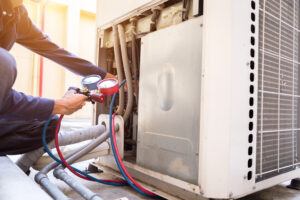
A qualified HVAC technician can perform a duct leakage test using a duct blaster to measure exactly how much air is escaping. This test, combined with static pressure readings at the air handler, gives a clear picture of whether the ductwork needs sealing, modification, or full replacement.
Ready to Move Forward?
Tell us about your project and get matched with up to 3 pre-screened contractors. Compare quotes, check reviews, and hire with confidence.
What Should Homeowners Know About Duct Sealing and Insulation?
Sealing duct joints with mastic and insulating ducts in unconditioned spaces are two of the most cost-effective HVAC upgrades.
Sealing Methods
Professional duct sealing focuses on joints, connections, and takeoff fittings where sections of ductwork meet. The two primary methods are:
- Mastic sealant. A thick, paste-like compound applied directly to joints and seams. It remains flexible after curing and does not degrade over time. This is the preferred method for permanent sealing.
- Foil-backed (UL 181) tape. An approved alternative for sealing joints on metal and flexible ductwork. It holds up under temperature swings far better than standard cloth duct tape.
Aeroseal is a newer technology where a sealant is sprayed inside the duct system under pressure, coating leak points from the inside. It is effective for reaching leaks in ducts that are difficult to access physically.
Insulation Requirements
Ducts running through unconditioned spaces such as attics, crawlspaces, and unheated garages should be insulated to at least R-8 in most climates, per ENERGY STAR recommendations. Ducts in conditioned spaces generally do not require additional insulation, since any energy lost from the duct still ends up inside the living space.
The cost of insulation upgrades varies depending on the type and accessibility of the ductwork, but the return on investment is typically strong. Insulating and sealing ducts in an unconditioned attic can reduce annual heating and cooling costs by 15% to 25% in many homes.
Pro Tip: If you are replacing your HVAC system, ask the contractor to include a duct evaluation in the scope of work. New equipment paired with leaky or undersized ductwork will never perform to its rated efficiency. A proper HVAC inspection should include static pressure testing and a visual assessment of the duct system.
Making the Most of Your HVAC Ductwork
Your ductwork does not get the same attention as a new furnace or air conditioner, but it has just as much impact on comfort, efficiency, and equipment longevity. Understanding the basics of plenums, CFM, static pressure, and duct types puts you in a stronger position to evaluate contractor recommendations and identify problems before they become expensive.
If you are experiencing uneven temperatures, rising energy costs, or excessive noise from your HVAC system, the ductwork should be one of the first things you investigate. A qualified contractor can test your system’s airflow and static pressure, identify leaks, and recommend targeted improvements. In many cases, addressing ductwork issues delivers more comfort per dollar spent than upgrading equipment alone.
Ready to get your ductwork evaluated? Connect with an HVAC professional in your area through MyHomePros to schedule a duct inspection, static pressure test, or full system assessment. Get free quotes and compare local contractors today.
Connect with top-rated local contractors who can help you with siding, roofing, HVAC, windows, and more. Get free quotes from verified professionals in your area today.