

Replacing or installing new windows typically costs $300 to $1,000 per window, and choosing standard sizes rather than custom dimensions can save you 15% to 30% on both materials and labor. Understanding standard window sizes helps you budget accurately, communicate clearly with contractors, and make informed decisions about window replacement or new construction.
This guide covers the most common window sizes for different types and locations in your home, what makes a size “standard,” and how to measure your existing windows to determine whether standard sizes will work for your project.
What Makes a Window Size “Standard”
Standard window sizes are the dimensions manufacturers produce in volume, which means they’re readily available, more affordable, and don’t require custom fabrication. These sizes emerged from building code requirements, architectural conventions, and decades of residential construction patterns. The National Fenestration Rating Council (NFRC) sets energy performance standards, while individual manufacturers maintain specifications for these common dimensions.
Understanding Window Size Nomenclature
Window sizes follow a general naming convention based on width and height. Manufacturers typically list dimensions as width × height, measured in feet and inches. A window labeled “3050” translates to 3 feet 0 inches wide by 5 feet 0 inches tall. The actual dimensions may vary slightly between manufacturers, usually within a tolerance of ¼ inch to accommodate different framing methods.
Standard sizes exist because they align with common wall framing practices. Most residential walls use studs spaced 16 or 24 inches apart, and standard windows fit neatly within these framing bays. This standardization reduces construction costs and labor time while providing adequate natural light and ventilation for typical room sizes.
Standard Double-Hung Window Sizes
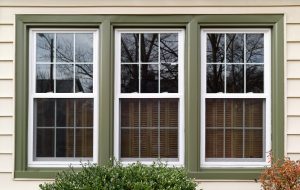
Double-hung windows are the most common type in residential construction, featuring two movable sashes that slide vertically. These windows work well for most rooms and provide good ventilation control.
Common Double-Hung Dimensions
Common widths for double-hung windows range from 24 to 48 inches, increasing in 2-inch or 4-inch increments. The most frequently installed widths are 24, 28, 32, 36, and 48 inches. Heights typically range from 36 to 72 inches, with 52, 54, 60, and 72 inches being the most popular choices.
| Room Type | Recommended Size | Purpose |
| Bedrooms | 32″ × 54″ or 36″ × 60″ | Adequate light, meets egress codes |
| Living Areas | 36″ × 60″ or 48″ × 60″ | Maximum natural light |
| Bathrooms | 24″ × 36″ or 24″ × 48″ | Privacy with ventilation |
Rough Opening Requirements
The rough opening (the space in the wall framing) for a double-hung window typically needs to be 1 to 2 inches larger than the window unit itself to allow for proper installation and insulation. A 32-inch by 54-inch window unit, for example, usually requires a rough opening of approximately 33 to 34 inches wide by 55 to 56 inches tall.
Standard Casement Window Sizes
Casement windows hinge on one side and swing outward like a door, operated by a crank mechanism. They provide excellent ventilation and an unobstructed view when open, making them popular for kitchens, bathrooms, and areas where you want maximum airflow.
Standard Casement Dimensions
Standard casement window widths typically range from 15 to 30 inches, with 15, 18, 20, 24, and 30 inches being the most common. Heights range from 36 to 72 inches, matching the height options available for double-hung windows. Many homeowners install casement windows in pairs or groups to create larger window assemblies while maintaining standard sizing.
| Configuration | Individual Size | Combined Opening | Best Use |
| Single | 20″ × 48″ | 20″ × 48″ | Bathrooms, narrow spaces |
| Double | 24″ × 48″ each | 48″ × 48″ | Kitchen above sink |
| Triple | 20″ × 60″ each | 60″ × 60″ | Living areas, picture window flanking |
Cost Considerations
Casement windows generally cost $200 to $800 per unit for standard sizes in vinyl or aluminum frames, with wood frames ranging from $400 to $1,200. The crank mechanism adds slightly to the cost compared to double-hung windows, but the superior air seal can reduce energy costs over time.
Standard Sliding Window Sizes
Sliding windows (also called gliding or slider windows) operate horizontally, with one or both sashes moving along a track. They work particularly well in contemporary homes and locations where vertical operation would be impractical.
Common Sliding Window Dimensions
Common widths for sliding windows range from 36 to 84 inches, with 48, 60, 72, and 84 inches being popular choices. Heights typically range from 24 to 60 inches, with 36, 48, and 60 inches most frequently installed. These larger widths make sliding windows ideal for creating expansive views in living rooms, bedrooms, or along walls where you want significant natural light.
| Width | Height | Room Application |
| 48″ | 36″ | Bedrooms, offices |
| 60″ | 48″ | Living spaces, master bedrooms |
| 72″ | 60″ | Great rooms, panoramic views |
| 84″ | 60″ | Large living areas, modern designs |
Actual costs depend on your location, project scope, and materials. The best way to know what you'll pay is to get quotes from local contractors.
Get Your Free Estimate →Operational Benefits
The track system makes sliding windows easier to operate for people with limited mobility compared to windows requiring vertical lifting or cranking. Standard sliding windows in vinyl frames typically cost $250 to $900, while wood or aluminum-clad wood versions range from $500 to $1,500.
Standard Picture Window Sizes
Picture windows are fixed units that don’t open, designed to maximize views and natural light. They’re often combined with operable windows to create custom configurations that balance aesthetics, light, and ventilation.
Available Size Range
Picture windows come in the widest range of standard sizes because they don’t require operating mechanisms. Widths can range from 24 to 96 inches or more, while heights span from 24 to 96 inches. Common sizes include 36 × 48, 48 × 60, 60 × 60, 72 × 48, and 72 × 60 inches.
| Size | Application | Typical Room |
| 36″ × 48″ | Small focal point | Bedrooms, dining areas |
| 48″ × 60″ | Medium view | Living rooms, offices |
| 60″ × 60″ | Large focal point | Great rooms, feature walls |
| 72″ × 60″ | Panoramic view | Main living areas |
| 84″ × 72″ | Dramatic statement | Two-story rooms, modern homes |
Cost and Energy Efficiency
Because picture windows lack moving parts, they offer superior energy efficiency and typically cost less than comparable operable windows. Standard picture windows range from $150 to $800 depending on size and materials, though large units or specialty glass can increase costs significantly.
Standard Bay and Bow Window Sizes
Bay and bow windows project outward from the wall, creating additional interior space and architectural interest. Bay windows typically feature three panels (a large center window flanked by two angled windows), while bow windows curve outward with four or more panels.
"We matched with a great contractor the same day. The whole process was easy and completely free."
Bay Window Configurations
Standard bay windows commonly measure 7 to 10 feet wide overall, with the center panel ranging from 42 to 60 inches wide. The angled side windows (usually casement or double-hung) typically measure 18 to 24 inches wide. Heights range from 48 to 72 inches, matching standard window heights to maintain consistent sight lines throughout a room.
Bow Window Specifications
Bow windows span larger widths, commonly ranging from 8 to 12 feet, with individual panels measuring 18 to 24 inches wide. The number of panels and the arc radius determine the overall projection from the wall, typically 12 to 18 inches for standard installations.
| Window Type | Overall Width | Panel Configuration | Projection | Installed Cost |
| Bay (3-panel) | 7′-10′ | 42″-60″ center + 18″-24″ sides | 12″-18″ | $1,500-$4,000 |
| Bow (4-5 panel) | 8′-12′ | 18″-24″ each panel | 12″-18″ | $2,000-$5,000 |
These window assemblies require structural support and often need additional foundation work, which adds to installation costs. Custom sizing or specialty features like copper roofing or built-in seating can increase costs substantially.
Standard Awning Window Sizes
Awning windows hinge at the top and open outward from the bottom, creating an awning effect that allows ventilation even during light rain. They’re commonly installed above or below other windows, in bathrooms, or in basements.
Standard Dimensions
Standard widths range from 24 to 48 inches, with 24, 30, 36, and 48 inches being most common. Heights are typically smaller than other window types, ranging from 18 to 36 inches, with 24, 30, and 36 inches most frequently used. The compact height makes awning windows ideal for spaces where wall space is limited or where you want ventilation without compromising privacy.
| Size | Typical Location | Purpose |
| 24″ × 24″ | High bathroom wall | Privacy ventilation |
| 30″ × 24″ | Bathroom, basement | Privacy with airflow |
| 36″ × 18″ | Above other windows | Supplemental ventilation |
| 48″ × 24″ | Kitchen transoms | Additional light and air |
Performance and Cost
Awning windows typically cost $200 to $700 for standard sizes, comparable to casement windows. The hinging mechanism and weatherstripping create an excellent seal when closed, making them energy efficient despite their smaller size.
Egress Window Requirements and Standard Sizes
Building codes require bedroom windows to meet specific egress requirements to provide emergency escape routes. Understanding these requirements helps you choose appropriate standard sizes for bedroom windows without needing custom dimensions.
IRC Egress Code Requirements
The International Residential Code (IRC) establishes minimum standards for egress windows:
- Minimum net clear opening: 5.7 square feet (5.0 square feet for ground floor windows)
- Minimum width: 20 inches
- Minimum height: 24 inches
- Maximum sill height: 44 inches above the floor
Standard Sizes That Meet Egress Requirements
Common window sizes that meet these requirements include:
| Window Type | Size | Clear Opening | Code Compliance |
| Double-hung | 32″ × 54″ | ~6.0 sq ft | ✓ Meets IRC |
| Double-hung | 32″ × 60″ | ~6.5 sq ft | ✓ Meets IRC |
| Double-hung | 36″ × 48″ | ~6.2 sq ft | ✓ Meets IRC |
| Double-hung | 36″ × 54″ | ~7.0 sq ft | ✓ Meets IRC |
| Casement | 24″ × 48″ | ~6.8 sq ft | ✓ Meets IRC |
| Casement | 30″ × 48″ | ~8.5 sq ft | ✓ Meets IRC |
Important: Casement windows typically provide larger clear openings relative to frame size compared to double-hung windows, which is why smaller casement dimensions can still meet egress requirements.
Basement Egress Considerations
Basement egress windows present additional challenges because the window well must be large enough to access the window and meet depth requirements. Standard egress windows for basements typically measure 48 to 60 inches wide to maximize the opening area within code-compliant window wells.
Local codes may have additional requirements, so verify with your building department before selecting window sizes for bedrooms.
How to Measure Your Windows for Replacement
Accurate measurements determine whether you can use standard window sizes or need custom fabrication. Taking three measurements at different points accounts for settling, warping, or irregularities in older homes.
For Insert or Pocket Window Replacements
For replacement windows that fit within existing frames (insert or pocket windows), measure the width at the top, middle, and bottom of the window opening, then measure the height at the left, center, and right. Use the smallest width and height measurements to ensure the new window fits. Most manufacturers recommend subtracting ¼ inch from these measurements to allow for installation adjustments.
For Full-Frame Replacements
For full-frame replacements, measure the rough opening (the framed opening in the wall) rather than the existing window frame. This requires removing interior trim to access the framing. Measure width and height at three points as above, again using the smallest measurements.
Pro Tip: Window manufacturers provide detailed sizing charts showing the relationship between window unit dimensions and required rough openings. A window listed as 36 inches wide typically has an actual unit width of approximately 35½ inches, requiring a rough opening of about 36½ to 37 inches to accommodate the frame, shims, and insulation.
Why Hire a Licensed Professional
- Licensed & insured — protects you from liability
- Warranty coverage — manufacturers require pro installation
- Code compliance — avoids permit issues
- Faster completion — pros finish in days, not weeks
Rounding Guidelines
If your measurements fall between standard sizes, rounding down to the next smaller standard size usually works better than rounding up. A window slightly smaller than the opening can be shimmed and insulated during installation, while a window even slightly too large won’t fit at all.
When to Choose Custom vs. Standard Window Sizes
Custom windows make sense for historic homes, architectural features, or specific design requirements, but they add significant time and cost to your project. Standard windows typically ship within days to weeks, while custom windows may take six to twelve weeks for fabrication.
Cost Premium for Custom Windows
The cost premium for custom windows ranges from 20% to 40% above standard sizes, sometimes more for unusual shapes or very large dimensions. Installation labor may also cost more because custom windows often require specialized handling or adjustment of rough openings.
When to Choose Standard Sizes
Choose standard sizes when possible, even if this means adjusting your design slightly. Many window configurations can use combinations of standard windows to achieve the desired effect. For example, two or three standard double-hung windows side by side can create a large window wall while maintaining cost efficiency.
When Custom Windows Become Necessary
Custom windows become necessary in these situations:
- Historic preservation: Maintaining original proportions preserves architectural integrity
- Non-standard framing: Older homes with irregular or off-dimension rough openings
- Architectural features: Arched windows, triangular windows, or geometric shapes
- Oversized openings: Picture windows or assemblies that exceed standard manufacturing limits (typically above 96 inches in any dimension)
- Specialty applications: Round windows, transom windows with unusual dimensions, or clerestory windows
Regional Variations in Window Sizing
Standard window sizes remain relatively consistent across the United States, but regional building practices and climate considerations can influence which sizes are most common. Northern regions often favor smaller windows or different proportions to reduce heat loss, while southern regions may use larger windows with specific glazing requirements.
DIY vs. Professional: At a Glance
Hurricane and Coastal Zones
Hurricane-prone areas along the Gulf and Atlantic coasts have additional requirements for impact-resistant windows, which may limit available standard sizes or require special ordering even for common dimensions. These impact-rated windows typically cost 40% to 60% more than standard windows and may have longer lead times.
The Florida Building Code and similar coastal regulations require windows to meet specific wind pressure and impact resistance standards. Major manufacturers like Pella and Marvin offer impact-resistant versions of most standard sizes.
Seismic Zones
California and other seismic zones require windows to meet earthquake resistance standards, which generally doesn’t affect standard sizing but may influence framing requirements and installation methods. Always check local building codes before ordering windows to ensure your chosen sizes comply with regional requirements.
Cost Considerations for Different Window Sizes
Window costs scale with size, but the relationship isn’t perfectly linear. A window twice as large doesn’t necessarily cost twice as much because manufacturing setup costs and basic components (frames, locks, seals) remain similar regardless of size.
Price Ranges by Size Category
| Size Category | Vinyl Frame | Wood/Fiberglass Frame | Installation Labor |
| Small (24″ × 36″) | $150-$300 | $300-$500 | $100-$200 |
| Medium (32″ × 54″, 36″ × 60″) | $250-$500 | $400-$800 | $150-$300 |
| Large (48″ × 72″+) | $400-$800 | $700-$1,500 | $200-$400 |
Installation labor typically costs $100 to $300 per window for standard sizes, with full-frame replacements at the higher end of this range. Complex installations, structural modifications, or second-story work can increase labor costs to $300 to $500 per window.
Volume Pricing Benefits
Money-Saving Tip: Bulk ordering reduces per-window costs. Many contractors offer package pricing for whole-house window replacement, and manufacturers often provide volume discounts for orders of ten or more windows. Planning to replace all windows at once rather than piecemeal can save 15% to 25% on total project costs.
Spring and summer are the busiest seasons for home improvement projects — top-rated contractors book up fast. Lock in your estimate now before demand peaks.
Check Availability in Your Area →Choosing the Right Window Size for Each Room
Room function, wall space, and natural light requirements guide window size selection. Building codes mandate minimum light and ventilation requirements based on room size, typically requiring window area equal to 8% to 10% of the floor area for habitable rooms.
Bedroom Window Sizing
Bedrooms perform well with windows sized to provide adequate egress and natural light without dominating the wall space. A 12 × 12-foot bedroom (144 square feet) needs at least 14.4 square feet of window area. Two 36 × 48-inch windows (12 square feet total) would meet this requirement, though slightly larger windows improve natural light and ventilation.
Living Room and Great Room Windows
Living rooms and great rooms benefit from larger window arrangements. A combination of a 60 × 60-inch picture window flanked by two 24 × 60-inch casement windows creates 38 square feet of glazing, appropriate for a 300- to 400-square-foot living space. This configuration balances fixed views with operable sections for ventilation.
Kitchen Window Recommendations
| Kitchen Layout | Recommended Size | Location | Purpose |
| Standard | 36″ × 36″ single or (2) 24″ × 36″ casement | Above sink | Task lighting, ventilation |
| Large/Open | 48″ × 48″ or 60″ × 48″ | Main wall | Natural light, views |
| Galley | 24″ × 48″ awning or casement | End wall | Supplemental light |
Bathroom Window Sizing
Bathrooms balance privacy, ventilation, and natural light. High-mounted awning or casement windows (24 × 24 inches to 30 × 36 inches) provide privacy while allowing airflow. Bathrooms without exterior walls require mechanical ventilation to meet code requirements.
Energy Efficiency Across Different Window Sizes
Larger windows generally lose more energy than smaller ones, but modern glazing technology has narrowed this gap significantly. U-factor (heat transfer rate) and Solar Heat Gain Coefficient (SHGC) matter more than size alone in determining energy performance.
Ready to Move Forward?
Tell us about your project and get matched with up to 3 pre-screened contractors. Compare quotes, check reviews, and hire with confidence.
Performance Metrics That Matter
Double-pane windows with low-E coatings and argon gas fills can achieve U-factors of 0.30 or lower regardless of size, provided the frame materials and construction quality remain consistent. A well-built 60 × 60-inch window with low-E glass performs better than a poorly constructed 24 × 36-inch window with basic glazing.
The frame-to-glass ratio affects efficiency, particularly in smaller windows where the frame represents a larger proportion of the total area. Performance by frame material:
- Vinyl and fiberglass: Best insulation values (U-factor 0.27-0.35)
- Wood: Good insulation but requires maintenance (U-factor 0.30-0.40)
- Aluminum: Poor insulation unless thermally broken (U-factor 0.45-0.65)
Energy Star Certification and Rebates
Energy Star certification helps identify efficient windows for your climate zone. Northern regions benefit from low U-factors to reduce heat loss, while southern regions prioritize low SHGC to minimize heat gain. Many utility companies offer rebates for Energy Star-rated window replacements, potentially saving $50 to $150 per window.
Standard Window Sizes for New Construction
New construction offers more flexibility than replacement projects because rough openings can be framed to accommodate any standard window size. This flexibility allows you to optimize window selection for each room’s purpose and orientation.
Default Sizing for New Homes
Most builders use 36 × 60-inch or 36 × 54-inch double-hung windows as the default for bedrooms, adjusting size based on room dimensions and egress requirements. Living areas commonly feature larger windows or combinations, such as picture windows flanked by casement windows.
Maintaining Visual Harmony
Maintaining consistent window heights throughout a home creates visual harmony from both interior and exterior perspectives. Using 60-inch or 54-inch heights as a standard across different window types (double-hung, casement, etc.) allows for consistent head heights and maintains clean sight lines.
Design Considerations
Window schedules for new construction should account for:
- Furniture placement: Avoid low windows behind beds or sofas
- Views and privacy: Orient larger windows toward desirable views
- Solar orientation: South-facing windows maximize passive solar heat gain in northern climates
- Shading needs: East and west windows may need shading devices to prevent excessive afternoon heat gain
Next Steps
Understanding standard window sizes helps you plan effectively, budget accurately, and communicate clearly with contractors. Before ordering windows, measure your existing openings carefully at multiple points to ensure standard sizes will fit or identify where custom sizing becomes necessary.
Consider your entire home’s window needs rather than replacing individual windows. Whole-house replacement allows you to negotiate better pricing, ensures consistent style and energy performance, and avoids multiple contractor visits. The energy savings from efficient windows can offset replacement costs over time through reduced heating and cooling bills.
Local building codes and manufacturer specifications always take precedence over general sizing guidelines. Consult with licensed contractors, review manufacturer technical specifications, and obtain necessary permits before beginning your window replacement or installation project.
Ready to find qualified window contractors for replacement or installation? MyHomePros connects you with screened, licensed professionals in your area who can help you choose the right window sizes for your home, provide accurate measurements, and ensure proper installation for energy efficiency and long-term performance.
Connect with top-rated local contractors who can help you with siding, roofing, HVAC, windows, and more. Get free quotes from verified professionals in your area today.