

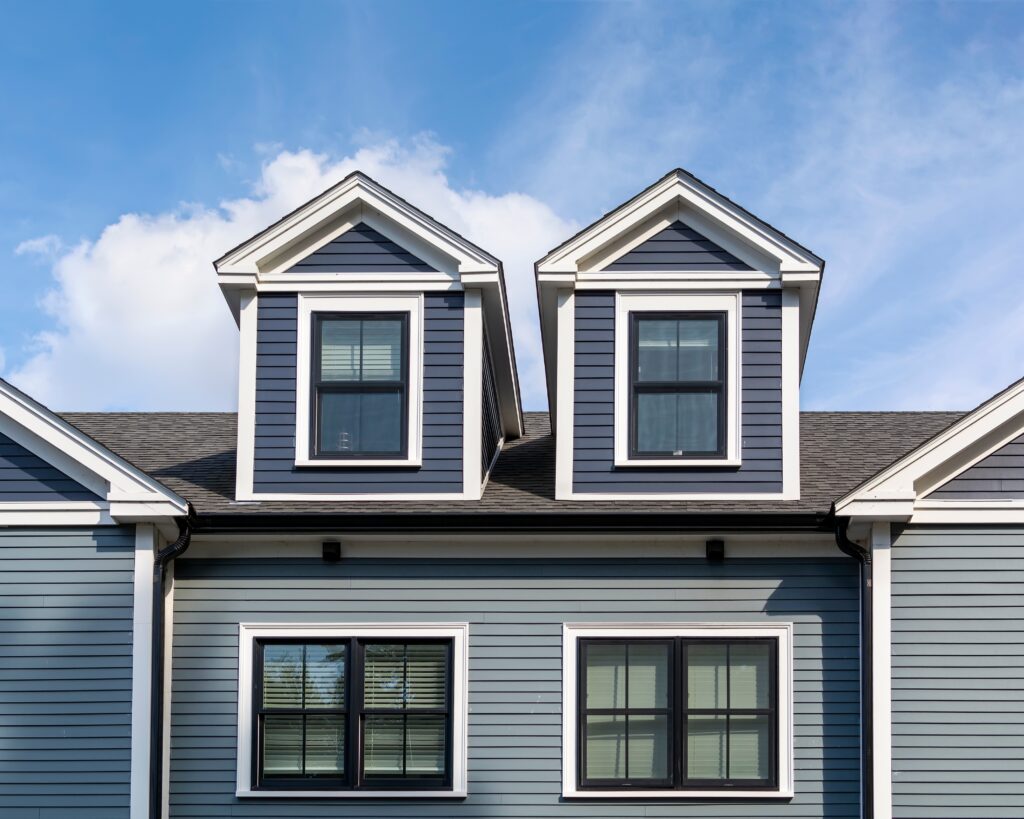
Your home’s exterior is the first thing buyers see, and worn or outdated siding can quietly erode thousands of dollars in perceived value before anyone steps through the front door. According to the 2025 Cost vs. Value Report from Zonda, siding replacement ranks among the top exterior renovation projects in the country, with fiber cement siding returning approximately 114% of its cost at resale and vinyl siding recouping up to 97%.
Those numbers put siding ahead of most interior remodels and on par with other high-performing exterior upgrades like garage door replacement and manufactured stone veneer. But ROI percentages only tell part of the story.
The material you choose, the condition of your current exterior, your neighborhood’s expectations, and local climate all influence whether a siding project adds $8,000 or $25,000 to your home’s market value. This guide breaks down what the data actually shows, compares the return on popular siding materials, and explains the factors that determine whether new siding is a smart investment for your specific situation.
Does New Siding Really Increase Home Value?
New siding typically recoups 75% to 114% of its cost at resale, making it one of the highest-returning exterior renovation projects nationwide.
The short answer is yes. New siding consistently ranks among the best home improvement investments you can make.
The 2025 Cost vs. Value Report, published annually by Zonda and the Journal of Light Construction, tracks 28 remodeling projects and their resale returns. Eight of the top 10 projects in the 2025 report are exterior replacements, and siding holds two of those spots.
Why Siding Performs So Well at Resale
Siding touches three areas that buyers, appraisers, and home inspectors all evaluate when assessing a property’s condition and market value.
Curb Appeal
A home with fresh, well-installed siding photographs better, shows better, and creates the impression of a property that has been maintained. Buyers often form their opinion of a home before they walk through the front door.
Protection
Siding is your home’s primary defense against moisture, wind, pests, and temperature swings. Buyers understand that failing siding often means hidden problems behind it.
Reduced Maintenance
New siding, particularly low-maintenance options like fiber cement or vinyl, signals that a buyer will not need to invest in the exterior for decades after purchase. That perception directly reduces the discount buyers apply for anticipated future costs.
Key takeaway: Exterior renovation projects have outperformed interior remodels in resale value for more than a decade, and siding replacement remains one of the top-performing categories in national cost-versus-value studies.
How Much ROI Does Each Siding Material Return?
Fiber cement siding leads the pack with up to 114% ROI, while vinyl siding returns around 97% nationally according to 2025 data.
Not all siding materials deliver the same financial return. The material you choose affects your upfront cost, your home’s perceived quality, and the percentage of your investment you recover when selling.
Here is how the most common siding materials compare based on national averages from the 2025 Cost vs. Value Report and industry data.
| Siding Material | Avg. Installed Cost (2,000 sq ft home) | Estimated ROI | Typical Lifespan |
|---|---|---|---|
| Fiber Cement | $14,000 to $36,000 | 80% to 114% | 30 to 50 years |
| Vinyl | $8,000 to $16,000 | 80% to 97% | 20 to 40 years |
| Engineered Wood | $10,000 to $22,000 | 75% to 85% | 20 to 30 years |
| Manufactured Stone Veneer | $11,000 (partial facade) | Up to 208% | 50+ years |
| Natural Stone | $57,000 to $72,000 | 60% to 70% | 75+ years |
| Brick | $7,500 to $22,500 | 70% to 77% | 100+ years |
Actual costs depend on your location, project scope, and materials. The best way to know what you'll pay is to get quotes from local contractors.
Get Your Free Estimate →Fiber Cement Siding
Fiber cement consistently delivers the strongest full-replacement ROI in national studies. The 2025 report shows that a fiber cement siding replacement adds an average of $24,420 in resale value.
The material resists fire, pests, rot, and moisture, and it convincingly mimics the look of natural wood without the maintenance burden. Buyers in mid-range to upscale neighborhoods tend to view fiber cement as a quality upgrade, which translates directly into appraisal support.
Vinyl Siding
Vinyl remains the most popular residential siding material in the United States, and its ROI reflects that broad acceptance. Lower material and labor costs keep the total project price down, which means a higher percentage of the investment comes back at resale.
For budget-conscious homeowners or those in markets where vinyl is the neighborhood standard, it delivers excellent value. If you are weighing whether to add insulation backing, insulated vinyl siding can improve energy performance and potentially push your return higher.
Manufactured Stone Veneer
Manufactured stone veneer deserves a separate mention because its ROI numbers are exceptional. Replacing vinyl siding on the lower third of a home’s front facade with stone veneer costs roughly $11,000 and adds approximately $22,880 in resale value, for a 208% return.
This is a partial facade upgrade, not a full re-side. But it demonstrates how dramatically a targeted material upgrade can shift buyer perception.
"We matched with a great contractor the same day. The whole process was easy and completely free."
What Factors Affect Siding ROI the Most?
Material choice, installation quality, neighborhood expectations, and local climate are the four biggest variables that determine your siding return.
A 97% ROI for vinyl siding is a national average. Your actual return could be significantly higher or lower depending on several factors specific to your home, your market, and your contractor.
Neighborhood Comparable Sales
Appraisers set home values based on comparable sales in your area. If most homes on your street have updated exteriors, failing to replace deteriorating siding can cost you at the negotiation table.
Conversely, installing premium fiber cement in a neighborhood where vinyl is standard may not yield a proportional return. The goal is to match or slightly exceed the exterior quality of comparable homes, not to over-improve for the market.
Installation Quality
Even the best siding material will underperform if installed poorly. Gaps around windows, misaligned panels, visible seams, and improper flashing can all raise red flags during a home inspection.
Buyers and inspectors notice sloppy workmanship, and it can erase the value that new siding would otherwise add. Professional installation with proper moisture barriers, correct flashing techniques, and manufacturer-specified fastening patterns is essential.
Climate and Weather Exposure
Where you live affects which siding materials deliver the best return. In regions with harsh winters, freeze-thaw cycles, and heavy snowfall, durable siding rated for cold climates carries more weight with buyers because they understand the consequences of a failing exterior.
In coastal areas, resistance to salt air and high winds matters more. In fire-prone zones, the Class A fire rating of fiber cement or metal siding can be a selling point that justifies the higher cost.
Timing Relative to a Sale
Siding installed shortly before listing has a stronger impact on buyer perception than siding installed five or 10 years ago. A recent replacement looks newer, feels more like a capital improvement, and may still carry a transferable warranty.
If you are planning to sell within the next two to three years, siding replacement offers a particularly strong value proposition.
Why Hire a Licensed Professional
- Licensed & insured — protects you from liability
- Warranty coverage — manufacturers require pro installation
- Code compliance — avoids permit issues
- Faster completion — pros finish in days, not weeks
How Does Siding ROI Compare to Other Home Improvements?
Siding replacement outperforms most interior remodels and ranks alongside other top exterior projects in national return-on-investment studies.
Homeowners often weigh siding against kitchen remodels, bathroom updates, or roof replacements when deciding where to invest. The 2025 Cost vs. Value data provides a clear picture of how these projects stack up.
| Project | 2025 National ROI |
|---|---|
| Garage Door Replacement | 268% |
| Steel Entry Door Replacement | 216% |
| Manufactured Stone Veneer | 208% |
| Fiber Cement Siding Replacement | 114% |
| Vinyl Siding Replacement | 97% |
| Wood Deck Addition | 95% |
| Minor Kitchen Remodel (Mid-Range) | 96% |
| Midrange Bathroom Remodel | 80% |
| Major Kitchen Remodel (Upscale) | 38% to 51% |
The pattern is consistent. Exterior projects dominate the top of the ROI rankings because they improve curb appeal at a relatively low cost compared to gut-renovating an interior space.
A new roof and new siding together can transform a home’s exterior presentation, often for less than the cost of a major kitchen overhaul. For a broader look at which upgrades deliver the best financial returns, this guide to home renovations with the best ROI compares projects across multiple categories.
Worth noting: The 2025 report found that backup power generators entered the top 10 for the first time, with ROI exceeding 100% in hurricane-prone and storm-affected regions. This suggests that buyers increasingly value practical, protective upgrades over purely cosmetic ones.
Does New Siding Improve Energy Efficiency?
Insulated siding and properly sealed installations can reduce heating and cooling costs by 10% to 20%, adding functional value alongside curb appeal.
Resale value is only one part of the financial picture. New siding can also lower your monthly energy bills, especially if your current siding is old, cracked, or poorly insulated.
Modern siding products, particularly insulated vinyl and fiber cement installed over a quality house wrap, create a tighter building envelope that reduces air infiltration. The energy savings depend on your starting point.
A home with 30-year-old aluminum siding and no insulation backing will see more dramatic improvement than a home with 10-year-old vinyl that is still in good condition. The U.S. Department of Energy notes that air leaks through exterior walls are a significant source of energy waste in residential buildings.
If energy performance is a priority, consider pairing your siding replacement with upgraded insulation. The combination of new siding, a modern moisture barrier, and added wall insulation can significantly reduce heat loss in winter and heat gain in summer.
Some insulated siding products may also qualify for the Energy Efficient Home Improvement Credit, which allows homeowners to claim up to 30% of material costs (up to $1,200) for qualifying products.
DIY vs. Professional: At a Glance
When Should You Replace Your Siding Before Selling?
Replace siding before selling when visible damage or outdated appearance will reduce your sale price more than the project costs.
Not every home needs new siding before going to market. If your current siding is in good condition and matches the neighborhood standard, replacing it may not move the needle enough to justify the expense.
However, there are several situations where replacement is clearly worth the investment.
Signs That Siding Replacement Will Pay Off Before a Sale
These indicators suggest your current siding is actively costing you resale value.
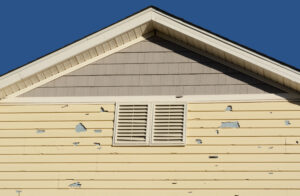
- Visible warping, cracking, fading, or peeling across large sections of the exterior
- Moisture damage, mold, or rot behind or within the siding
- Multiple past repairs that create a patchy, inconsistent appearance
- Outdated material or color that dates the home significantly
- Pest or termite damage that compromises structural integrity
- Energy bills that suggest poor exterior insulation
When New Siding May Not Be Worth It
If your siding is relatively new, in good condition, and consistent with neighborhood standards, the money may be better spent on higher-impact projects. A garage door replacement or window upgrades paired with siding could deliver a stronger return in that scenario.
Spring and summer are the busiest seasons for home improvement projects — top-rated contractors book up fast. Lock in your estimate now before demand peaks.
Check Availability in Your Area →How to Maximize Your Siding Investment
Choosing the right material, contractor, and timing can push your siding ROI well above national averages and into profitable territory.
Getting the best return from a siding project is not just about picking the cheapest option or the most expensive one. It is about making choices that align with your market, your home, and your goals.
Choose Materials That Match Your Market
Research what buyers in your area expect. In neighborhoods with a mix of fiber cement and vinyl, upgrading from aging vinyl to new fiber cement can provide a noticeable premium at resale.
In areas where vinyl dominates, a high-quality vinyl installation with updated color choices may deliver a better return than over-investing in premium materials.
Ready to Move Forward?
Tell us about your project and get matched with up to 3 pre-screened contractors. Compare quotes, check reviews, and hire with confidence.
Coordinate Your Exterior
A new siding installation looks best when complemented by clean trim, updated gutters, and maintained landscaping. Buyers evaluate the entire exterior as a package.
Mismatched elements, such as brand-new siding paired with a rusting gutter system or peeling trim, reduce the impact of the upgrade. If you are already investing in siding, consider whether the full cost of re-siding your house should include trim and gutter work as part of the project scope.
Hire Qualified Contractors
Siding installation quality directly affects both performance and value. Look for contractors with manufacturer certifications, verified references, and experience with your chosen material.
Get at least three written estimates, and verify that each includes the following:
- Tear-off: Removal and disposal of existing siding
- Substrate inspection: Evaluation of wall sheathing for rot, mold, or pest damage
- Moisture barrier: Installation of a proper house wrap or weather-resistive barrier
- Cleanup and warranty: Jobsite cleanup and documentation of all warranty coverage
If you are concerned about upfront costs, siding financing options can make the project more accessible without compromising on installation quality.
Do Not Skip the Inspection Underneath
One of the most valuable aspects of a siding replacement is the opportunity to identify and fix problems hidden behind the old exterior. Rot, mold, pest damage, and deteriorated sheathing can all be addressed during the project.
This is part of what makes siding replacement a genuinely protective investment, not just a cosmetic one.
Pro tip: Ask your contractor for photos of the substrate after tear-off. Documenting the condition of the wall sheathing and any repairs made provides evidence of thoroughness that can strengthen buyer confidence during a future sale.
Is New Siding Worth the Investment?
For most homeowners, new siding is one of the best investments you can make in your home’s long-term value and livability.
The data supports a clear conclusion. New siding adds measurable resale value, often recovering most or all of its cost.
It also delivers ongoing benefits that pure ROI calculations do not fully capture, including lower energy bills, reduced maintenance, and protection against moisture and pest damage that could lead to far more expensive structural repairs.
The strongest returns go to homeowners who choose materials appropriate for their market, hire qualified professionals, and time the project strategically relative to a potential sale. Even if you are not planning to sell anytime soon, the combination of curb appeal, energy savings, and deferred maintenance costs makes siding replacement one of the most well-rounded home improvement investments available.
Ready to explore your options? Compare siding materials, get cost estimates, and connect with qualified contractors in your area.
Connect with top-rated local contractors who can help you with siding, roofing, HVAC, windows, and more. Get free quotes from verified professionals in your area today.